
Emergency Air Duct Cleaning Near Me: What Conroe Homeowners Should Do First
Turning the HVAC back on after a flood or a rodent discovery is the most common mistake we hear about. It feels like the right move – you want to dry things out, you want the house back to normal – but running that system pushes contaminated air into every room before anyone shows up to clean it. If you’d rather not handle the first steps yourself, Duct Cleaning Conroe offers free estimates. Call (844) 761-5350 and we’ll talk through what you’re seeing.
What follows is the triage sequence we walk Conroe homeowners through before a technician arrives. It matters because starting extraction on an unsecured system can spread the problem instead of solving it.
What Counts as a Real Duct Emergency in Conroe?
Most duct problems are urgent but schedulable. A genuine emergency is one of three things: post-flood system saturation, confirmed rodent nesting inside the ductwork, or smoke and fire particulate infiltration. Each one demands a different first move, and getting the response wrong is what turns a contained problem into a whole-house one.
Here’s how the three break down:
- Post-flood saturation. Water has entered the system, and moisture sitting in insulated flex duct or in the plenum creates conditions for biological growth within a short window. The priority is stopping airflow and getting the system assessed before anything is switched back on.
- Rodent nesting. Droppings, nesting material, and urine-soaked insulation are a contamination problem, not a debris problem. Running the fan aerosolizes what’s in there and distributes it through the supply runs.
- Smoke and fire particulate. Soot particles are fine enough to travel deep into the duct walls and settle in the register boots. Standard blowing won’t lift them; the residue needs contact cleaning and, in many cases, odor treatment.
A dusty system, a musty smell that comes and goes, or one room that never seems to cool properly are all worth scheduling. None of them require the shutdown protocol below. The distinction matters because in Conroe’s humid climate, a genuinely wet system and a merely dirty one get confused all the time, and treating the wrong one wastes money.
Should You Shut the HVAC Off? The First 60 Minutes
Yes – shut the system down completely if you suspect flood saturation, rodent intrusion, or smoke infiltration. Switch the thermostat to off, not just fan mode. This is the single most important thing you can do before help arrives.
Here’s the sequence, in order:
- Set the thermostat to OFF. Not heat, not cool, not fan. The system should not be moving air at all.
- Close the registers by hand. Most supply registers have a damper lever or dial. Closing them limits how much contamination migrates from the duct system into living space while the system is down.
- Leave the return grille alone if it’s the only airflow path. If your system has a single central return, closing it entirely can create pressure issues. Note its condition instead and photograph it.
- Don’t run the fan in “on” mode to “clear things out.” This is the mistake. Fan-on runs the blower continuously regardless of whether the compressor is calling, which means constant circulation of whatever is in the ducts. Auto mode at least stops when the call ends. During containment, off is the only correct setting.
If the system is wet, don’t attempt to dry it with the HVAC. A wet blower motor and wet duct insulation are both problems that get worse with airflow, and a flooded blower compartment can present an electrical hazard. Leave the breaker alone and let a technician assess it.
What Should You Document Before Anyone Touches the System?
Photograph everything before a single register comes off. Good documentation shapes both the remediation scope and, if you’re filing a claim, what your insurer will cover. In our experience, homeowners who document early have a much easier conversation with their adjuster.
What to capture:
- Register contamination. Close-ups of every supply and return grille. Note which rooms show the heaviest buildup – that pattern tells a technician where the contamination originated.
- The odor source. Walk the house and note where the smell is strongest. A musty smell concentrated near the air handler points somewhere different than one that only appears in a single bedroom.
- Moisture readings, if you have a meter. A cheap pin-type meter gives you a number to compare against later. If you don’t own one, note visible water lines, staining on ceiling or drywall, and any insulation that’s clearly saturated.
- The water source and the timeline. When did the flood happen, how high did the water get, and how long before the system was shut off. Write it down while you remember it accurately.
- Signs of rodent activity. Droppings near the return, gnaw marks on flex duct, nesting material visible through a register. Photograph, don’t disturb.
Keep the photos time-stamped and backed up somewhere off your phone. A contractor’s written scope plus your own documentation is a far stronger position than either one alone.
What Should a Real Emergency Duct Service Include?
A legitimate emergency call is not a standard cleaning with a rush fee attached. It follows a different sequence, and you should be able to name each step before you agree to anything.
The four components:
- Scope inspection before extraction. The technician inspects the system and confirms what’s actually in there before hooking up equipment. This is where a camera inspection or a physical look at the plenum and trunk line happens.
- Containment setup. Negative air pressure contains the contamination instead of letting it drift into the house. This is where remediation-grade equipment like Abatement Technologies negative-air machines earns its place – the same class of tool used in mold abatement work, not a shop vac with a long hose.
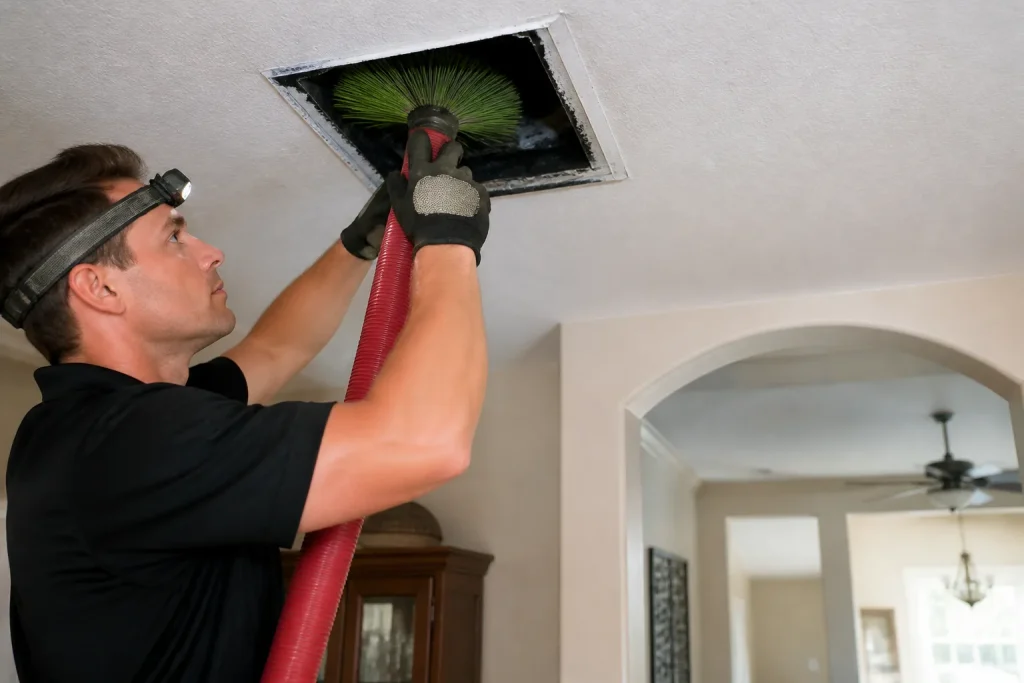
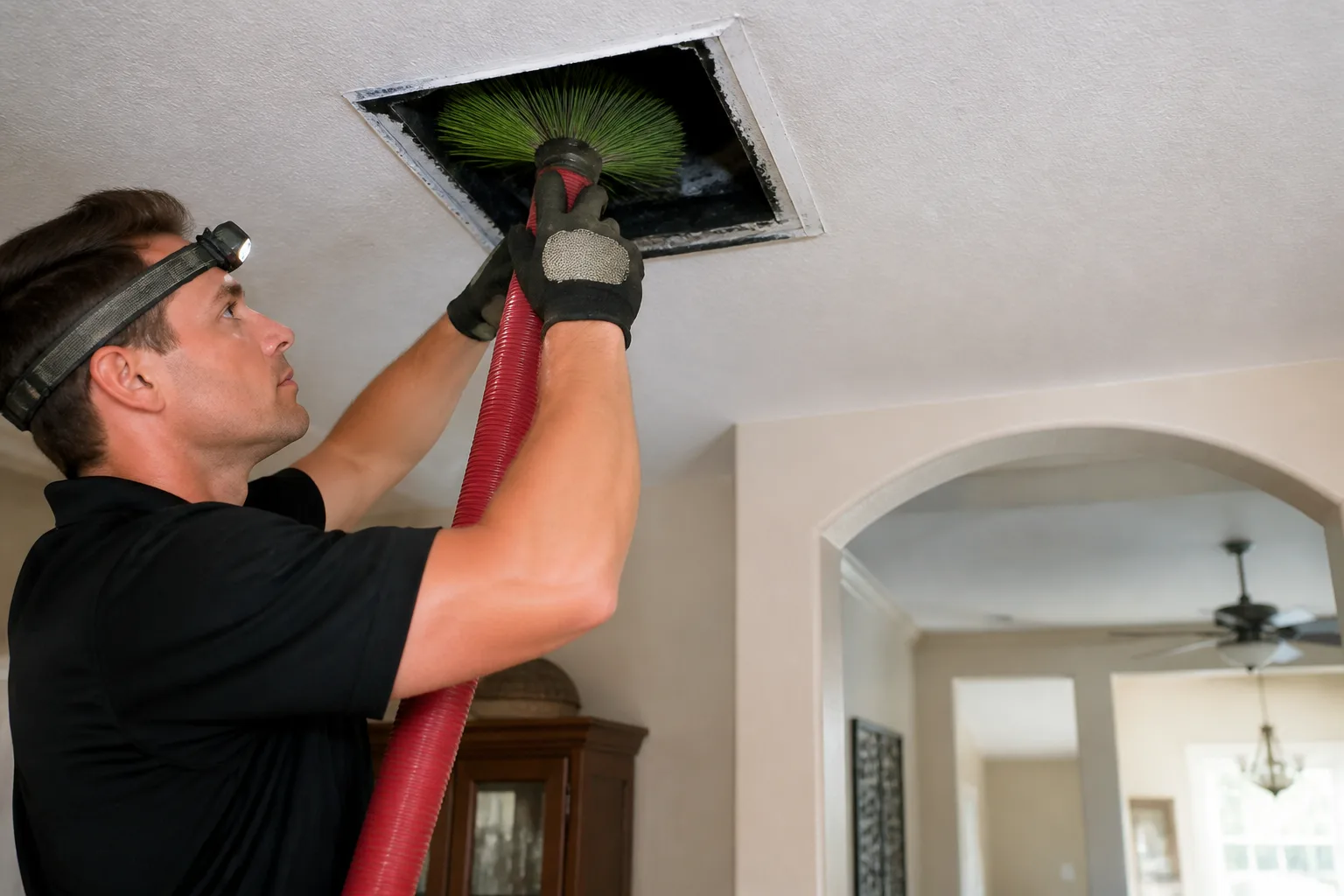
- Contact cleaning, not just airflow. A Rotobrush contact-cleaning system physically agitates and extracts debris from the duct walls. Blowing air through a contaminated duct and calling it clean is the failure mode we see most often.
- Post-cleaning verification and written clearance. You should get photos of the before and after, and a written record of what was found and what was done. Ask for it if it isn’t offered.
One thing a genuine emergency scope catches that a standard cleaning misses: damaged ductwork. If the flood or the rodents damaged flex duct, sealing, or a boot connection, cleaning it and walking away leaves you pulling contaminated air from a crawlspace or attic into the living space. That’s why air duct cleaning and repair belong in the same scope, not two separate visits.
How Do You Vet an “Emergency” Duct Cleaning Company?
Ask what equipment shows up. A company doing genuine remediation work will name their containment and extraction gear without hesitation. A standard cleaning company that added “emergency” to their availability window will talk about timing and price instead.
Questions worth asking before you book:
- “What containment equipment are you bringing?” You’re listening for negative air machines and HEPA vacuum systems. Nikro and Abatement Technologies are the names that come up in serious remediation work.
- “Do you inspect before you clean?” A yes here means a scope inspection and a diagnosis. A no means they’re running a fixed procedure regardless of what’s in your ducts.
- “Do you do repair, or cleaning only?” If the answer is cleaning only, ask who handles deteriorated ductwork and how the handoff works.
- “Will I get before-and-after photos and written clearance?” Vague answers here are a red flag.
- “Are you set up for smoke or biological contamination specifically?” Smoke residue and rodent contamination are different problems. A company that treats them the same is guessing.
The “emergency” label in this trade usually describes a scheduling window, not a capability. In Conroe, the practical difference is whether the crew can contain contamination, clean it by contact, and verify the result – or whether they’re just available sooner to do a standard blow-through.
While you’re having the conversation, ask about dryer vents too. A blocked dryer vent is a leading cause of residential fires, and dryer vent cleaning is a dedicated service most duct-only companies skip entirely. If you’re already having the system assessed in Conroe, it’s worth having the vent looked at in the same visit.
When to Call a Pro (and When Not To)
Call a professional immediately for flood saturation, confirmed rodent activity inside the ductwork, or smoke infiltration. Those three are contamination events, and the containment and extraction work requires equipment most homeowners don’t have and shouldn’t improvise.
For a system that’s simply due for cleaning, or that’s contributing to allergies or inconsistent airflow, you can schedule at a normal pace. Our technicians have up to 14 years of experience and work with remediation-grade equipment from Rotobrush, Nikro, and Abatement Technologies, so the assessment and the cleaning happen in one visit rather than getting handed off. We’re also trained on Honeywell and Aprilaire indoor air quality components, which matters if your system has a media filter or UV setup that needs to keep working after the ducts are cleaned. And we apply Guardsman-level surface protection before we start, because moving equipment through a house shouldn’t leave marks on your walls or floors.
One small mercy: the fan-off rule is the least glamorous advice in this entire guide, and it’s also the one that saves the most money.
Related services in Conroe: air duct cleaning, dryer vent cleaning, and duct cleaning in Conroe.
The Bottom Line
If you suspect a duct emergency in Conroe, shut the system off completely, close the registers, document what you see, and then call. Don’t run the fan to clear the air – that’s the mistake that spreads the problem. The right sequence is inspection, containment, contact cleaning, and written verification, and you should expect all four from anyone you hire.
Learn more about how we handle Conroe duct systems, or just get on the phone. If you’re in Conroe and need help, Duct Cleaning Conroe offers free estimates – call (844) 761-5350. We answer 24/7. Fast dispatch from 7am to 7pm, Sunday through Friday.
Frequently Asked Questions
A real duct emergency is one of three things: post-flood system saturation, confirmed rodent nesting in the ducts, or smoke and fire particulate infiltration. Everything else – dust, a musty smell, uneven airflow, allergy complaints – is urgent but schedulable. Those can wait for a normal appointment. Call (844) 761-5350 and we’ll help you sort out which one you’re dealing with before the crew arrives.
Yes. Set the thermostat to off, not fan mode, and close the supply registers by hand. Don’t run the fan on “on” mode to dry things out – a wet blower compartment is an electrical hazard and airflow makes a wet system worse. Leave the breaker alone and let a technician assess it. Call (844) 761-5350 for an exact quote on the assessment and the cleaning work – estimates are free.
Not usually. Genuine remediation needs negative air containment and remediation-grade HEPA equipment, plus contact cleaning that agitates and extracts debris from the duct walls rather than blowing air through them. A standard cleaning company that advertises “emergency” availability may not have that equipment. Ask what containment gear they’re bringing before you book. Call (844) 761-5350 and we’ll walk you through what a proper scope looks like for your situation.
We price per job by written estimate, not by the vent, and not with a teaser coupon that grows once the technician is on site. The range depends on square footage, the number of systems, and how much repair the inspection turns up. The written estimate sets the final price before any work starts. Call (844) 761-5350 for an exact quote – estimates are free.
Written by the team at Duct Cleaning Conroe.
Need Air Duct Cleaning Help?
Call Duct Cleaning Conroe - licensed & insured, with free written estimates in Conroe.
(844) 761-5350