
Last updated November 15, 2026
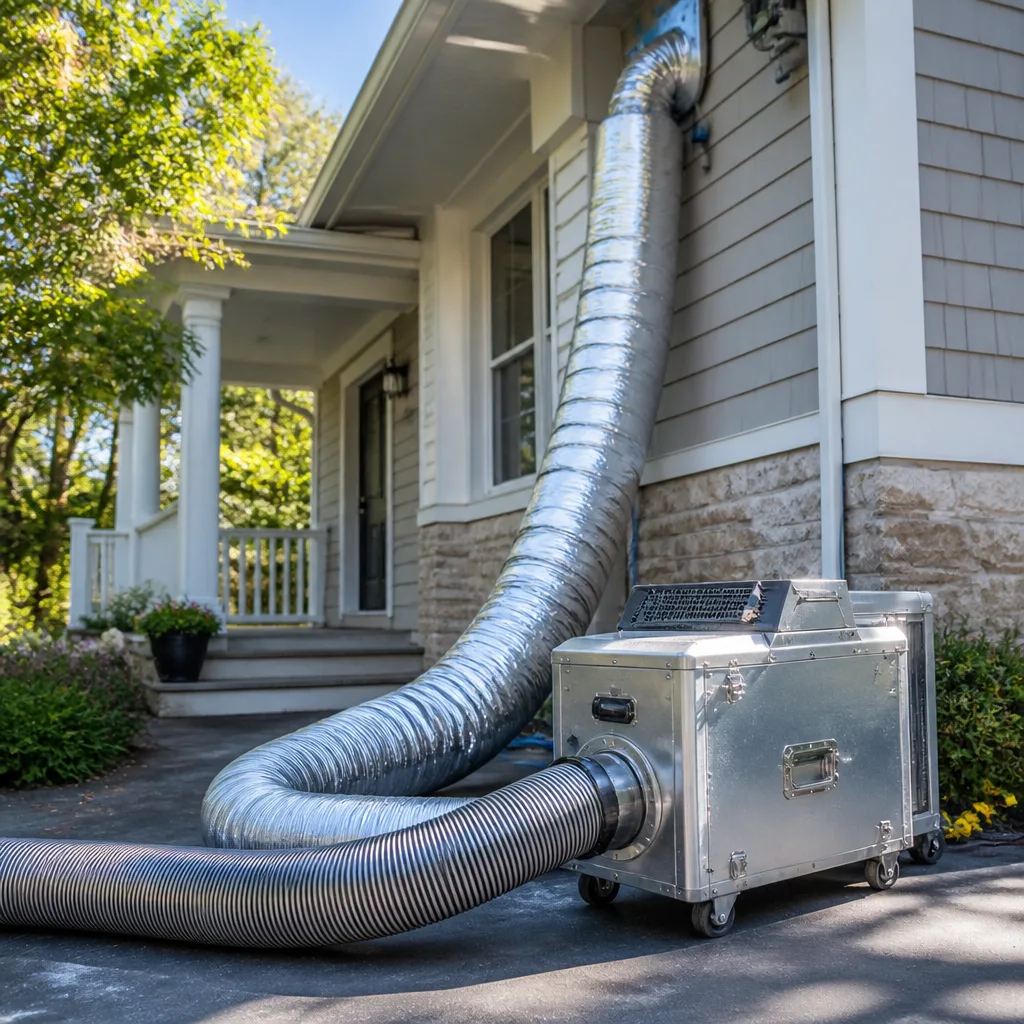 Whole-home duct cleaning
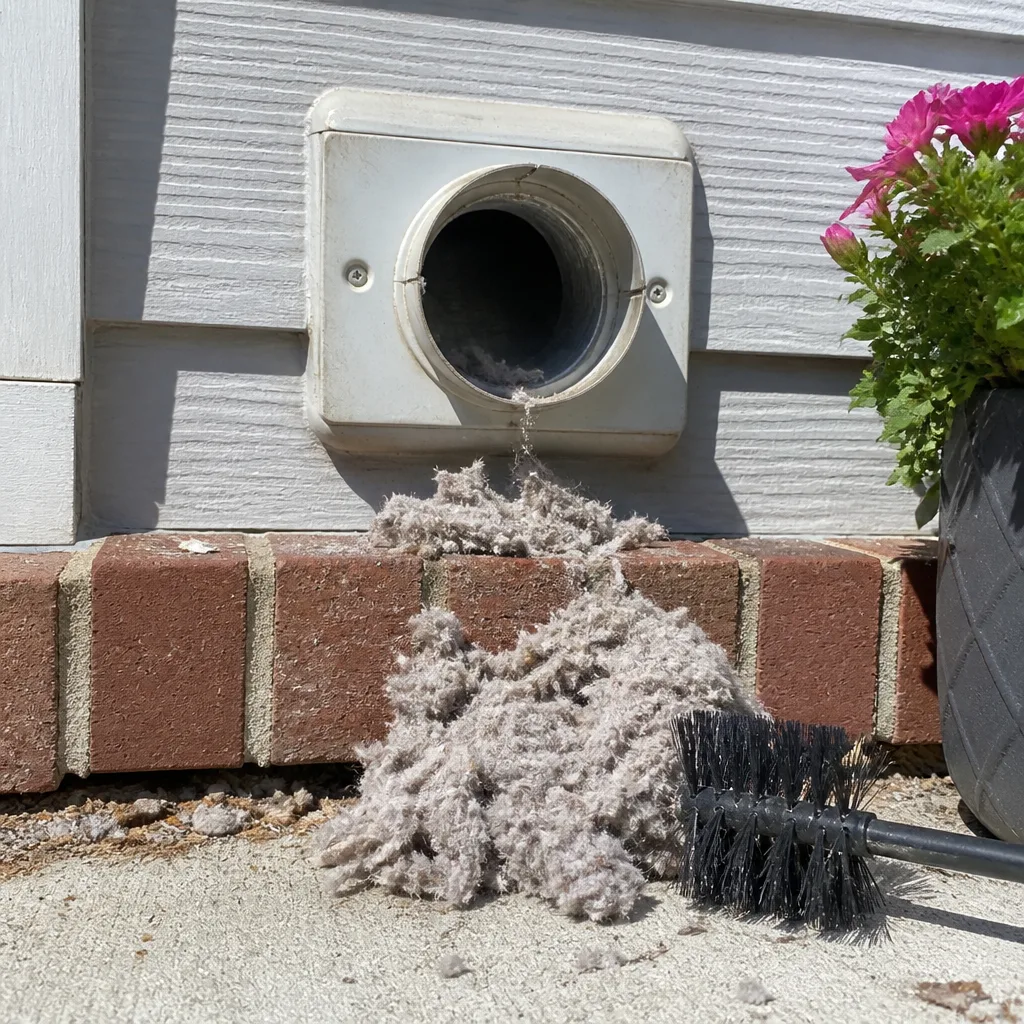 Dryer vent cleaning
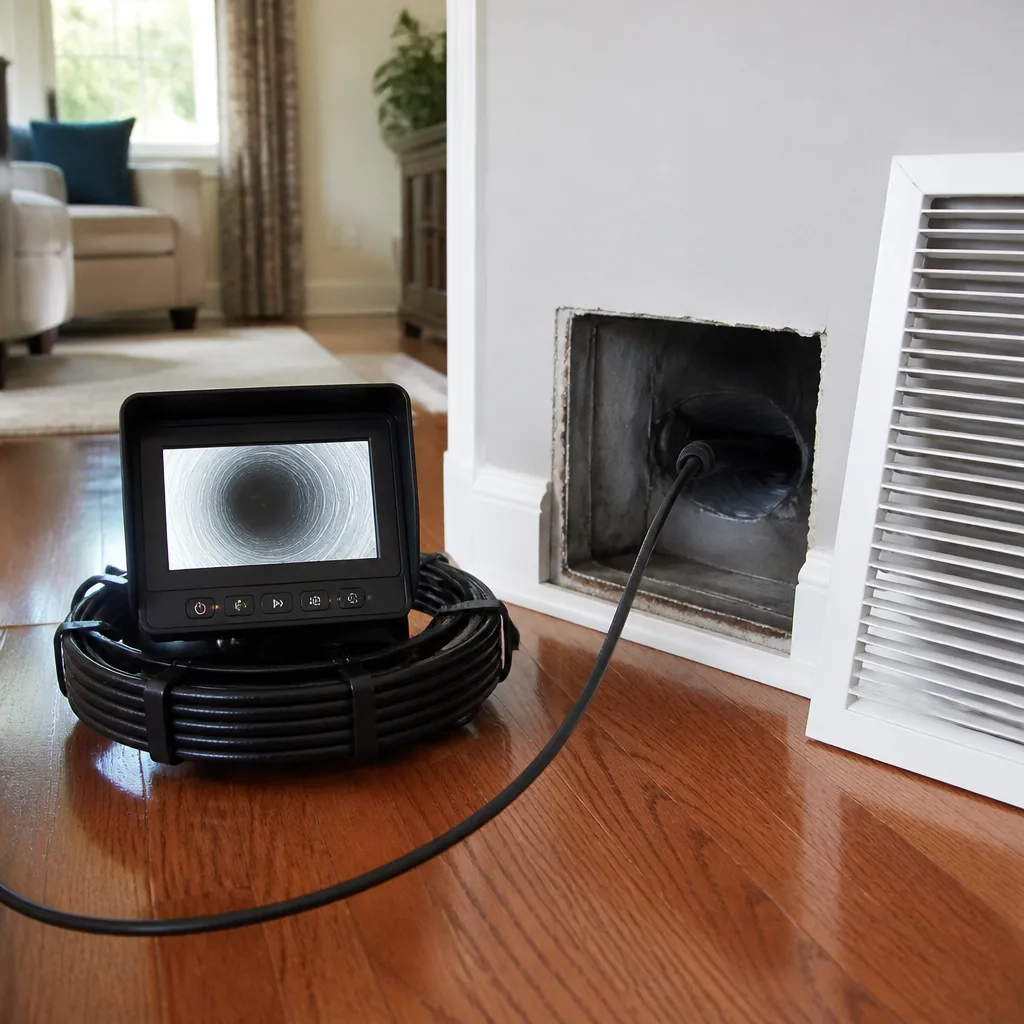 Camera inspection
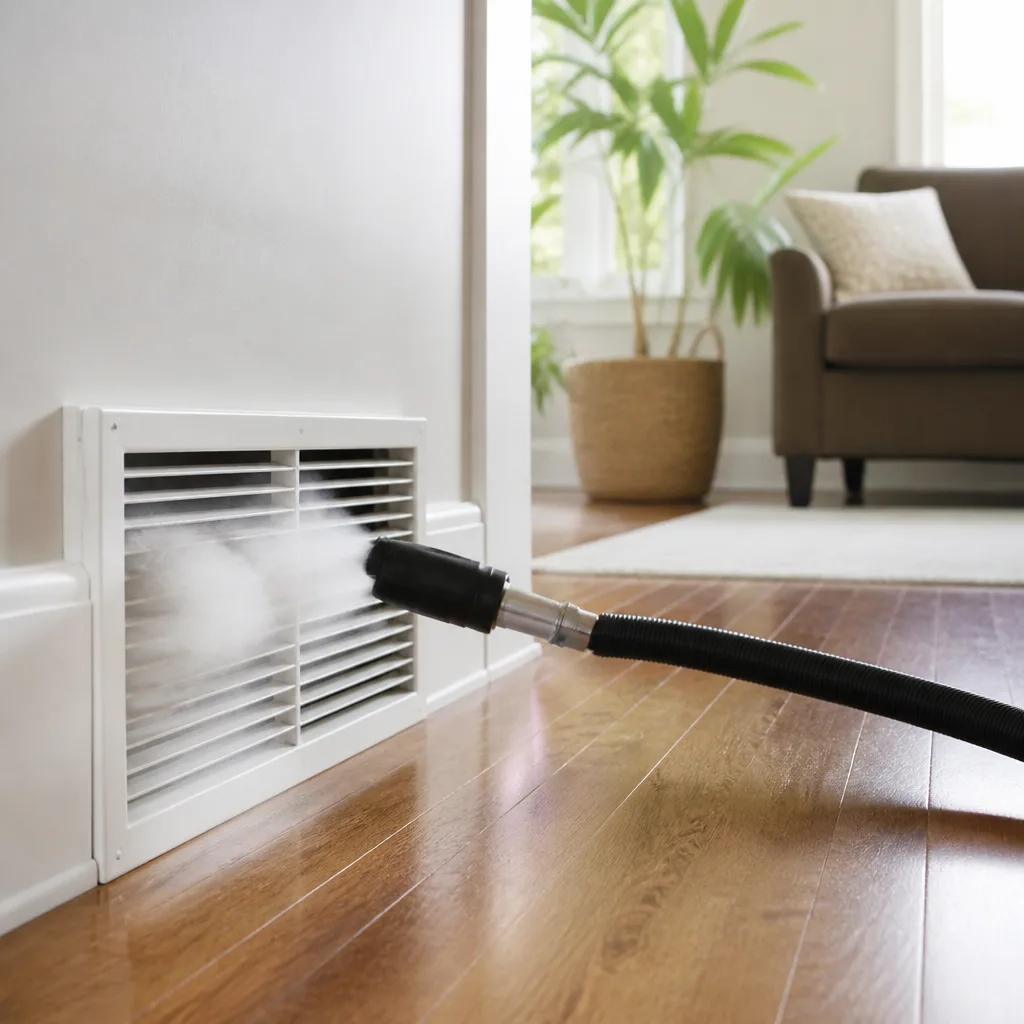 Sanitizing & deodorizing
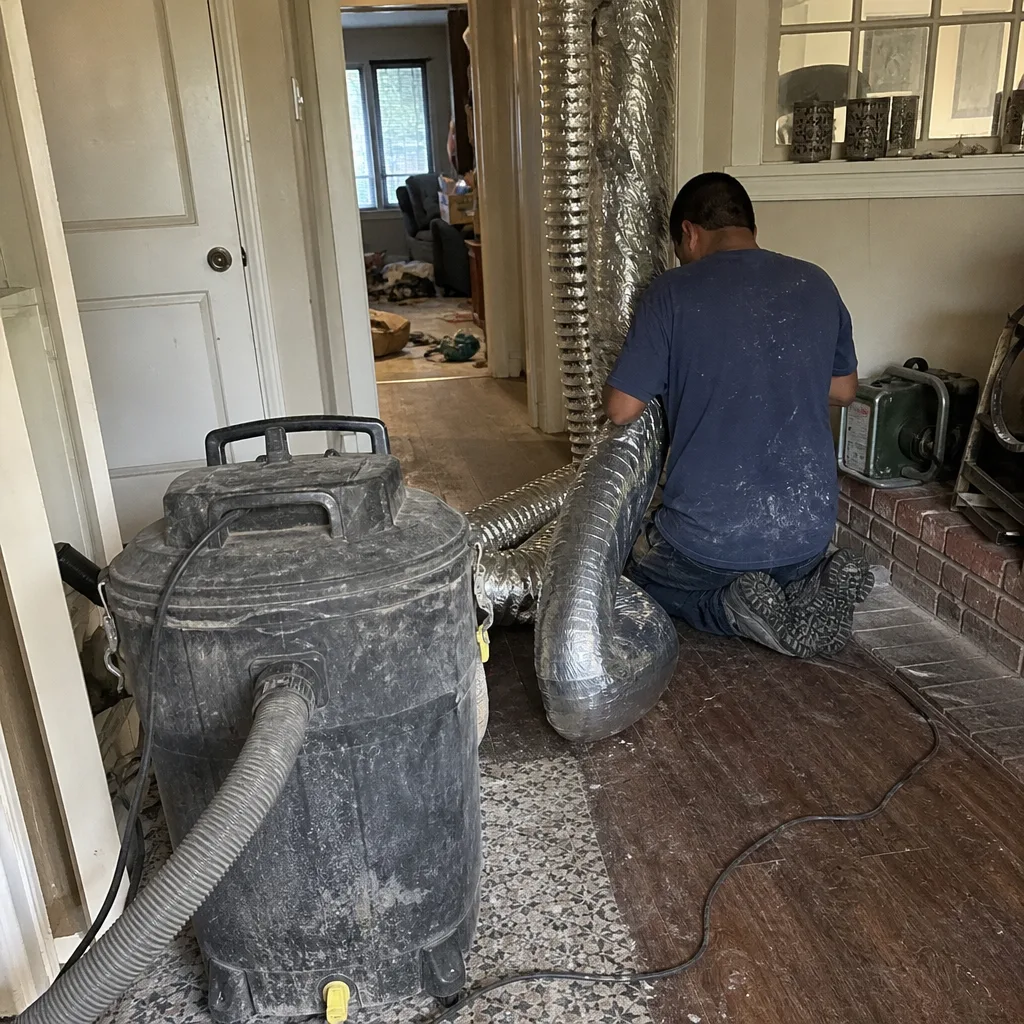
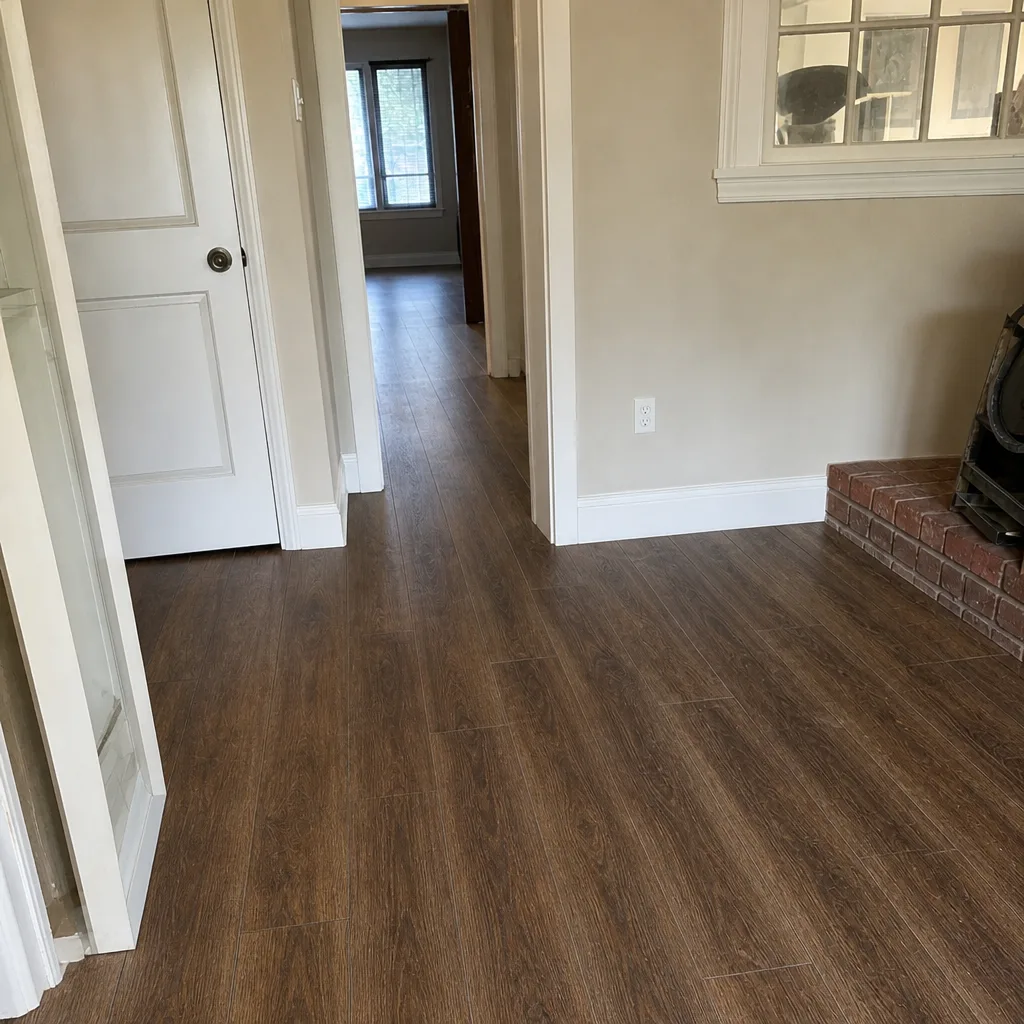
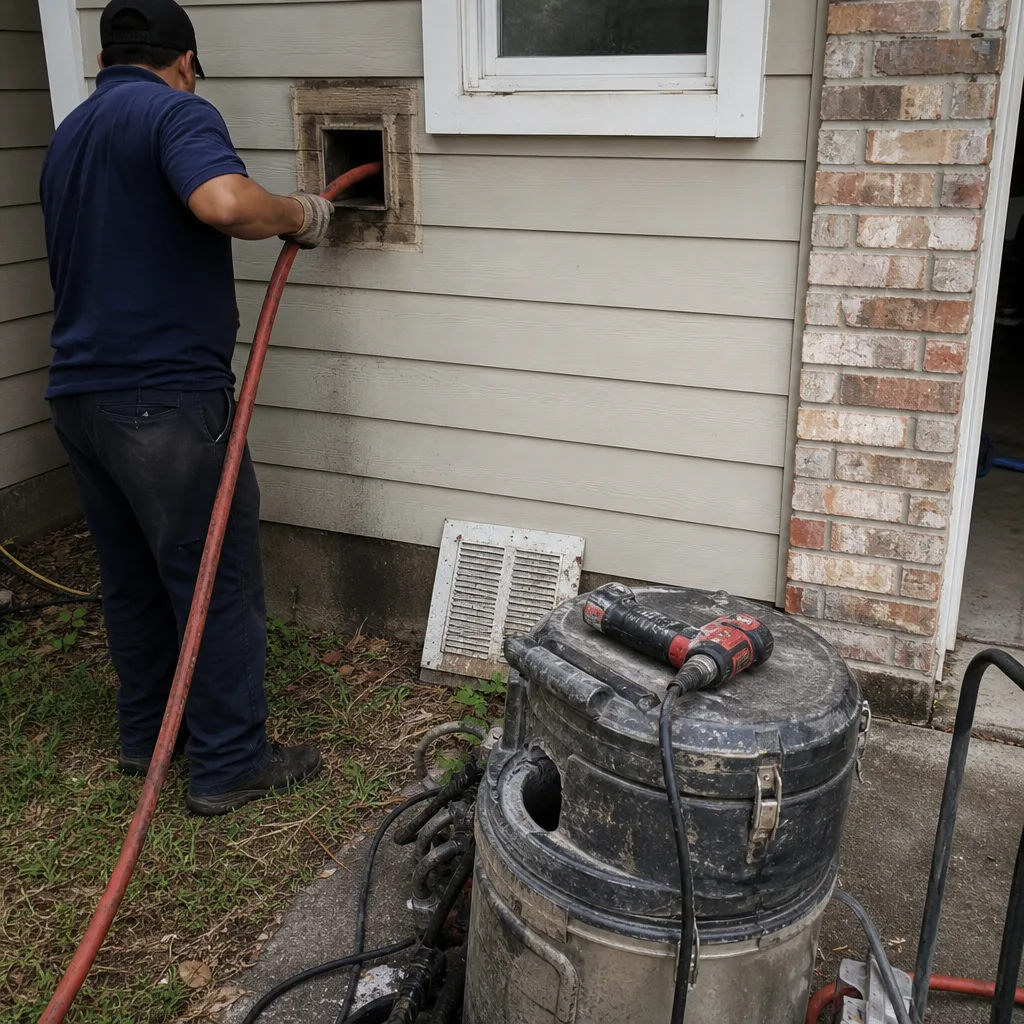
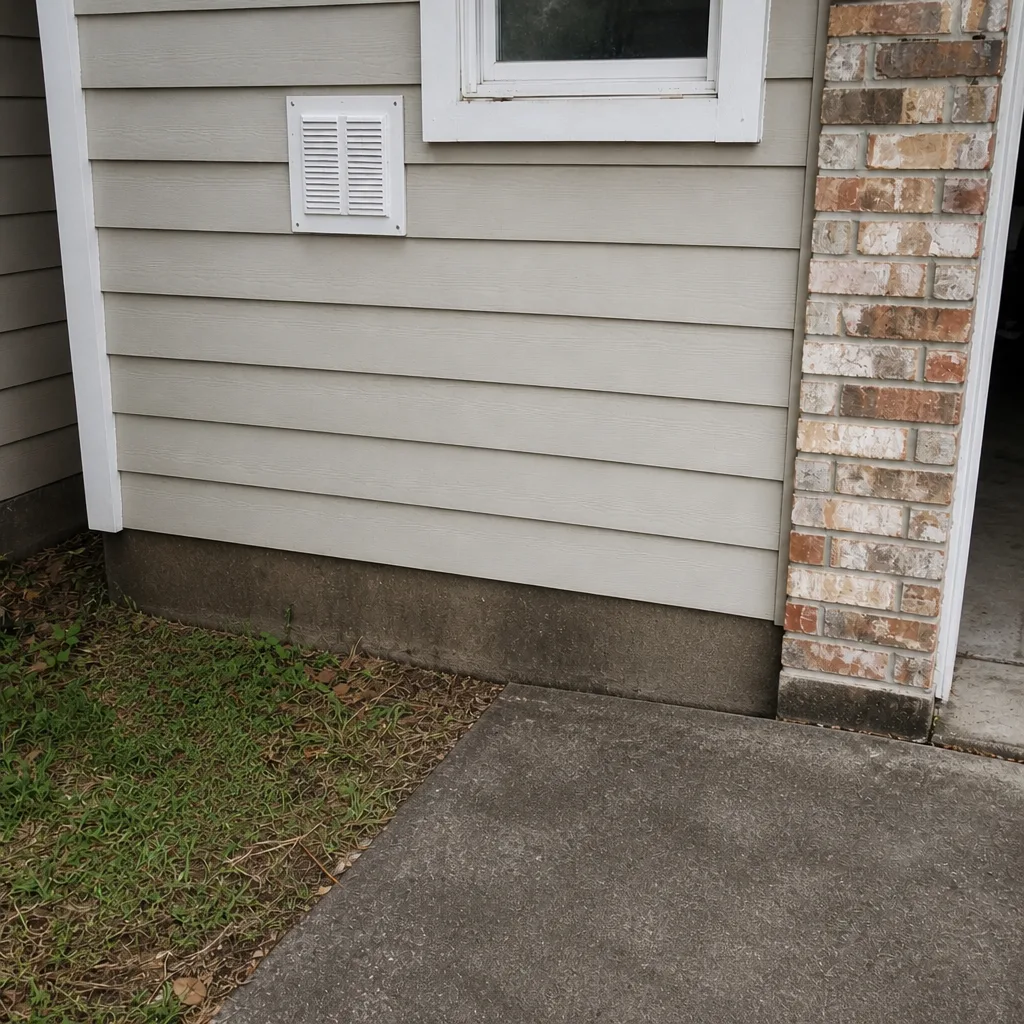
Whole-system duct and dryer vent check with before-and-after photos - you see exactly what came out of your vents
That "$99 whole-house special" is a bait ad - the real number appears once they are in your hallway, or the "clean" is a shop-vac at the register. We photograph the inside of your ducts before and after instead.
Air Duct Cleaning Permits, Codes & Inspections in Conroe, TX: What You Need to Know
Most Conroe homeowners assume duct work is duct work, so a permit question never enters the conversation. That’s the trap. Cleaning your ducts is maintenance and doesn’t trigger a permit, but repairing or replacing part of that same system is mechanical work under Texas rules, and it can require one. If a technician finds a crushed flex run or a disconnected plenum and swaps it out on the same visit without a word about permitting, the homeowner is the one holding unpermitted mechanical work on their record. In this guide we’ll walk through the cleaning-versus-repair distinction, when a license applies, how to verify permit status on work already done, and what Texas energy code means for duct sealing. Conroe resale, insurance, and inspections all hinge on getting this right.
Quick Answer
Air duct cleaning alone in Conroe, TX does not require a permit. Duct repair, replacement, or re-routing of ductwork is mechanical work that may require a permit from the City of Conroe’s building department, and in Texas the contractor performing that repair generally needs the appropriate HVAC or mechanical contractor license. Cleaning can be done by a duct cleaning specialist; physical alteration of the duct system is a different scope. Always ask which category your job falls into before work starts.
Styles & brands we work with
- Whole-home duct cleaning
- Dryer vent cleaning
- Camera inspection
- Sanitizing & deodorizing
Table of Contents
- Cleaning vs. Repair: Where the Permit Line Actually Sits
- What Texas Mechanical Code Says About Duct Work
- When Is an HVAC License Required for Duct Work in Texas?
- IECC Energy Code and Duct Sealing in Texas
- When Duct Leakage Testing Is Triggered
- How to Verify Permit Status on Completed Duct Work
- Requesting a Montgomery County Inspection on Prior Work
- Why This Matters at Resale in Conroe
Cleaning vs. Repair: Where the Permit Line Actually Sits
The permit question starts with the word “cleaning.” Cleaning is defined as a maintenance activity: brush, agitate, extract, sanitize the accessible interior of the duct system. You aren’t changing the physical configuration of the ducts, so there’s no structural or mechanical alteration to review. No permit. No inspection trigger. That’s true in Conroe and it’s true across Texas.
Repair moves the job into a different category. The moment a technician cuts out a section of duct, replaces a boot, reconnects a plenum, re-routes a run, or seals a joint with mastic and mesh as a permanent mechanical correction, the work is modifying the mechanical system of the home. Most cities classify that modification as mechanical work, and mechanical work typically requires a permit. Conroe is not an exception, though the exact thresholds come from the local building department, not from a general rule.
- Cleaning only: maintenance, no permit in standard cases.
- Cleaning plus sealing small leaks with tape or mastic during the cleaning: typically still maintenance, though scope matters.
- Replacing a section of duct, a boot, a plenum connection, or a flex run: mechanical repair, permit likely required.
- Re-routing or adding a duct run: mechanical alteration, permit almost certainly required.
- Replacing an entire trunk line or retrofitting the duct system: major mechanical work, permit and inspection expected.
The distinction matters because a duct cleaning job can turn into an unpermitted mechanical job in a single visit. We repair what we find, and that includes telling the homeowner when a repair crosses into permit territory so they can decide how to handle it rather than discovering it later.
What Texas Mechanical Code Says About Duct Work
Texas doesn’t have a statewide duct-cleaning code chapter. It has a statewide mechanical code adopted through the International Residential Code and International Mechanical Code family, which local jurisdictions adopt and amend. Conroe enforces its own adopted version, and that adopted text is what actually applies to a job at a given address. The state sets the floor; the city sets the specifics.
Under the mechanical code framework, duct systems must be installed, sealed, and supported per code, and alterations to a duct system must maintain those standards. Flex duct must be installed with correct support spacing, correct bend radius, and correct termination at the register boot. A repair that leaves a sagging flex run, an undersized return, or a boot that isn’t sealed to drywall can fail inspection even if it looks fine from the grille. That’s exactly the kind of shortcut that shows up in five or ten years when a duct system is pulling attic air into the conditioned space.
If you want the code text for your specific address, the City of Conroe building department is the correct source, not a website summary and not a scope written by a contractor. Call them with the property address and ask which code cycle is currently adopted.
For general air duct cleaning questions outside the permit scope, the guide on air duct cleaning covers method and expectations in more detail.
When Is an HVAC License Required for Duct Work in Texas?
Texas requires an Air Conditioning and Refrigeration Contractor license (through TDLR) for anyone who contracts to perform air conditioning and refrigeration work, which includes duct system installation and repair as part of an HVAC system. Cleaning is not, by itself, contracting to install or repair an HVAC system. So a dedicated duct cleaning specialist can legally clean ducts. A contractor who physically alters the duct system as part of the HVAC system is in a different licensing category.
In practice, this means two different things happen on a Conroe job:
- A cleaning specialist inspects the full duct system, uses contact-cleaning equipment to remove debris, and documents findings. This is the cleaning scope.
- If repairs are needed, the homeowner should confirm who is doing the repair and whether that party is licensed for mechanical work and pulling the permit if one applies.
An honest scope-of-work statement separates those two categories clearly. If a contractor’s quote blends them together quietly, ask which line items are cleaning and which are mechanical repairs. Get the answer in writing on the estimate.
For larger system needs in and around the city, the main Conroe service page lays out how the three service lines fit together. For a scope discussion specific to cleaning, our duct cleaning page is a good starting point.
IECC Energy Code and Duct Sealing in Texas
The International Energy Conservation Code (IECC) addresses duct sealing in the sections covering duct insulation and air leakage. Texas adopts IECC updates on a rolling basis through the State Energy Conservation Office, and local jurisdictions like Conroe choose which version to enforce for new construction and major alterations. When duct sealing or replacement is part of a permitted mechanical job, the sealed duct system needs to meet the leakage limits adopted by the local authority.
For most Conroe homeowners this only matters when the work is significant. Replacing a flex run to a single bedroom on a like-for-like basis is different from replacing the whole supply trunk or reconfiguring the duct layout. The larger the alteration, the more likely the inspector asks for documentation that the sealed system meets the adopted code.
- Like-for-like repair of a small section: usually no energy code testing triggered.
- Replacement of a full trunk or major run: energy code compliance likely applies, testing may be required.
- Whole-house duct retrofit: testing and inspection expected.
- New construction or substantial remodel: full IECC compliance applies.
Leakage testing documentation is where the conversation usually stops being theoretical. If a permit is pulled on a mechanical job that touches the duct system, the inspector may require proof that the sealed system meets the adopted leakage standard, and that’s a measurement taken after the work, not a promise made before it.
When Duct Leakage Testing Is Triggered
Duct leakage testing in Texas is typically triggered by permit conditions, not by the homeowner’s preference. When the adopted energy code applies and a mechanical permit has been pulled on duct system work, the inspector has authority to require verification that the sealed system meets a leakage limit. The test is performed with a duct blaster or equivalent calibrated equipment, and the results are documented and turned in with the inspection request.
- Confirm whether the adopted code requires it. Ask the Conroe building department directly and in writing which test is required for your scope.
- Schedule the test after all sealing and duct connections are final. Testing a system that isn’t fully assembled wastes a trip and produces unusable numbers.
- Use the equipment the inspector expects. A properly calibrated duct blaster, a documented setup, and a printed report are baseline.
- Turn in the report with the inspection request. Numbers reported verbally and not attached to the file create a call-back.
Homeowners don’t run this test. A licensed contractor on a permitted job does, and the report becomes part of the property’s mechanical history. If you’re buying a Conroe home where major duct work was done, ask the seller for that report before you close.
How to Verify Permit Status on Completed Duct Work
Permit verification is straightforward and it’s the single highest-value exercise in this whole guide for a buyer or seller. Conroe issues mechanical permits through the building department, and those permits carry an inspection record. If the work was permitted, the record exists. If it wasn’t, no record appears, and that’s the flag.
- Ask the seller for the permit number. Any permitted mechanical job has one. If they don’t have it, ask for the contractor name and address on the job.
- Call the City of Conroe building department. Give them the property address and ask for the permit history on the mechanical side. They can look up whether a permit was pulled and whether it was closed with a passed final inspection.
- Check the final inspection status. A permit pulled and never closed is a red flag. Sometimes the work was done correctly and the paperwork was simply abandoned; sometimes the work failed and was never corrected.
- Request the mechanical inspection report. The inspector’s notes tell you what was seen and whether the duct system met the adopted code at the time of sign-off.
- Document everything. Take the permit number and the inspection result and put them in your file. If you ever sell the home, this is the evidence a buyer’s agent will ask for.
Homeowners doing their own due diligence on a home they already own should use the same process in reverse: request the permit history on the address, confirm all mechanical permits were closed, and note any work that appears to have been done without one.
Requesting a Montgomery County Inspection on Prior Work
If you’ve discovered duct work on your Conroe home that was completed without a permit, the fix is to bring it into compliance rather than ignore it. That means contacting the City of Conroe building department (the county itself isn’t the mechanical inspector for most in-city residential work) and asking for what’s called a permit after the fact, or a compliance inspection, depending on how the local office processes unpermitted work.
The typical sequence looks like this:
- Describe the work already completed. What was done, when, by whom, and what equipment or materials were used.
- Ask what the building department wants. Some offices require a new permit with the original work disclosed; some require an inspection only; some require corrective work before sign-off.
- Bring in the appropriate licensed contractor. Mechanical permits are pulled by the licensed contractor performing the work, not typically by the homeowner.
- Have the duct system evaluated against the current adopted code. This may surface sealing, insulation, or support corrections that go beyond what was originally done.
- Complete the inspection. The inspector signs off, the permit closes, and the property record reflects permitted mechanical work.
Don’t skip this step on a home you’re selling in Conroe. An unpermitted mechanical repair found during a buyer’s inspection can delay a closing or cost you leverage at the negotiating table. Getting it regularized before listing is far cheaper than getting it regularized after a buyer’s agent finds it.
Why This Matters at Resale in Conroe
Conroe’s housing stock is varied, and a good share of homes have had duct work done at some point, either as part of an HVAC replacement, an attic remodel, or a duct repair after rodent or storm damage. Buyers and their inspectors know to look. When a mechanical permit history comes up empty on a property where the duct system has clearly been modified, the buyer’s agent has a specific, concrete objection and the seller has to work around it.
Three things drive real cost at resale:
- Unpermitted work discovered during the inspection period. Negotiating leverage shifts to the buyer.
- Insurance questions. Some carriers ask about permitted mechanical work, especially after weather events. An unpermitted repair can complicate a claim.
- Appraisal friction. Appraisers note mechanical alterations that aren’t supported by a permit, which can prompt additional scrutiny before the loan goes through.
Permitted duct work is also a small quality signal, because pulling a permit forces the licensed contractor to put the sealed duct system to a measurement standard that a permit-less repair never reaches. That matters in a climate where a leaky duct system pulls humid Gulf air into the conditioned space and drives the AC to work harder than it should.
Common Mistakes to Avoid
- Assuming “duct cleaning doesn’t need a permit” covers everything. That statement is true for cleaning only. If a repair is part of the visit, the permit question comes back into play.
- Letting a technician alter ductwork on a cleaning visit without asking about scope. A crushed flex run replaced with a new one is a mechanical repair, and if it isn’t permitted the homeowner carries that on the property record.
- Not asking for the permit number before work starts. Once the truck has left, the conversation is much harder. Ask the contractor before work begins what’s permitted and what isn’t.
- Skipping the permit history check when buying in Conroe. A five-minute call to the building department during the inspection period is cheaper than a negotiation during closing.
- Confusing a duct cleaning specialist’s role with a licensed mechanical contractor’s role. Both categories exist and both are legitimate. They are not interchangeable on permitted repair work.
- Treating IECC leakage testing as optional. If a permit is pulled on a duct alteration, the test documentation is part of the inspection file, not a nice-to-have.
- Assuming county and city are the same for permits in Conroe. The City of Conroe handles permits for in-city addresses; unincorporated county addresses go through the county process. Confirm which applies to your property before calling.
See the difference
 Before
 After
 Before
 After
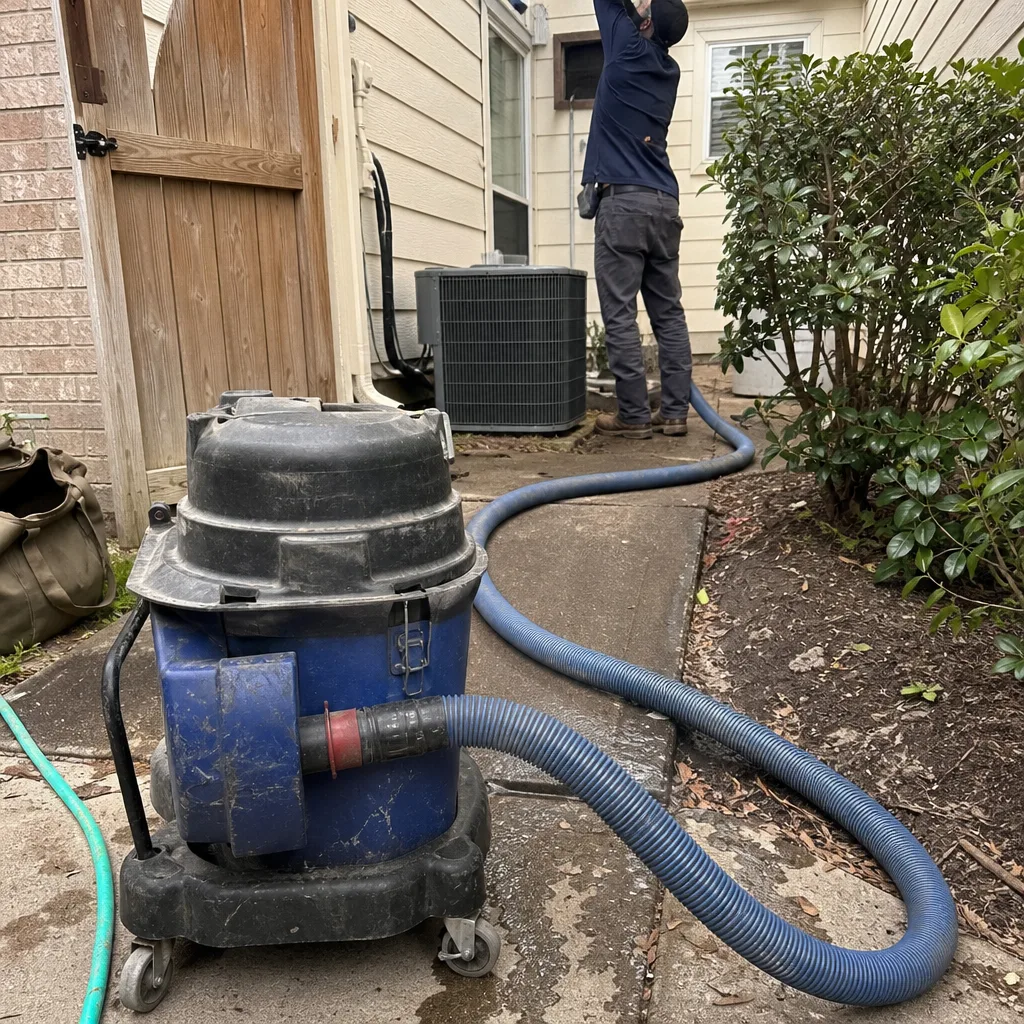 Before
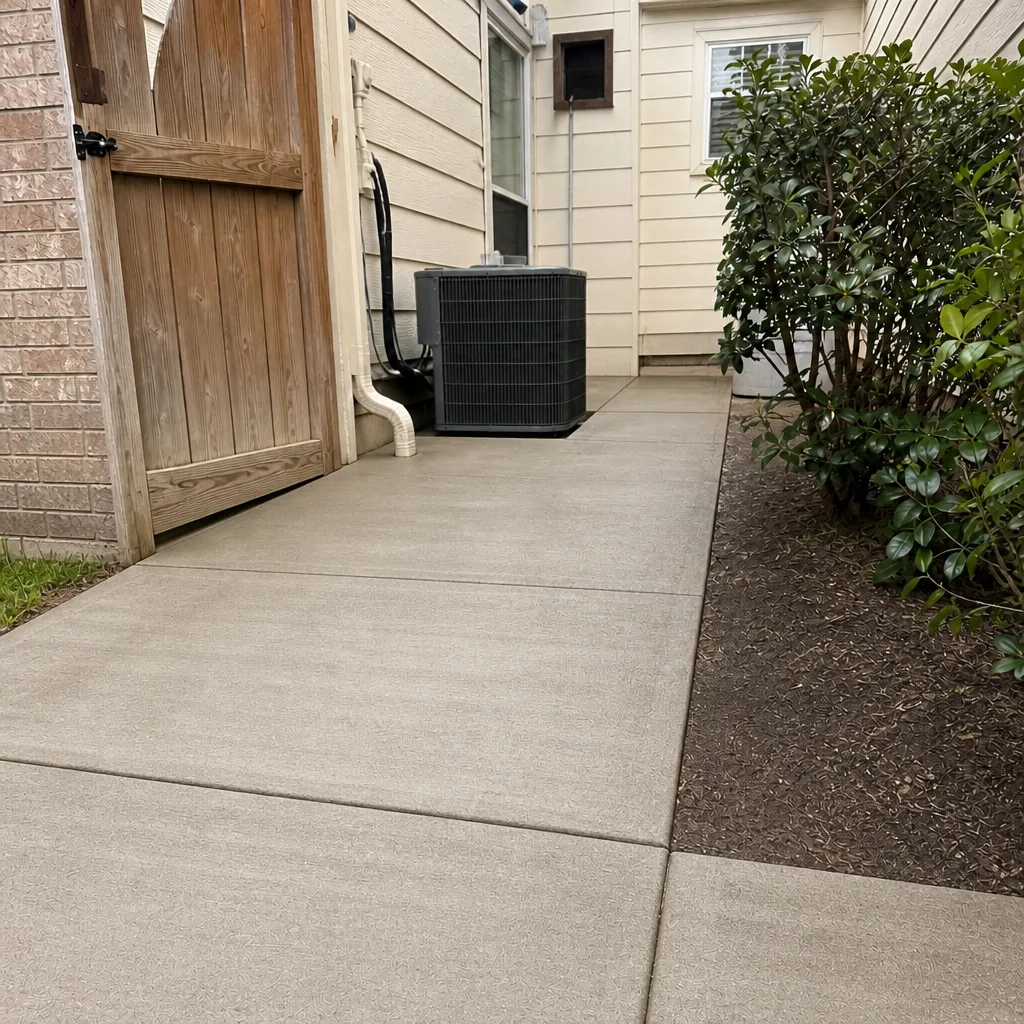 After
When to Call a Professional
Call a professional in any of these situations. Airflow has dropped noticeably in one or more rooms and you can’t trace it to a filter or a closed damper. You smell a musty or dusty odor from the supply registers that returns soon after cleaning. You have visible dust accumulation on the grilles within weeks of a cleaning. You see physical damage to accessible flex duct in the attic or crawl. You’re looking at a home purchase in the Conroe area and want the duct system assessed before closing. Your dryer is taking two cycles to dry a normal load, which points to a clogged dryer vent and a real fire risk rather than a minor annoyance. In each case, the right first step is an inspection that separates cleaning from repair and tells you clearly what needs a permit and what doesn’t. Duct Cleaning Conroe offers free estimates in Conroe. Call (844) 761-5350. We answer 24/7. Fast dispatch from 7am to 7pm, Sunday through Friday.
Frequently Asked Questions
No. Air duct cleaning is maintenance activity and does not require a permit in Conroe. A permit question arises only when the work modifies the duct system itself through repair, replacement, or re-routing. If your job is cleaning only, you can schedule it without any permitting step. Call (844) 761-5350 for an exact quote. Estimates are free.
Cleaning removes debris from inside an existing duct system without altering it. Repair replaces or modifies physical components of the duct system, which is mechanical work and may trigger a permit and inspection. The distinction matters because the two services carry different license requirements and different permit obligations in Texas. When in doubt, ask the contractor to state which category your job falls into before work begins.
Yes, ask whether a permit was required and whether one was pulled. If the work involved a physical alteration to the duct system, most Texas cities treat that as mechanical work, and unpermitted mechanical work can create problems at resale or on an insurance claim. The City of Conroe building department can tell you the permit history on your address. If nothing was pulled and the work was more than cleaning, ask how the contractor plans to document it. Call (844) 761-5350 if you need a second opinion on what was done.
Call the City of Conroe building department, give them the property address, and ask for the mechanical permit history. You’ll learn whether a permit was pulled, who pulled it, and whether the final inspection passed and the permit closed. Any permitted mechanical job has a paper trail. If the work clearly happened but no permit exists, the permit history will show a gap. Call (844) 761-5350 for an exact quote. Estimates are free.
Duct leakage testing measures how much conditioned air escapes the duct system before it reaches the rooms. It’s a calibrated duct blaster measurement, not a visual inspection. In Texas, testing is required when the adopted energy code applies and a mechanical permit has been pulled on duct system work, and the results are turned in with the inspection. For a small like-for-like repair, testing is usually not triggered. For a trunk replacement or a whole-house retrofit, expect it. Call (844) 761-5350 to talk through your scope. Estimates are free.
Texas requires an Air Conditioning and Refrigeration Contractor license for anyone contracting to perform HVAC installation or repair, including duct system work that is part of the HVAC system. Cleaning is not, by itself, HVAC installation or repair. A dedicated duct cleaning specialist can clean ducts without that license. Any repair that alters the duct system should be handled by a licensed contractor who pulls the permit if one applies. Call (844) 761-5350 for an exact quote. Estimates are free.
The Bottom Line
Two ideas to take from this. Cleaning is maintenance and doesn’t require a permit. Repair, replacement, and any physical alteration of the duct system is mechanical work that may require a permit in Conroe, and the licensed contractor pulling the permit is responsible for meeting the adopted IECC leakage requirements if the scope triggers them. If you’re buying or selling in Conroe, pull the mechanical permit history on the address; a gap in the record is the thing to solve before closing. Whether you need cleaning, duct repair, or a dryer vent cleaning to reduce the fire risk in your home, the right first step is an inspection that tells you which category each item falls into. Our technicians have up to 14 years of experience and work with Rotobrush contact-cleaning equipment, Nikro HEPA vacuums, and Abatement Technologies negative-air machines, and we apply Guardsman-level surface protection during service.
Call (844) 761-5350 for a free estimate. We answer 24/7. Fast dispatch from 7am to 7pm, Sunday through Friday.
Written by the team at Duct Cleaning Conroe.