
Last updated November 15, 2026
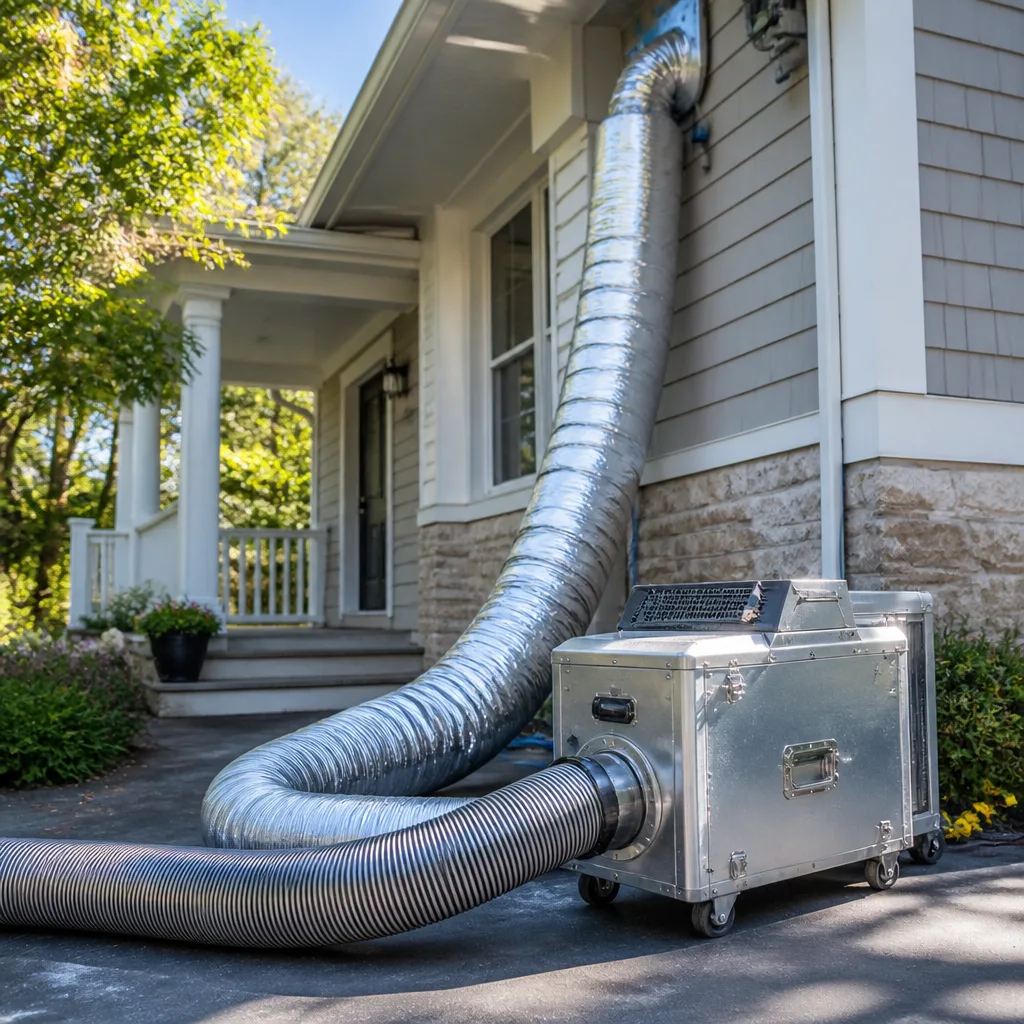 Whole-home duct cleaning
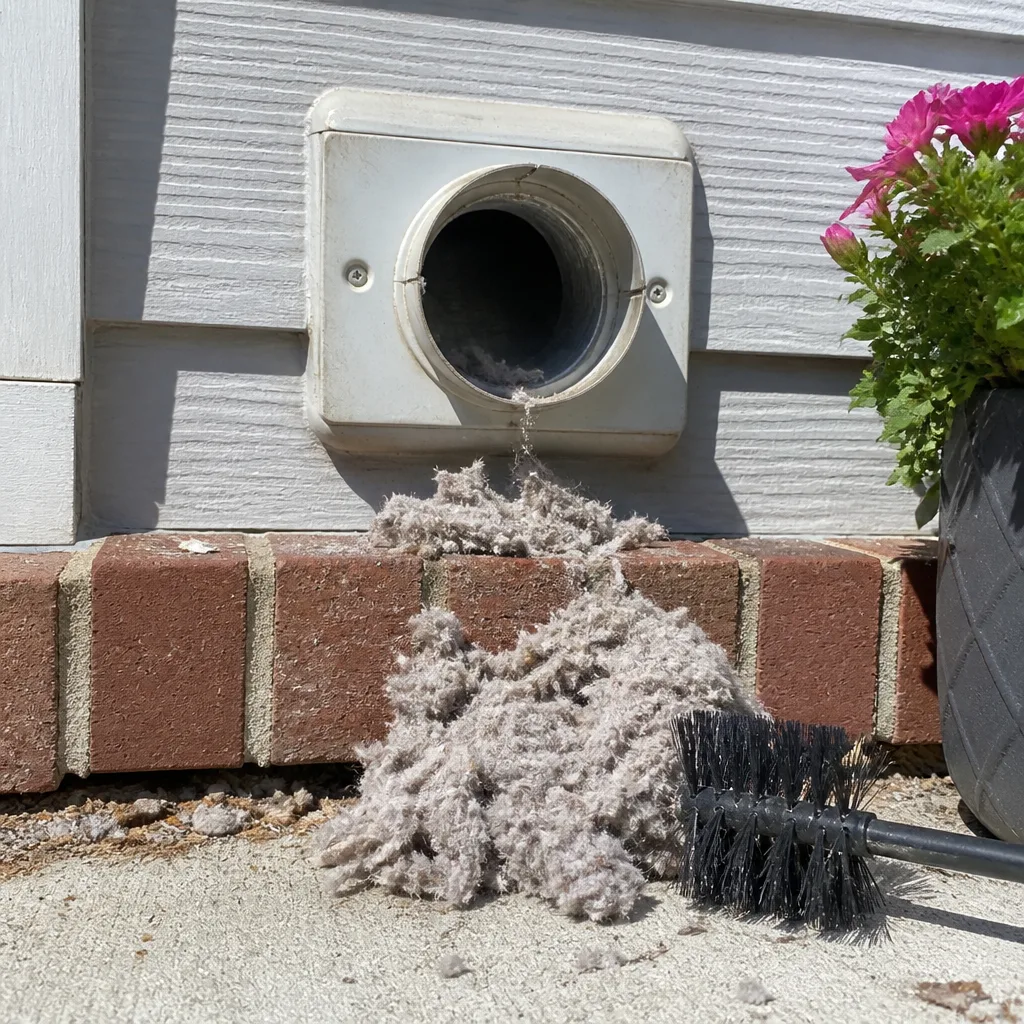 Dryer vent cleaning
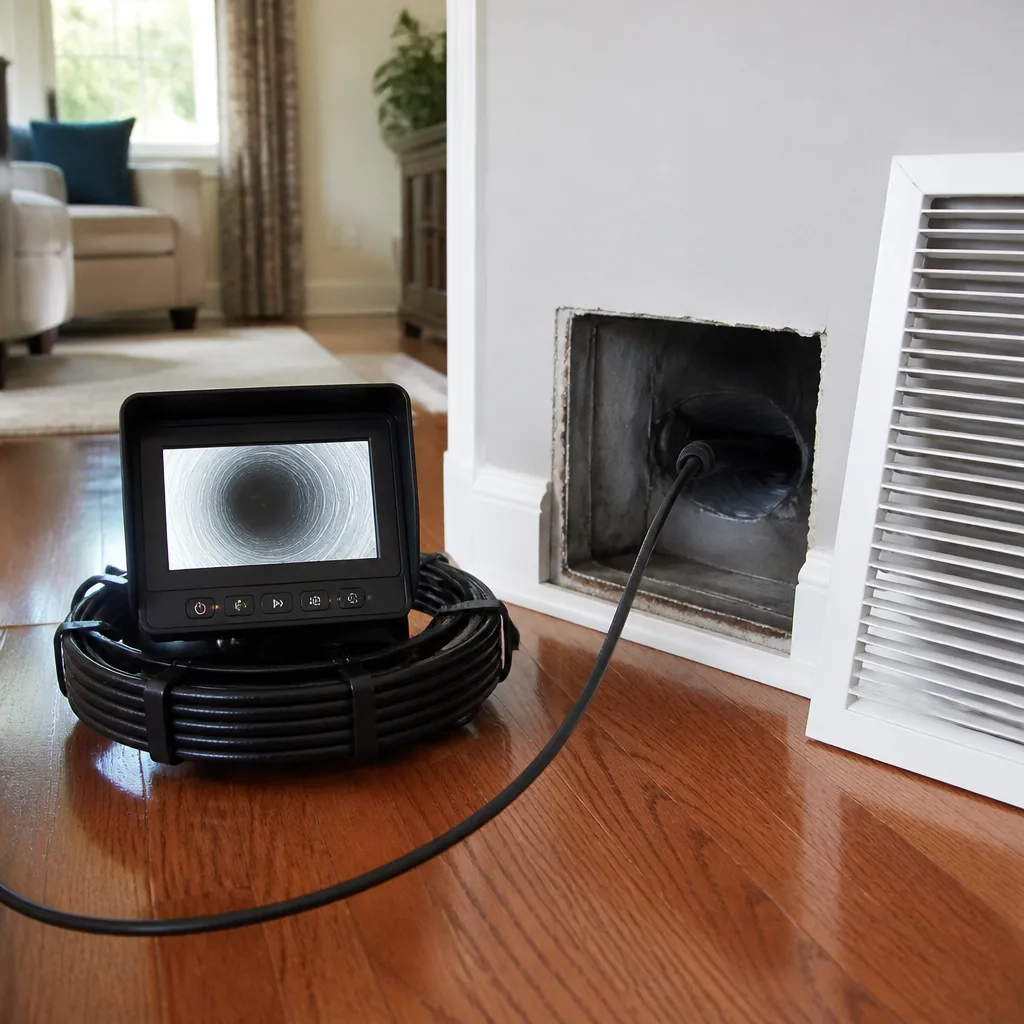 Camera inspection
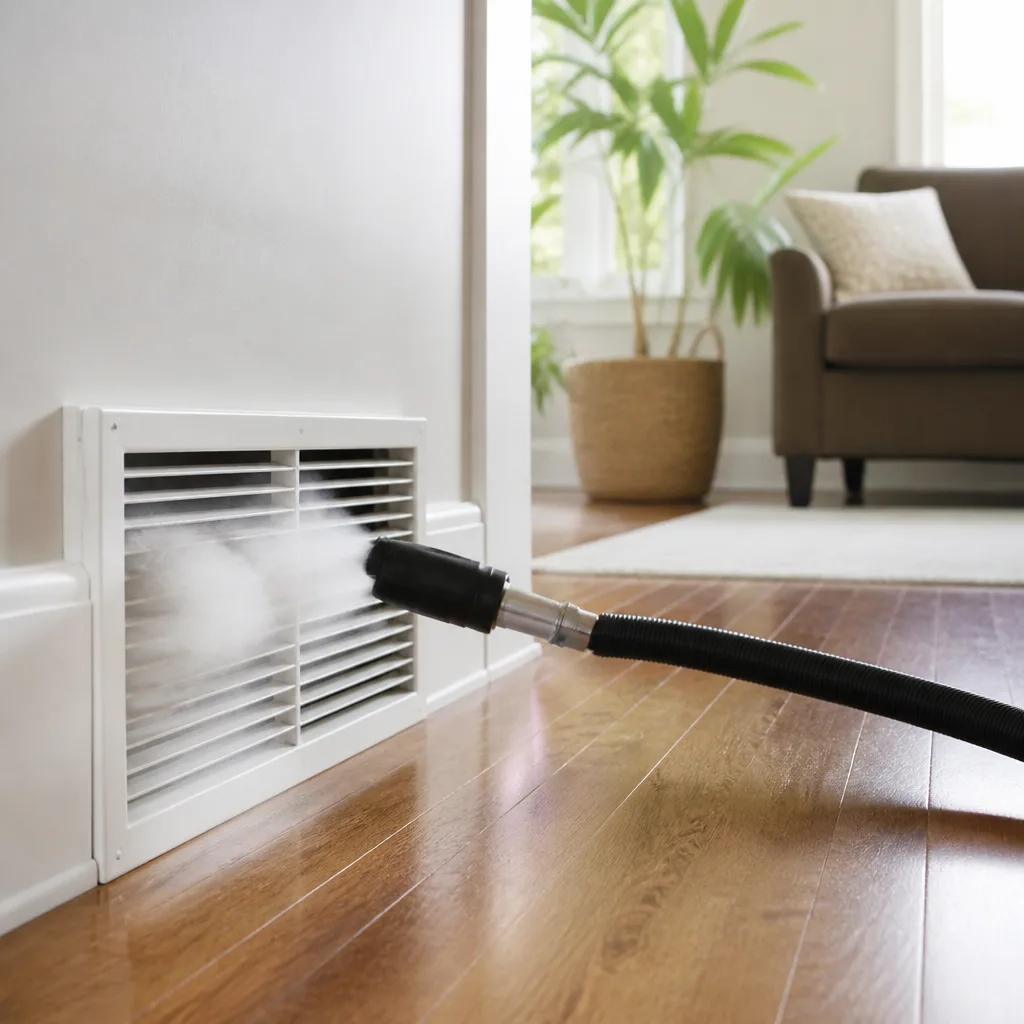 Sanitizing & deodorizing
Whole-system duct and dryer vent check with before-and-after photos - you see exactly what came out of your vents
That "$99 whole-house special" is a bait ad - the real number appears once they are in your hallway, or the "clean" is a shop-vac at the register. We photograph the inside of your ducts before and after instead.
How to Hire an Air Duct Cleaning Contractor in Conroe: A Step-by-Step Guide
There’s no state license required specifically for duct cleaning in Texas. That single fact explains most of what goes wrong when homeowners hire someone to clean their ducts. The person at your door may have exactly as much official credentialing as the person who doesn’t. A van, a hose, and a business card are the whole barrier to entry. What separates a serious duct specialist from a quick pass with a shop vac isn’t paperwork, it’s the equipment they bring, the questions they can answer, and whether they’ll put the scope of work in writing. This guide walks you through hiring a contractor in Conroe, from the first phone call to the 48-hour follow-up.
Quick Answer
To hire an air duct cleaning contractor in Conroe, screen for three things: the actual equipment brand and type they’ll use, a written scope that lists every component they’ll clean, and a price that’s quoted per system rather than per vent. Ask what negative air machine they deploy and what HEPA vacuum they run. A company that can name its equipment and explain why it chose it is usually telling you the truth about how the work gets done. Get the scope in writing before anyone arrives.
Styles & brands we work with
- Whole-home duct cleaning
- Dryer vent cleaning
- Camera inspection
- Sanitizing & deodorizing
Table of Contents
- Why Duct Cleaning Has Almost No Barrier to Entry
- The Equipment Questions to Ask Before Booking
- What NADCA Membership Tells You (and What It Doesn’t)
- Red Flags Specific to the Conroe Market
- How to Structure the Job Scope in Writing
- Post-Job Verification: What to Check Within 48 Hours
- Common Mistakes to Avoid
Why Duct Cleaning Has Almost No Barrier to Entry
Texas does not issue a license specifically for duct cleaning. HVAC contracting is regulated, and electrical and plumbing work is regulated, but the act of vacuuming and agitating the inside of a duct system sits in a regulatory gap. Anyone with a vehicle and a machine can hang a shingle. That’s not a knock on every unlicensed operator, but it does mean the credential check you’d use for an electrician or a plumber isn’t available here. You have to screen on other signals.
What fills the gap is a combination of industry membership, equipment transparency, and a willingness to document the work. A contractor who can speak fluently about CFM ratings, HEPA filtration, and negative-air containment is signaling that they’ve invested in the trade. A contractor who deflects those questions is signaling something else.
The reason this matters more in Conroe than in a lot of markets is the housing mix. Conroe has a large share of homes on slab foundations with flexible duct runs in the attic, plus older properties where the ductwork has been patched over decades. A generalist HVAC company treats duct cleaning as an add-on to a service call. A duct specialist treats it as the entire discipline and owns the equipment to match. When you’re hiring in Conroe, you want the specialist.
What “no license required” actually means for you
It means you can’t rely on a licensing database to vet a contractor. Instead, rely on:
- Equipment brand names you can look up independently.
- A written scope itemizing each component to be cleaned.
- Before-and-after photos of your own system, not stock images.
- A price quoted per system, agreed before work starts.
- A company willing to say no to work it doesn’t do (mold remediation, HVAC repair, restoration) rather than stretch into it.
If you want to compare this against what a full-system job should include, our air duct cleaning page covers the process end to end.
The Equipment Questions to Ask Before Booking
This is the heart of the guide. Ask these questions on the phone, before you book. A serious contractor answers them without hesitation, and the answers tell you whether the equipment matches the price.
1. What negative air machine will you use, and what’s its CFM rating?
The negative air machine is the vacuum pulling air out of your system through a HEPA filter while a technician works the ducts from the inside. It keeps the debris from redistributing into your home. Acceptable brands include Abatement Technologies and Nikro, both used in remediation and abatement work. Ask specifically what CFM rating the machine is. A machine that’s undersized for the duct volume will lose containment as soon as contact cleaning starts agitating dust.
2. Do you use a contact cleaning tool, or just blow air through the ducts?
Blow-and-go operations use compressed air to knock debris loose inside the duct, then rely on the vacuum to catch it downstream. Contact cleaning physically agitates the duct walls with a rotating brush or whip attached to a flexible rod. Rotobrush is the system most specialists use for this. The difference matters because years of dust, hair, and skin cells bond to the interior surface of flexible duct. Air pressure alone won’t lift them. Contact cleaning does.
3. Is the vacuum truck-mounted or portable?
Both can do the job, but they behave differently on site. Truck-mounted units pull high volume and keep the equipment noise and exhaust outside. Portable units, like a Nikro setup, are common in residential work because they can be positioned close to the system and paired with HEPA filtration. Ask which the company uses and why, then listen for a real answer rather than a memorized line.
4. How do you protect the interior of my home?
Contact cleaning loosens debris. Some of it ends up on floors, drop cloths, and door frames even with containment. Guardsman-level surface protection (drop cloths on floors, corner guards, plastic over furnishings near the work area) is the protocol. Ask what they’ll cover and what they’ll move.
5. Are you trained on the indoor air quality components in my system?
If your home has a Honeywell or Aprilaire filter media cabinet, humidifier, or UV component, ask whether the technician knows how to service around it. Ducts and IAQ equipment are one ecosystem. Cleaning the ducts without understanding the filtration cabinet above them is a partial job.
6. Do you inspect before you quote?
A real quote for a system we can’t see yet is guesswork. A camera inspection of the main trunks and a visual check of accessible duct runs should happen before a firm scope is written. Ask whether that inspection is included or costs extra, and how much.
What NADCA Membership Tells You (and What It Doesn’t)
NADCA is the National Air Duct Cleaners Association. Membership signals that a company has agreed to a code of ethics, keeps up with assessment, cleaning, and restoration standards, and operates as a duct specialist rather than a generalist adding a service line. That’s meaningful. But membership is a floor, not a ceiling. It’s not a license, and it doesn’t verify that every technician on the job has been trained to the same standard.
Here’s what to do with the NADCA signal in practice:
- Confirm the company is a current member, not a lapsed one.
- Ask whether the technicians doing the work hold ASD (Air Systems Cleaning Specialist) certification, not just the company.
- Ask whether the company follows ACR, the association’s assessment, cleaning, and restoration standard, on residential jobs.
- Read reviews for process language, not just stars. Reviews that mention specific equipment, before-and-after photos, or written scopes are more useful than reviews that just say “great job.”
A company that can discuss ACR and ASD is likely to run a disciplined operation. A company that says “we’re NADCA certified” and changes the subject is telling you it has the sticker, not the practice.
Red Flags Specific to the Conroe Market
Conroe’s rapid growth brought in a lot of new duct cleaning operators, some legitimate and some not. These are the warning signs we’ve seen homeowners describe most often. None are absolute proof of a bad actor, but each one is a reason to keep asking questions.
A “whole house for $99” price
Whole-system cleaning with professional equipment involves multiple hours of labor, a negative air machine, and a technician trained to run the contact cleaning tool inside the duct. At $99, the math doesn’t work. What usually happens at that price is a partial pass with a shop vac, followed by upsells once the technician is in the attic. The final invoice is the real price, and it’s much higher than the coupon. If you want an honest number, ask for a whole-system range before booking and compare it against what other Conroe companies quote for the same scope.
Upsell pressure on mold treatment before any inspection
Mold treatment is a specialized service with a specific testing protocol. A contractor who offers it as a same-visit add-on before seeing the ducts is selling fear. If a technician claims mold after a walk-through without a lab sample or a camera photo, get a second opinion.
Refusal to show equipment
You should be able to see the negative air machine and the contact cleaning tool before work starts. A company that won’t show you what it’s deploying is a company you should not hire.
No written scope
Verbal promises account for nothing once the technician is in the truck. Ask for a written estimate that lists every component to be cleaned. If the scope arrives after the deposit is paid, that’s a flag.
A phone number that rings to a different brand
Lead-generation aggregators often pose as local duct cleaning companies in Conroe. If the person who answers can’t answer a basic equipment question and instead asks for your info to “have someone call you back,” you’re talking to a broker, not a technician.
Vague duct repair language
Many systems in Conroe have duct joints that have started to separate, crimped runs, or flexible duct sections compressed beyond their intended length. If a cleaning company says it “can’t fix that” and only cleans, you may end up paying for a clean system that immediately leaks conditioned air into the attic. A contractor that handles repair as part of the scope (we repair what we find) is telling you the truth about the system’s condition.
How to Structure the Job Scope in Writing
The written scope is where the hiring decision is actually made. A well-written scope protects you from scope creep, gives you a way to check the work afterward, and forces the contractor to be specific. Ask for each of the following in writing before booking.
- Every component included. Supply and return trunks, all branch runs, register boots, and the air handler cabinet (when accessible) should be named. Vague scopes like “all ducts cleaned” leave room for the contractor to skip inaccessible branches.
- Every component excluded. Some systems have duct runs that are simply inaccessible, or share a chase with other utilities. The scope should name what won’t be cleaned and why.
- Equipment to be used. Negative air machine brand, CFM rating, and HEPA vacuum. Contact cleaning tool brand.
- Before-and-after documentation. Photos of the inside of your ducts, taken at the same locations before and after cleaning. Ask for the photos to be delivered electronically.
- Camera inspection cost. If the inspection isn’t included, find out what it costs on its own and whether it’s credited against the cleaning.
- Repair scope, if any. If the inspection turns up disconnected joints or damaged runs, is repair part of the job or a separate quote? What’s the expected range?
- Price per system, agreed before work starts. Not per vent, not a coupon, not “starting at.” One flat price for the entire system, agreed in advance.
- Workmanship guarantee. What’s covered if you find a problem within 48 hours.
- Dryer vent line item. If the contractor handles dryer vent cleaning, ask whether it’s included or a separate line, and what’s inspected inside the wall or under the floor.
- Payment terms. When payment is due, and whether a deposit is required.
A contractor who pushes back on any of these isn’t worth booking. The best ones offer most of this without being asked.
Post-Job Verification: What to Check Within 48 Hours
Verification is the step almost nobody tells you to do. It’s also the step that separates a real clean from a partial one. Within 48 hours of the work, go through this checklist.
- Look at the register boots. Every register in your home should be free of loose debris. If any register still has dust on the grille slats, ask why.
- Open a return grille and look inside. The inside of the return trunk should look visibly clean, not just less dusty than before.
- Check airflow at each register. Every register should have noticeably stronger airflow than before. If a register is weaker than before, a duct may have been disconnected during the job.
- Smell the air. A musty or construction smell right after cleaning is normal and should fade within a day. A smell that gets stronger is not.
- Compare your photos to theirs. The contractor should send before-and-after photos of the same duct sections. Look for the same angle, same lighting, same location in each pair.
- Look for debris outside the work area. Some dust on drop cloths is normal. Dust on furniture or bedding suggests containment wasn’t tight.
- Check the dryer vent, if serviced. Confirm the outside vent flap opens fully when the dryer is running and that no lint puff issues remain.
- Note any new noise. Whistling at a register or a new rattle at the air handler can indicate a joint that didn’t get reconnected properly.
If any of these checks fail, call the company within the 48-hour window. A contractor who stands behind the workbooks an appointment to look. One who doesn’t is telling you the job was always a one-time transaction.
Common Mistakes to Avoid
- Hiring on price alone. The lowest quote in Conroe is almost always a teaser for a scope that changes once the technician is on site. Ask what’s included in writing before comparing prices.
- Booking over the phone without an inspection. A firm price quoted before anyone has seen your system is either padded or fabricated. Get an inspection first.
- Skipping the dryer vent. A dryer vent clogged with lint is one of the leading causes of residential fires. Cleaning the ducts without checking the dryer vent leaves the fire risk in place.
- Accepting mold treatment without a test. If a contractor flags mold during a walk-through without a lab sample or camera photo, get a second opinion before spending money on remediation.
- Not asking about duct repair. Many Conroe homes have duct joints that need repair. A cleaning that leaves disconnected runs in place costs you more in energy bills over the following year than a repair would have.
- Ignoring IAQ equipment. If your system has a Honeywell or Aprilaire media cabinet, clean the cabinet and filter slot as part of the job. Ask before booking.
- Paying in full before photos arrive. Hold the final payment until before-and-after photos are delivered. It’s a reasonable ask and any serious contractor will accept it.
See the difference
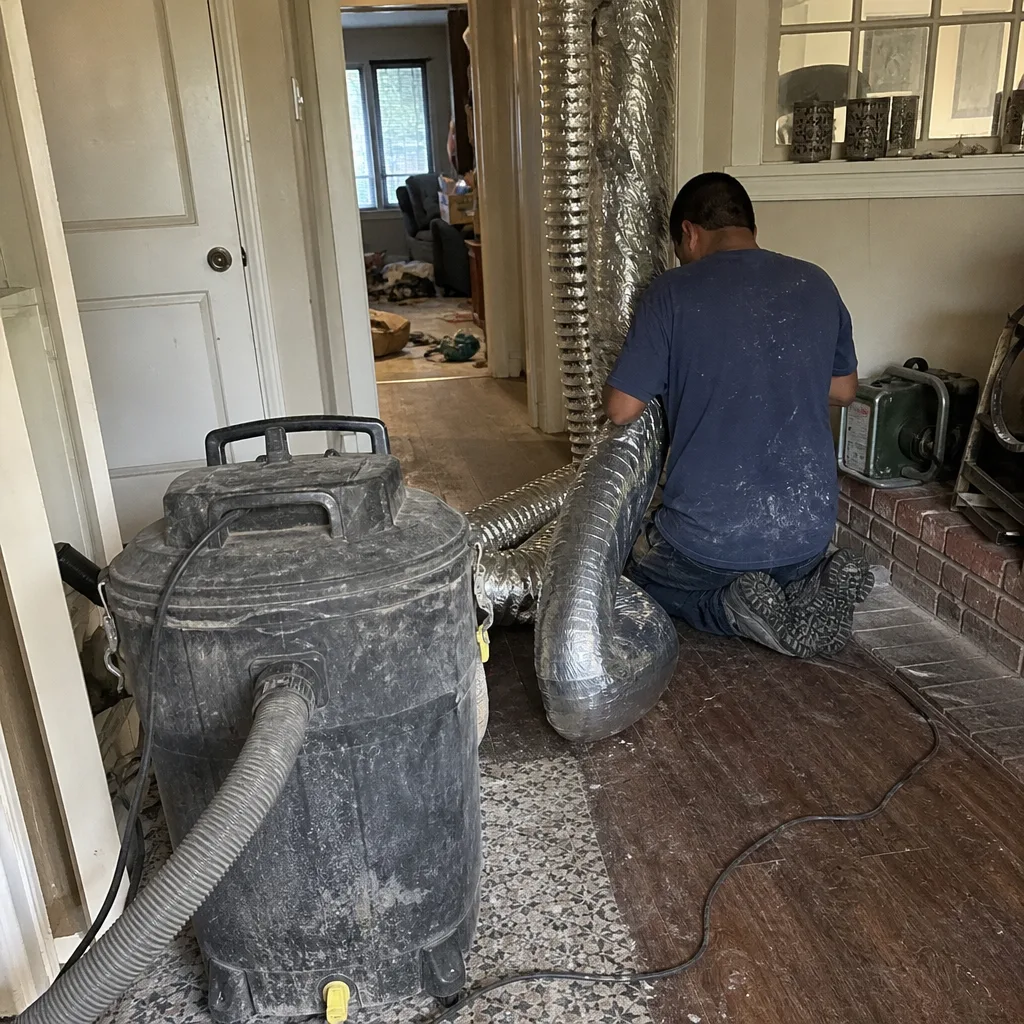 Before
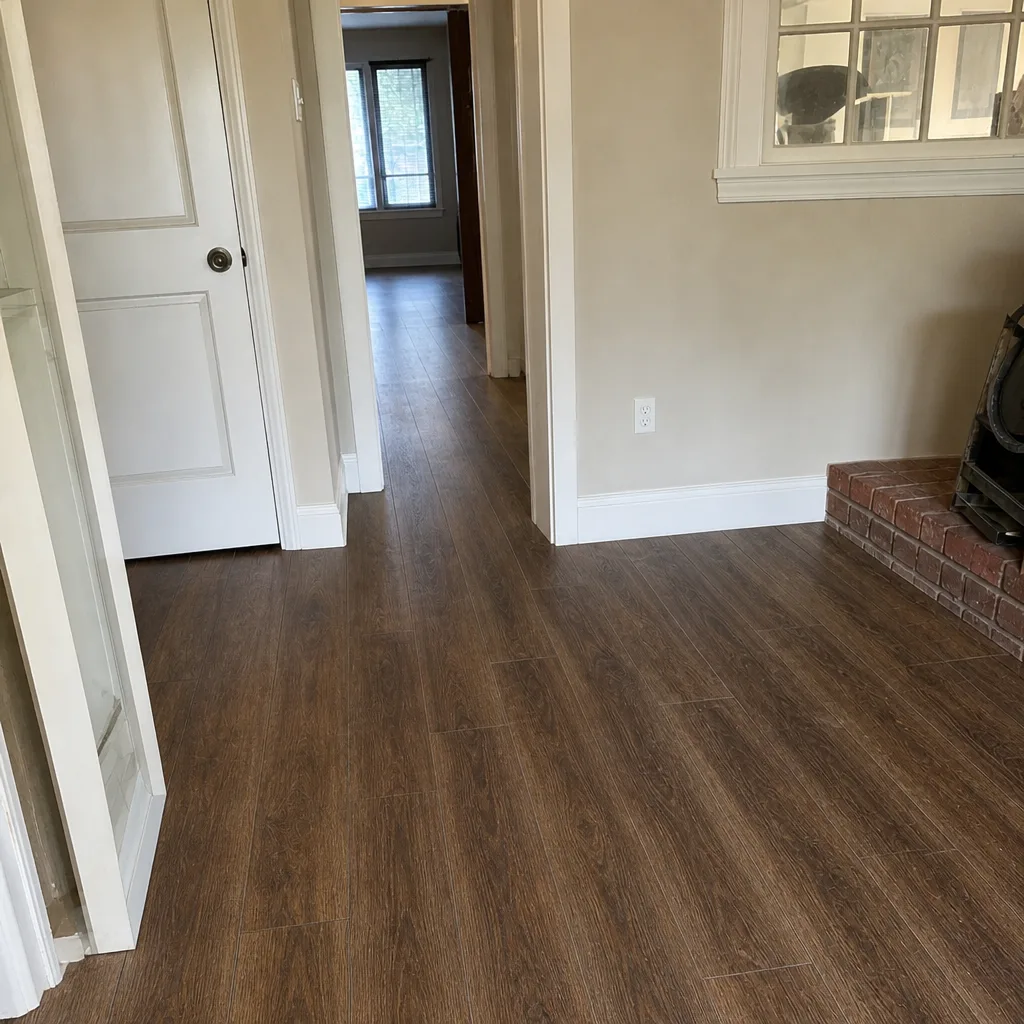 After
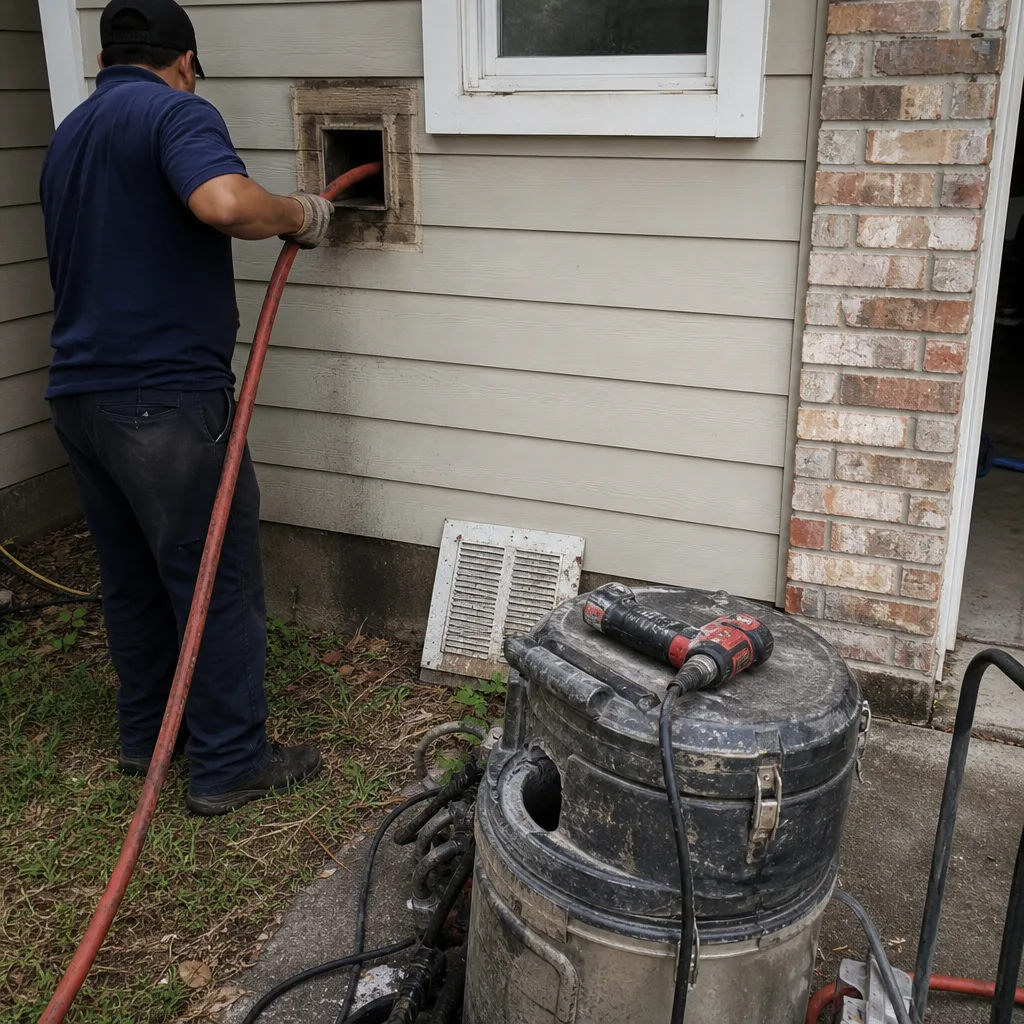 Before
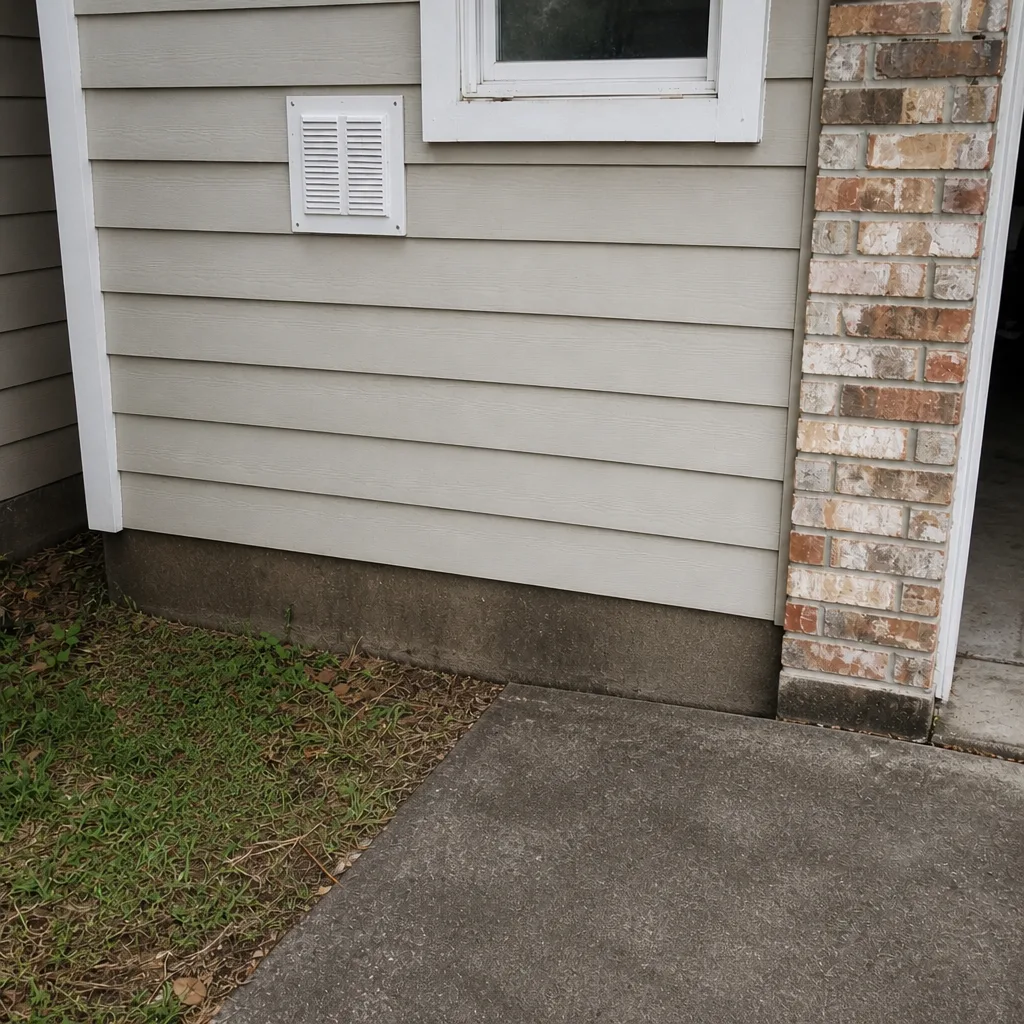 After
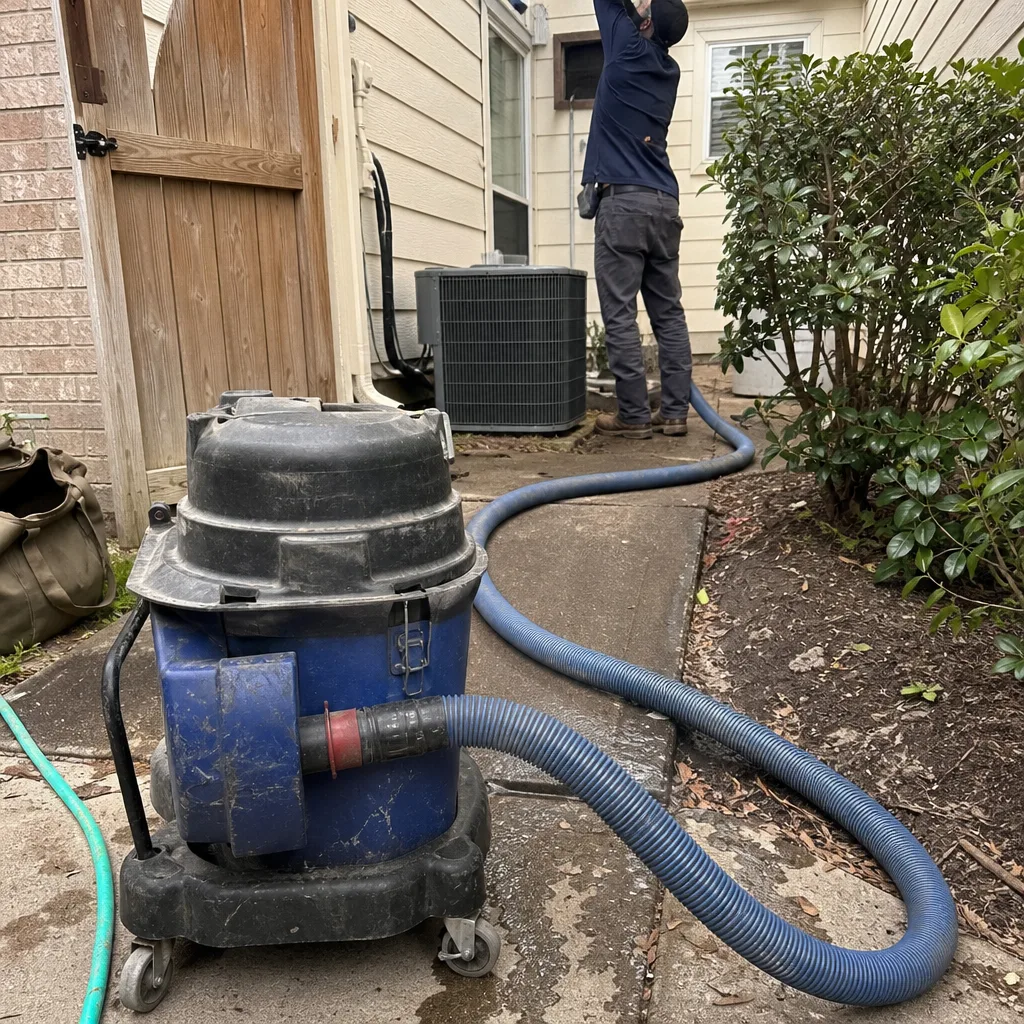 Before
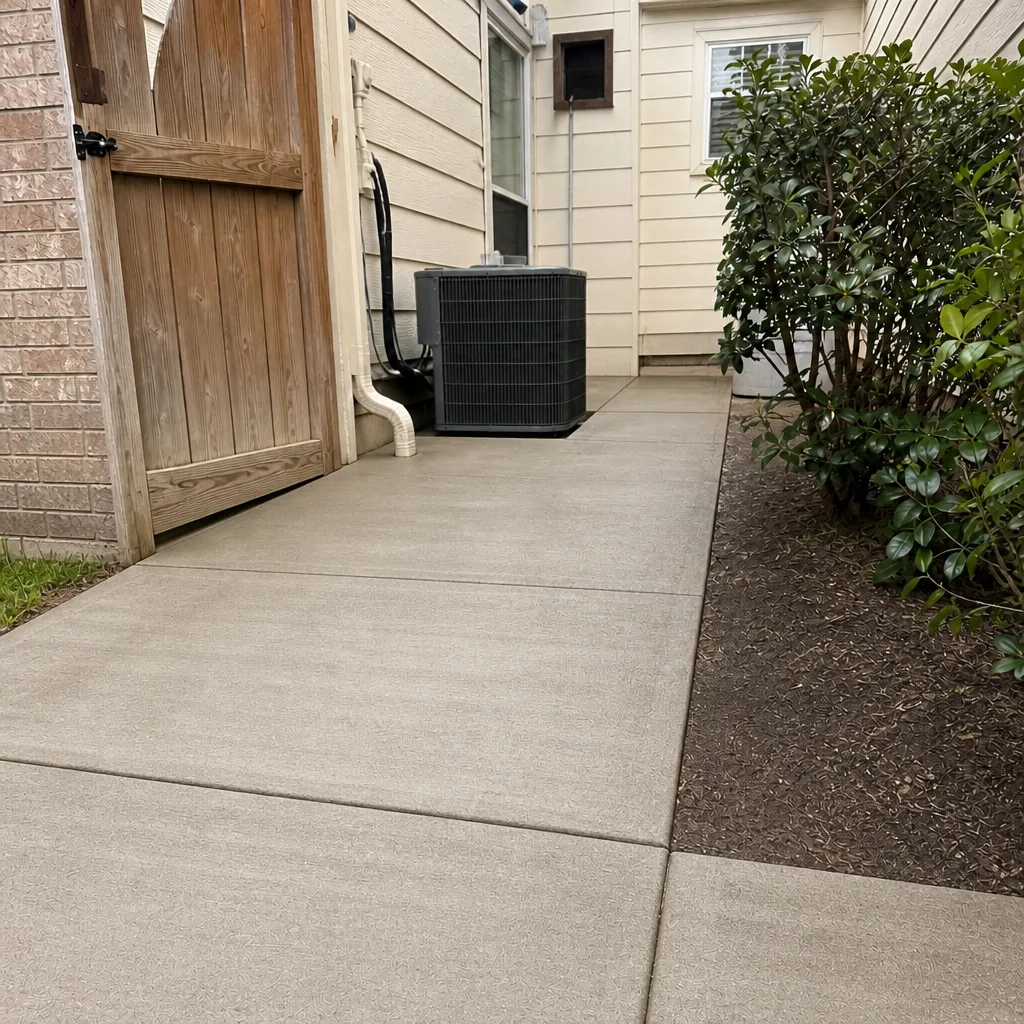 After
When to Call a Professional
Some duct problems are just dust. Others aren’t. Call a professional if you notice any of the following: a musty smell in the house that persists between cleanings, visible dust on ceiling registers within a week of cleaning them, uneven airflow between rooms, a dryer that takes noticeably longer to dry a load, or high energy bills with no other explanation. Get a professional on site if you’ve moved into a Conroe home built more than 15 years ago and don’t know the ductwork’s condition, or if you’ve had a renovation that generated construction dust. Duct Cleaning Conroe offers free estimates in Conroe. Call (844) 761-5350. We answer 24/7. Fast dispatch from 7am to 7pm, Sunday through Friday.
Frequently Asked Questions
Whole-system air duct cleaning in Conroe typically runs several hundred to well over a thousand dollars, depending on the size of the system, the number of branches, accessibility, and whether repairs are part of the job. We quote per system, not per vent, and we get the price in writing before work starts. Call (844) 761-5350 for an exact quote. Estimates are free.
Because the low number covers a different job. A $99 coupon usually buys a partial pass with a shop vac or compressed air, followed by upsells once the technician is on site. A full-system clean with an Abatement Technologies or Nikro negative air machine and a contact cleaning tool takes hours and costs what it takes. Ask what’s included before you compare prices. Call (844) 761-5350 for a written scope you can compare against any other quote.
Ask for before-and-after photos of the same duct sections, taken at the same angles. Then check for yourself: open a return grille, look inside the trunk, and test airflow at every register. We send our own photos electronically, and we stand behind the work with a satisfaction guarantee. Call (844) 761-5350 to book.
For most Conroe homes, every three to five years is reasonable. Homes with pets, recent renovation dust, or occupants with allergies may want it more often. The more useful trigger is condition: if you can see debris on the inside of a return grille or smell mustiness between cleanings, it’s time. Call (844) 761-5350 and we’ll tell you honestly whether you need it now.
No. You can be home, and you’ll see the equipment and the process while it’s running. Contact cleaning with a negative air machine keeps the environment contained. Ask the technician to walk you through the setup when they arrive. Call (844) 761-5350 to schedule.
Texas doesn’t issue a duct cleaning license specifically. That’s why equipment transparency, written scope, and industry membership matter more than a credential number. Ask what negative air machine they use, what HEPA filtration they run, and whether they’re a current NADCA member. A contractor who can answer all three clearly is telling you they’re a specialist. Call (844) 761-5350 to talk to a technician.
The Bottom Line
Hiring an air duct cleaning contractor in Conroe comes down to whether the company can prove its work. The state doesn’t check for you. Ask three things on the phone: what negative air machine they deploy (name and CFM), whether they use contact cleaning equipment like Rotobrush, and how the scope will be structured in writing. Compare quotes on what’s included, not just the number. Then verify the job within 48 hours using the return grille and register airflow checks above. If the work holds up, you’ve hired well. If it doesn’t, you now know exactly what to ask the next company. That’s the whole game. For an honest scope and a fair price, visit Duct Cleaning Conroe or call us at (844) 761-5350. We answer 24/7. Fast dispatch from 7am to 7pm, Sunday through Friday. Estimates are free, and the written price you get is the price you pay. If your home is in the Conroe area and you want a contractor who shows their equipment and documents their work, we’re ready to talk.
Written by the team at Duct Cleaning Conroe.