
Last updated November 15, 2026
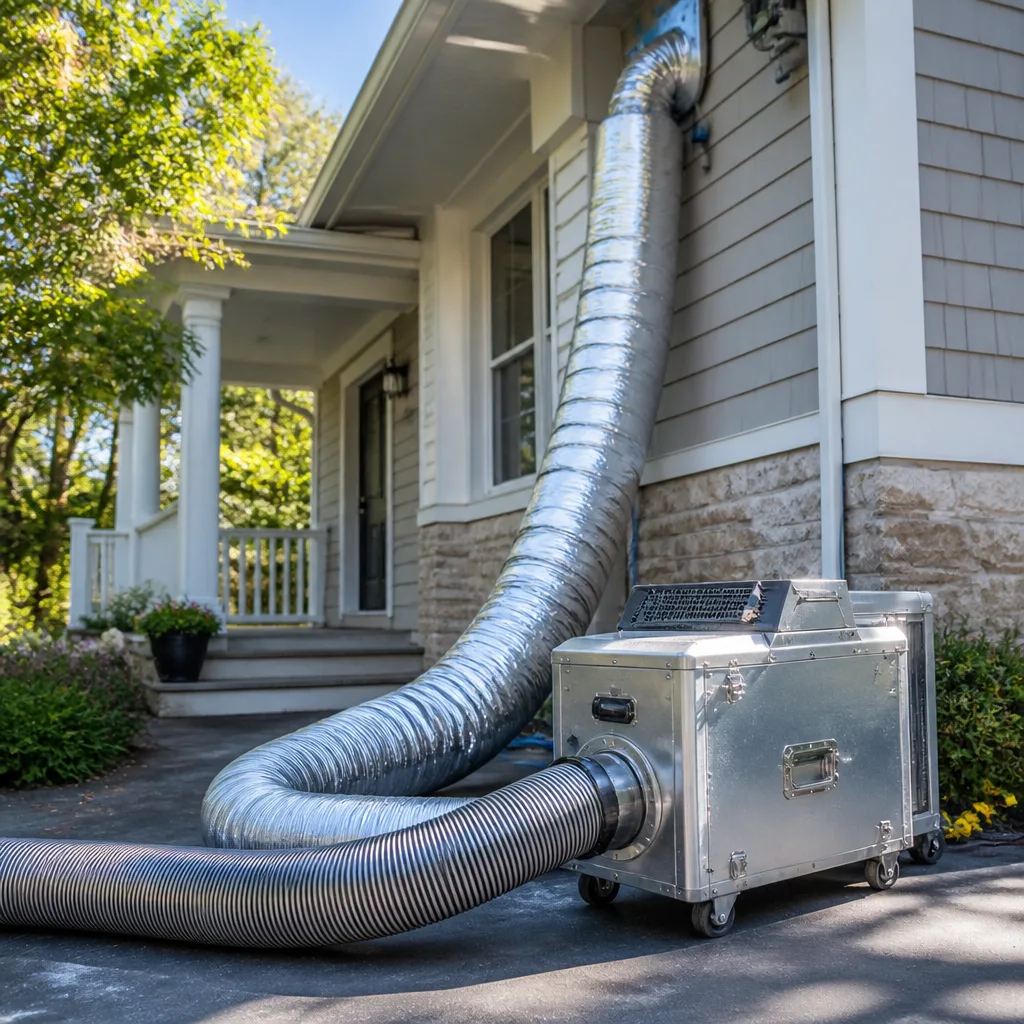 Whole-home duct cleaning
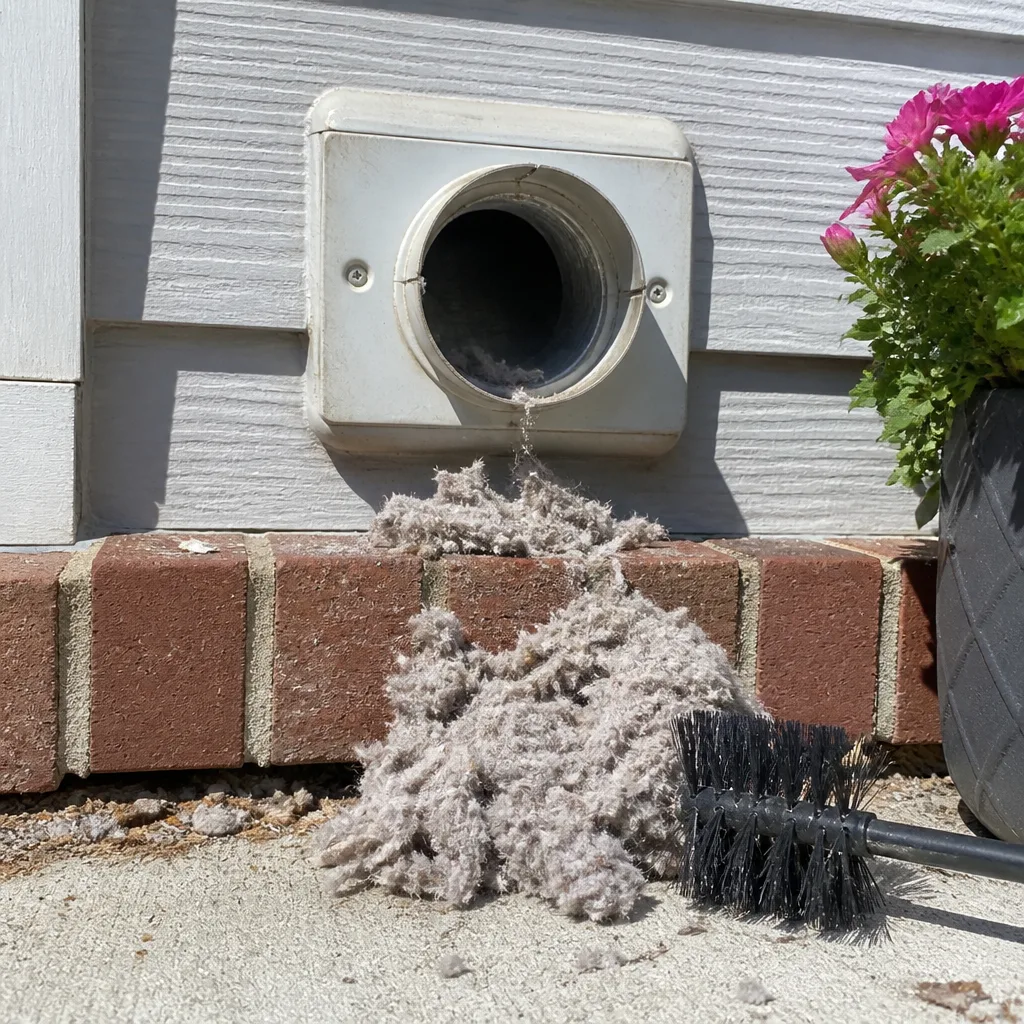 Dryer vent cleaning
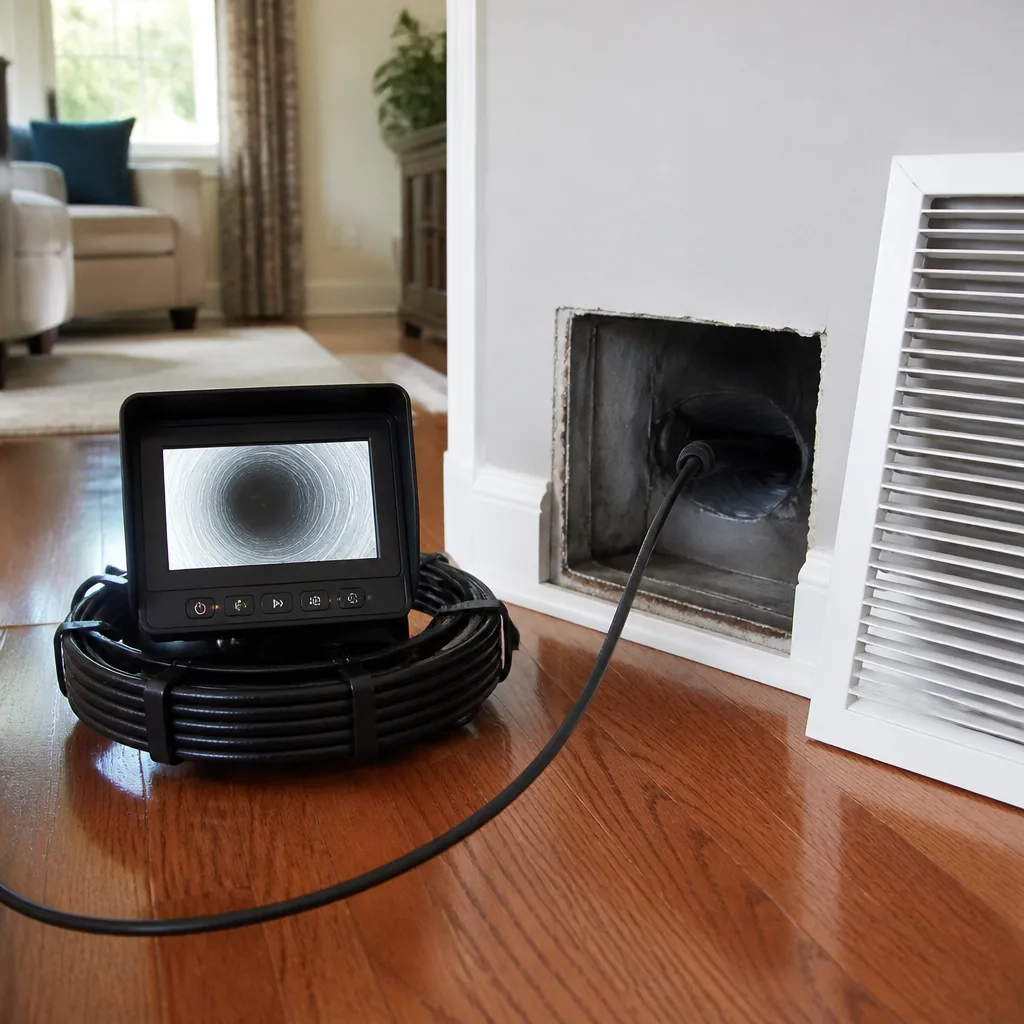 Camera inspection
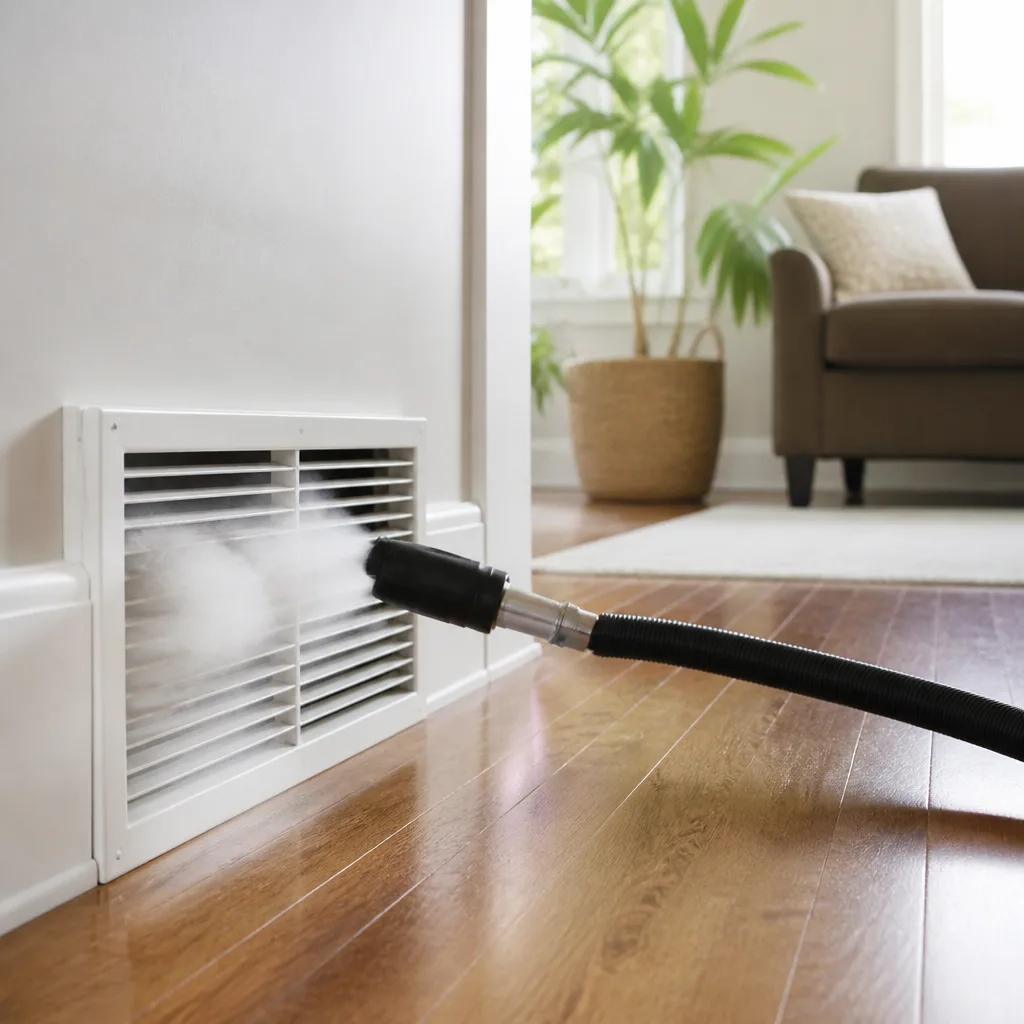 Sanitizing & deodorizing
Whole-system duct and dryer vent check with before-and-after photos - you see exactly what came out of your vents
That "$99 whole-house special" is a bait ad - the real number appears once they are in your hallway, or the "clean" is a shop-vac at the register. We photograph the inside of your ducts before and after instead.
Air Duct Cleaning Warning Signs: A Conroe Homeowner’s Reference Guide
Here’s what surprises most homeowners we talk to in Conroe: the warning signs of a dirty or failing duct system are almost never the dramatic ones people expect. You won’t see a cloud of dust pour from a vent. What you’ll notice, if you notice anything, is a faint mustiness that shows up every spring, a bedroom that never quite cools like the rest of the house, or a filter that seems to clog faster than it used to. These signals are quiet, gradual, and easy to explain away. That’s exactly why they matter. By the time dust is visibly caked on a register face, contamination has usually been building inside the ductwork for months or longer. This guide walks through what to actually watch for in a Conroe home, why each sign matters, and how to tell a duct problem from something else entirely.
Quick Answer
The main warning signs of dirty or damaged air ducts in a Conroe home are recurring musty odors (especially when the system starts up), uneven airflow between rooms, dust that returns to surfaces faster than it should, allergy symptoms that worsen indoors, a filter that clogs sooner than expected, and visible dust at the registers. In older Conroe homes with flex duct, sagging or disconnected joints can cut airflow long before any dust is visible. Any two of these signs together is a reasonable cue to have the system inspected.
Styles & brands we work with
- Whole-home duct cleaning
- Dryer vent cleaning
- Camera inspection
- Sanitizing & deodorizing
Table of Contents
- The Five Sensory Signals You Can Detect Without Tools
- Musty Smell? Distinguishing Duct Odors From Drain Pan and Coil Odors
- What a High Filter Consumption Rate Tells You About Duct Leakage
- Renovation and Construction: Why New Builds in Conroe See Contamination Spikes
- Warning Signs Specific to Older Conroe Homes With Flex Duct
- Airflow Asymmetry: When One Room Never Keeps Up
- Reading Allergy Symptom Timing
- Signs Homeowners Miss Until the System Is Compromised
The Five Sensory Signals You Can Detect Without Tools
You don’t need a moisture meter or a particle counter to catch most duct problems early. What you need is attention to five things that the average homeowner already notices but dismisses as “just how the house is.” Each of these signals points toward the duct system, and together they tell a coherent story.
- Odor patterns that shift with the season. A smell that only appears when the system first kicks on for cooling season, or that fades after a few minutes of running, is a strong duct-side signal. Odors that persist all day are more likely coming from the air handler itself or a plumbing issue.
- Airflow asymmetry between rooms. If the kitchen vent pushes hard while the back bedroom barely moves a tissue, that’s a distribution problem, not simply “how the house was built.” Duct design plays a role, but so does buildup, and so do loose or crushed flex runs.
- Dust reappearance rate on horizontal surfaces. Every home gets dust. The question is how fast it comes back after you wipe. If a dresser top you clean weekly looks dusty again in two or three days, the dust is likely being delivered through the vents rather than settling from ambient air.
- Allergy symptom timing. Symptoms that track with indoor time rather than outdoor pollen peaks are worth a second look. If you feel worse after a night in a particular bedroom and better after a day at work, pay attention.
- HVAC cycling behavior. A system that short-cycles more than it used to, or that runs noticeably longer to reach the same setpoint, is likely fighting restricted airflow. Restrictions can come from a clogged filter, a failing blower, or a duct system that’s lost its capacity to move air.
In Conroe this list carries a little extra weight. Our cooling season runs long, which means the system runs longer, which means the duct system has more hours to draw in and distribute whatever’s in the airstream. The dust that would stay put in a cooler climate gets circulated here for months on end. That’s not a scare tactic, it’s just how an air handler works: every hour it moves air, some of that air leaves behind what it was carrying on the duct walls.
The most common mistake is treating one of these signs as a fluke. Two signs appearing together, especially over a season or two, is a much stronger cue. If airflow issues are on that list, it’s worth understanding how a full air duct cleaning actually works before you assume a cleaning alone will solve everything.
Musty Smell? Distinguishing Duct Odors From Drain Pan and Coil Odors
Not every musty smell comes from the ducts, and this is where a lot of well-intentioned homeowner effort goes to waste. If you clean the ducts and the smell stays, you’ve spent money on the wrong fix. Three sources all smell vaguely “musty” and each has a different cure, so it’s worth sorting them before you act.
Duct origin
A duct-side odor typically appears when the system first starts pushing air, then fades as the air keeps moving. It tends to be present in every room equally, and it often varies with outdoor humidity and season. Flex duct lining and insulated interior surfaces can hold onto moisture and organic material that supports microbial growth. If the smell intensifies after a stretch of rainy days, that’s a strong duct signal.
Drain pan origin
A slow-draining condensate pan sitting under the indoor coil can grow a film that produces a smell similar to duct mustiness. Drain pan odors are usually concentrated near the air handler and can be intermittent, showing up when the system has been off for a while and then restarting. The fix is draining, cleaning, and correcting the slope of the pan, not duct cleaning.
Coil origin
The evaporator coil itself can develop a biofilm on the fins when it stays wet between cycles. Coil odors are usually strongest right at the air handler and lessen as air travels through the ducts to the far rooms. Coil cleaning is an HVAC service, and a good duct cleaning technician will tell you when a smell is coming from the coil side rather than the ducts. In our experience a lot of “duct” complaints turn out to be coil or drain pan once the system is opened up.
If you’re unsure which of the three you’re dealing with, the practical step is to have someone look. Our technicians use contact cleaning equipment, and part of the job is a proper inspection of the whole air-handler and duct layout before any cleaning begins. The wrong fix is expensive. The right inspection is not.
What a High Filter Consumption Rate Tells You About Duct Leakage
Your filter is the one diagnostic tool every homeowner already has. If you find yourself changing it more often than the manufacturer’s recommendation, that’s a signal worth paying attention to. A higher-than-expected filter load means the return side of the system is drawing in more airborne matter than it should, and in a healthy, sealed duct system it shouldn’t.
Two things drive accelerated filter loading:
- Return-side duct leakage. A gap, loose joint, or disconnected collar on a return run lets the system pull air from unintended places, including wall cavities, attics, and crawl spaces. All of that air carries dust and insulation fibers that then hit the filter directly.
- Bypass air around the filter frame. If the filter doesn’t seat cleanly in its slot, air goes around it and pulls dust past the filter into the air handler and out through the supply ducts. You’ll see dirty edges or a dust line around the filter housing.
Both problems are often found in the same visit as a cleaning. Duct repair is a real service line for a reason: cleaning a duct system without addressing return leaks is like wiping a counter and leaving the window open. The dust returns quickly and the homeowner blames the cleaning. If your filters start loading fast after a duct cleaning, that’s a sign a leak was left unaddressed. We repair what we find.
For homeowners with a whole-home filtration setup or an indoor air quality component like an Aprilaire or Honeywell filtration system, a filter that can’t keep up is also a sign the filtration system is fighting a losing battle against a leak elsewhere. Those systems work best when the ducts around them are sealed and contact-cleaned.
Renovation and Construction: Why New Builds in Conroe See Contamination Spikes
Conroe’s growth has brought a lot of new construction and a lot of renovation, and both put duct systems in the path of debris that would otherwise never enter them. This is one of the most overlooked causes of sudden contamination we see, because homeowners assume a newer home must have clean ducts.
The sequence usually looks like this:
- Drywall is hung and sanded. Fine gypsum dust fills the air.
- Insulation goes in. Fiberglass fibers and paper facings shed into the space.
- Trim and cabinet work generates sawdust and adhesive fumes.
- Floors and paint add their own volatile compounds.
- All of this settles into ductwork that may be open, partially connected, or running during construction.
Any duct opening during construction becomes a collection point. Supply boots and return grilles are often installed before drywall mudding and paint, which means dust settles inside the ducts and stays there long after the last coat dries. In our experience, a home that’s had significant renovation in the past year or a brand-new build that’s just been handed over benefits most from a full-system inspection and cleaning, regardless of how new the ductwork is.
New builds have an added wrinkle. Flex duct installed too quickly can be kinked, sagged, or badly connected at the joints, and those defects hide until you start losing airflow. If you’ve moved into a Conroe new build and the far bedrooms already feel weak, that’s not a design limitation you have to live with. It’s often a compression or connection issue that a proper inspection catches. For anyone in the area who is putting together a maintenance rhythm for a new home, our guide to Conroe duct system basics is a reasonable place to start.
Warning Signs Specific to Older Conroe Homes With Flex Duct
Older homes in and around Conroe frequently use flex duct in the attic or crawl. Flex duct is a solid material when installed correctly, but it has failure modes that a general cleaning won’t catch. If your home’s ductwork runs through hot attic space, these signs deserve particular attention.
Sagging runs
Flex duct is supposed to be supported along its length with a gentle sweep. When it sags, the low point collects both condensation and debris, and airflow drops. Sagging is common in older installs where the original strapping has loosened or been disturbed.
Disconnection at joints
The connection between a flex run and a metal boot, or between two flex sections, can pull apart from attic heat cycling and vibration. A disconnected joint is worse than a dirty duct: it pulls attic air directly into your conditioned space, and that attic air carries insulation fibers and whatever the attic atmosphere holds. This is one of the reasons an attic run can smell noticeably worse than the rest of the system.
Compression
Flex duct loses capacity fast when it’s compressed. A run crushed against framing or folded at a tight turn can lose a large share of its airflow before any dust is visible. The early symptom is a room that “used to cool fine” and now doesn’t. Homeowners often blame the air conditioner when the duct run is the actual problem.
This is where cleaning and repair have to go together. A contact-cleaning system like the Rotobrush we use can restore a duct interior to clean condition, but it can’t fix a sagged or disconnected run. That’s a repair. And repairs are part of the job, not an upsell tacked onto the invoice. The full duct system has to be sound before any cleaning actually improves what reaches your rooms.
Airflow Asymmetry: When One Room Never Keeps Up
The thermostat sits in one part of the house. It doesn’t know the back bedroom is five degrees warmer. Homeowners do. If you’ve been nudging a specific register closed to force more air to another room, that’s an airflow asymmetry symptom, and it usually has one of a few causes.
- Duet buildup at the branch takeoff. Where a supply trunk splits off to a room, the transition is a natural collection point for dust. A partially blocked takeoff starves that room.
- Damper position. Older home duct systems often have manual dampers at the trunk that can drift or have been moved by a previous owner and never reset.
- Flex run defect. As above: sag, disconnect, or crush on the run to that room.
- Undersized or poorly designed run. Occasionally the run is just too small for the room’s load.
Sorting these requires actually looking at the duct layout. In our experience, a surprising share of “hot room” complaints in Conroe turn out to be a duct issue, not an equipment problem. An HVAC technician will confirm the equipment is running correctly; if it is, the duct system is where the story continues.
One thing worth flagging: if the room only gets hot when outdoor temperatures peak, and the rest of the system is stable, the run itself may be fine and the issue could be attic heat gain through an under-insulated duct. That’s a repair or insulation question, and a technician who’s honest about what’s a duct fix and what isn’t will tell you. We’d rather say “that’s not us” than sell a cleaning that won’t help.
Reading Allergy Symptom Timing
Allergy symptoms that track to indoor time rather than outdoor pollen peaks are worth investigating. This is a soft signal, not a diagnosis, and it should be treated that way: as a reason to look, not proof of a problem.
What’s actually useful is the pattern:
- Do symptoms follow a specific room? If you feel worse in one bedroom and better in the living room, that points at a specific duct run or supply point.
- Do symptoms follow system startup? Symptoms that intensify in the first ten minutes after the AC comes on, then ease, point at airborne material being pushed out rather than settled dust.
- Do symptoms ease when you leave the house? A workday of relief and an evening of return is more suggestive than a general day of symptoms.
- Does the pattern shift with the season? A symptom that peaks in summer and fades in winter in Conroe, where outdoor allergens also shift, is muddier evidence. Symptoms that stay flat when outdoor pollen changes are more telling.
None of this replaces a doctor’s evaluation, and we’re not running a health diagnosis. What it does is give you a pattern to bring to an inspection. A technician can compare what you’ve noticed to what the system actually contains. Our equipment includes remediation-grade vacuum and containment (we use Nikro and Abatement Technologies machines), which is a serious upgrade over the shop vac approach some services use, because it captures material rather than just moving it around. Guardsman-level surface protection goes down first so your home’s interior is protected during the work.
Signs Homeowners Miss Until the System Is Compromised
Some warning signs don’t announce themselves at all until the system is clearly underperforming. These are the ones worth knowing because they’re the ones homeowners tend to rationalize for a long time.
- A vent cover that feels warm to the touch. A supply grille that’s noticeably warmer than the air coming from a grille in a well-flowing room usually means the run behind it is struggling.
- A whistle at a register. Whistling at a supply or return often signals leaky or undersized ductwork pulling air through a gap. Filter housings that whistle are also a clue to bypass.
- Condensation on a cold duct run in summer. Sweating on a duct run points at insulation failure. Insulation failure leads to mold growth on the run itself, which then gets distributed with the air.
- Dust trails on ceiling or wall near a vent. A visible trail of dust fanning from a grille tells you the air leaving that vent is carrying particles onto surrounding surfaces.
- Air feels heavier or “thicker.” Homeowners often describe the air as stuffy or having a texture. That’s subjective, but it’s a real perception, and it usually correlates with humidity control and airstream cleanliness.
If you’ve noticed two or more of the signals in this guide, and they’ve been present across a season, you’re past the “wait and see” window. That’s when an inspection is worth the time. If your home uses a whole-home dehumidifier or a filtration system like an Aprilaire unit, the same reasoning applies, because those systems only perform as well as the ducts they serve.
Common Mistakes to Avoid
- Treating a single symptom as proof. A musty smell that came once on a rainy day isn’t a duct problem. A musty smell that came back every rainy week for two seasons probably is. Judge signals over time, not in a moment.
- Assuming a new build has clean ducts. Construction dust settles into ductwork installed before the last paint coat. In Conroe’s active new-build market, this is common. A new home isn’t a clean home.
- Cleaning without repairing. A disconnected joint or a sagging flex run won’t stay clean. Cleaning a compromised duct system just means doing it again in a year. Repair and cleaning belong together.
- Believing a blow-and-go service did the job. Some services push air through and call it a cleaning. Without contact agitation and remediation-grade extraction, debris ends up redistributed rather than removed. Ask what equipment is actually being used.
- Skipping the dryer vent because the dryer still dries. Dryer vents are a fire risk, full stop. A dryer that runs long and gets hot doesn’t always show a warning beyond longer dry times. Treat the vent as a separate safety system, not a duct-cleaning add-on.
- Ignoring a filter that clogs fast. A filter isn’t supposed to work that hard. Faster clogging means leakage or bypass, and both are fixable before they cost you more.
- Setting a thermostat and hoping. If one room is persistently off, the cause is worth diagnosing. Adjusting setpoints treats a symptom and ignores the duct behind it.
See the difference
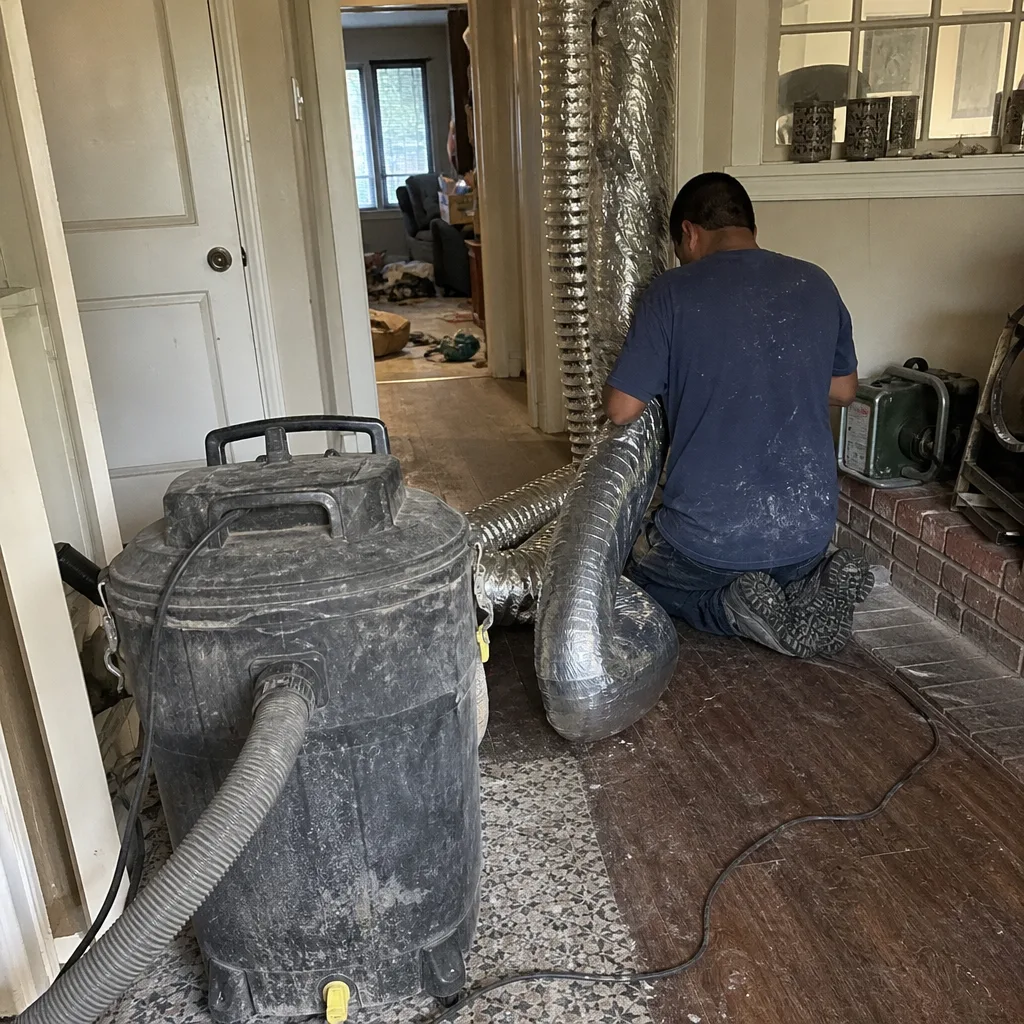 Before
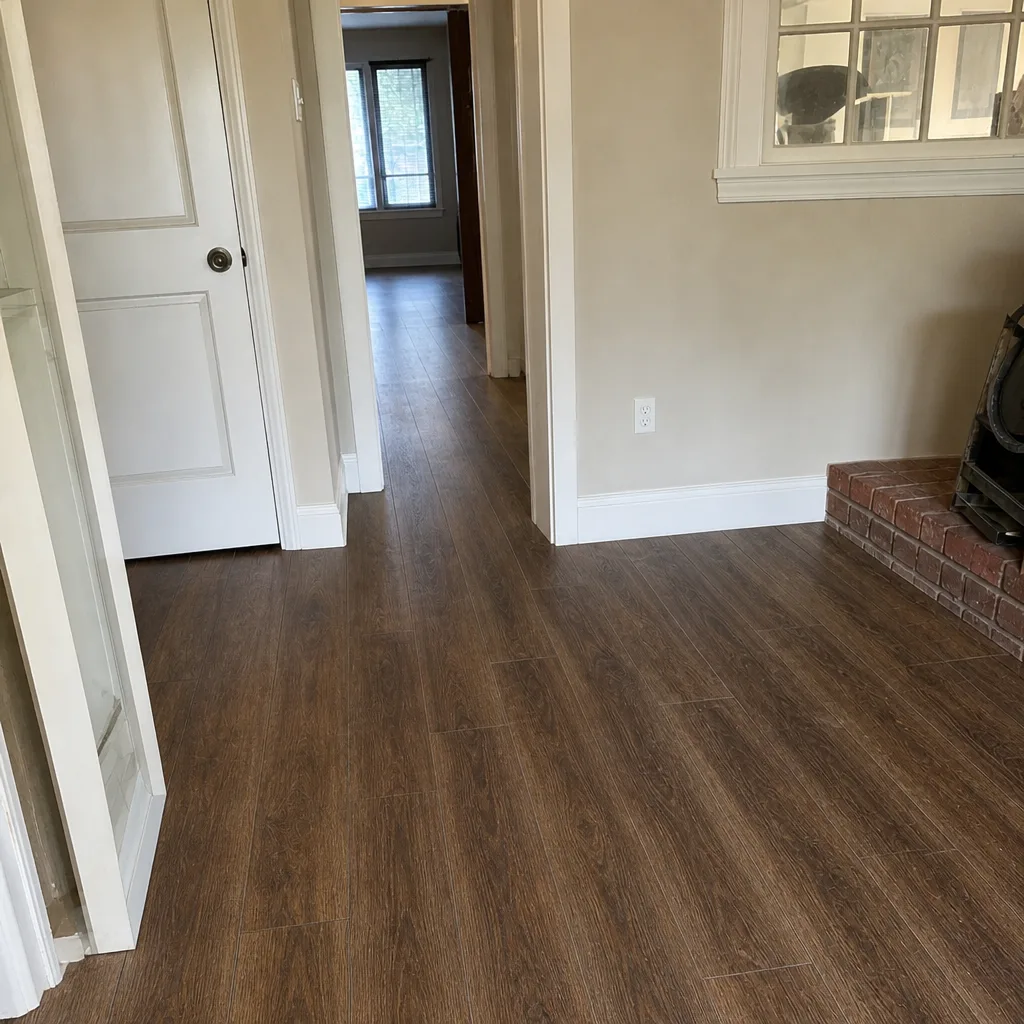 After
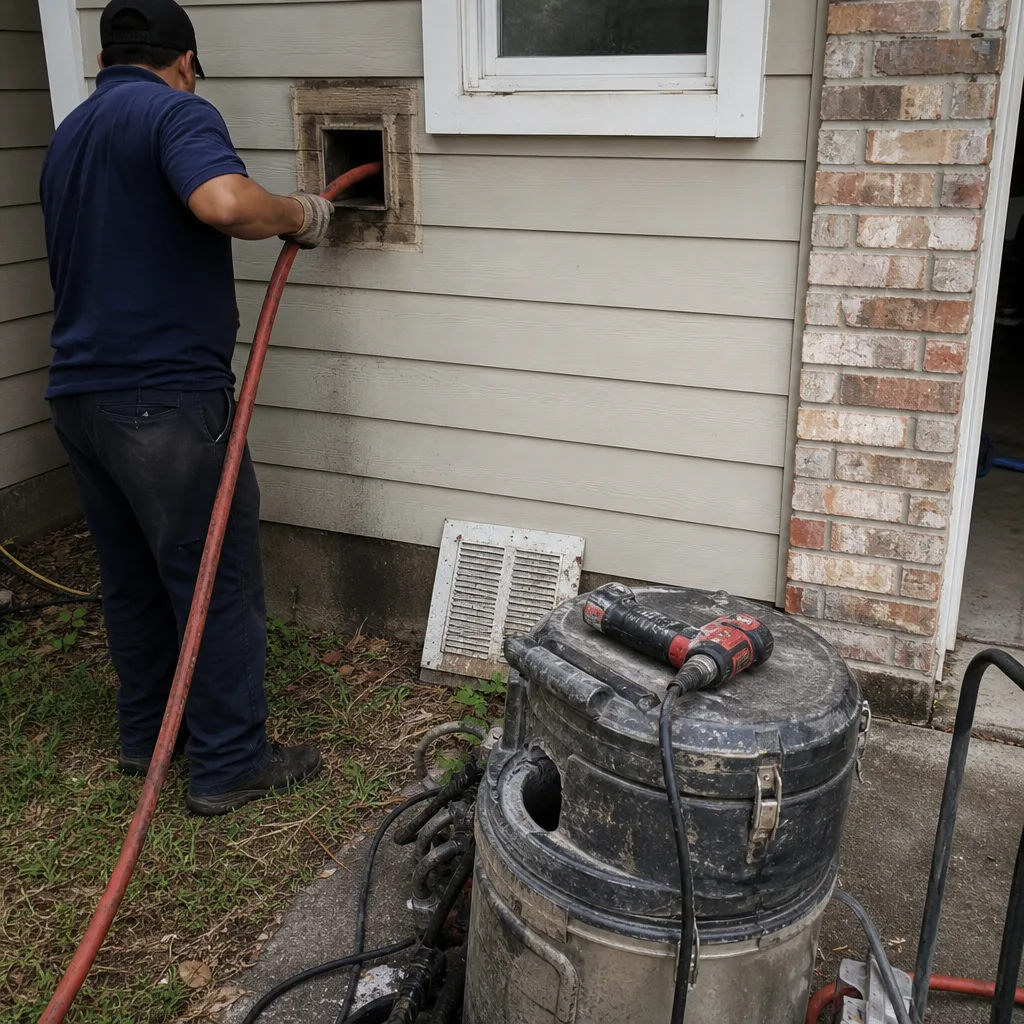 Before
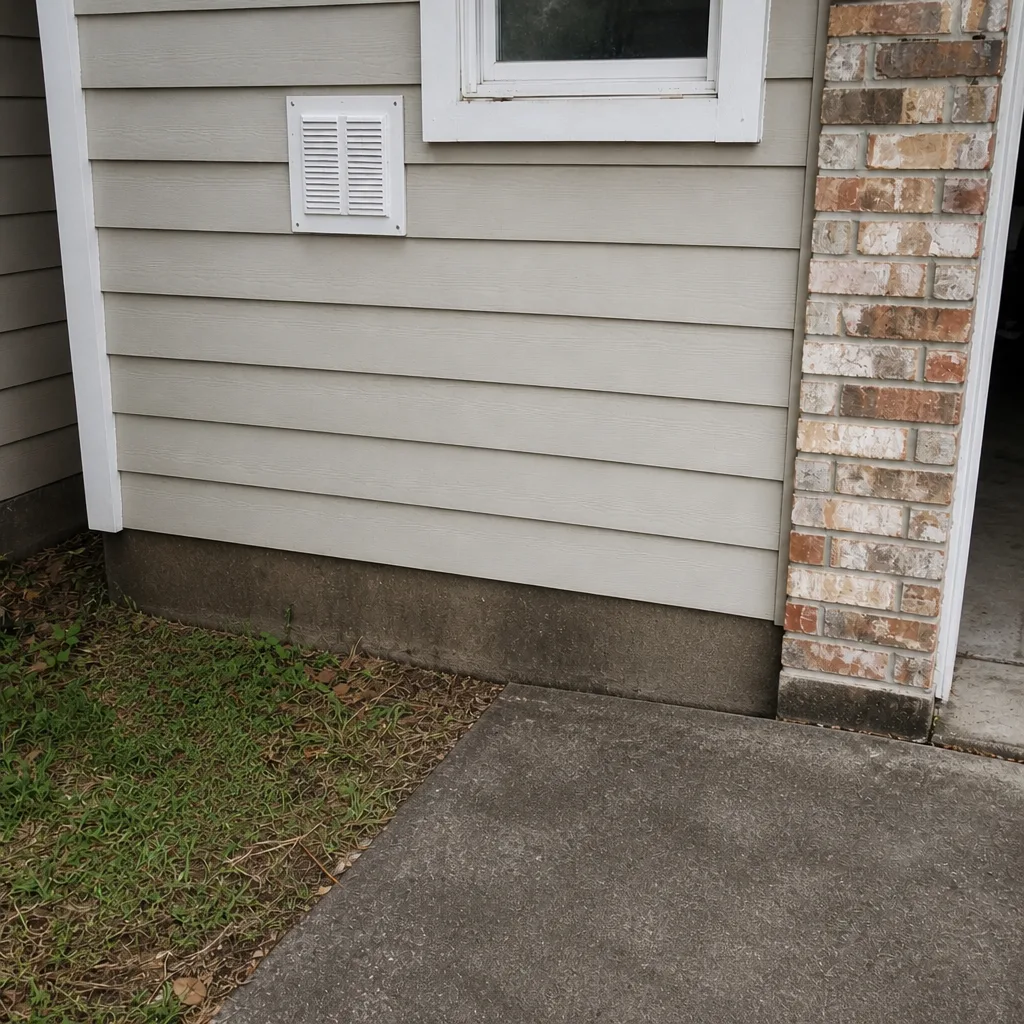 After
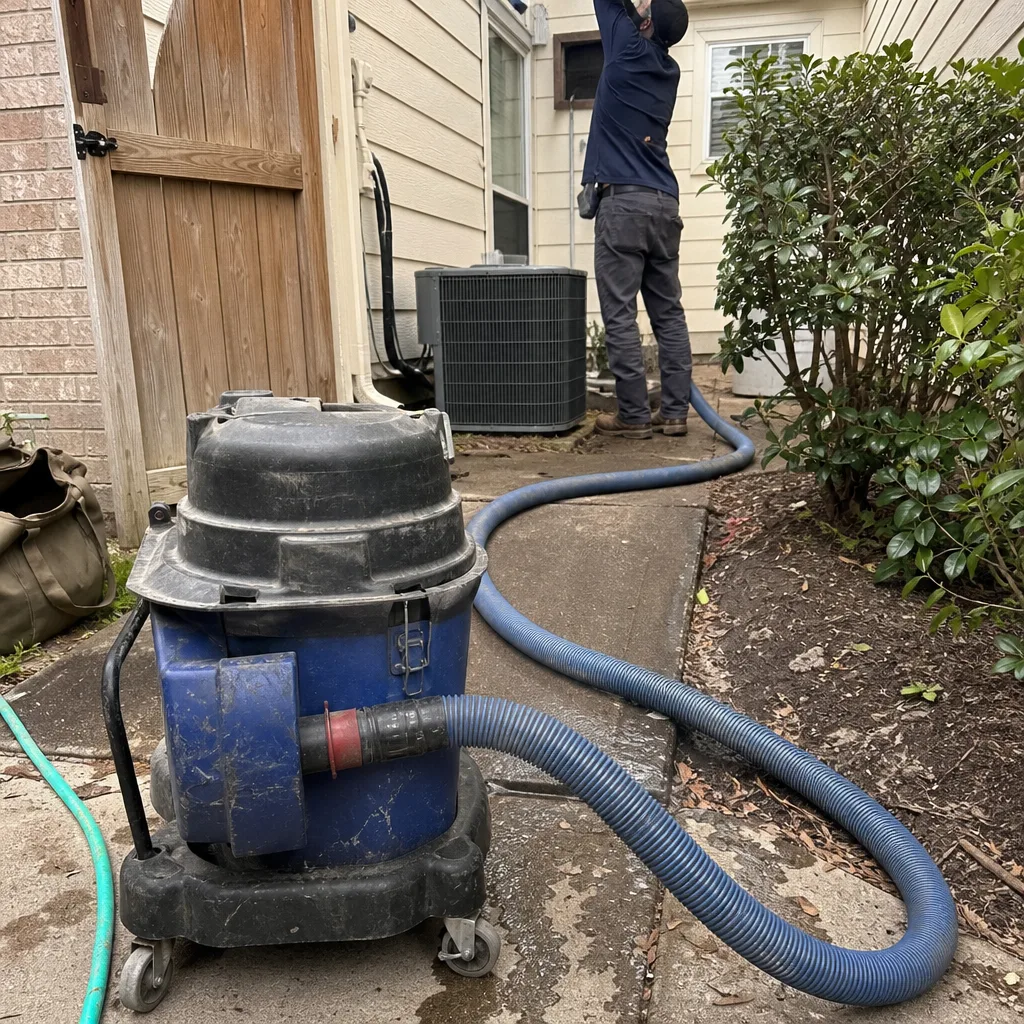 Before
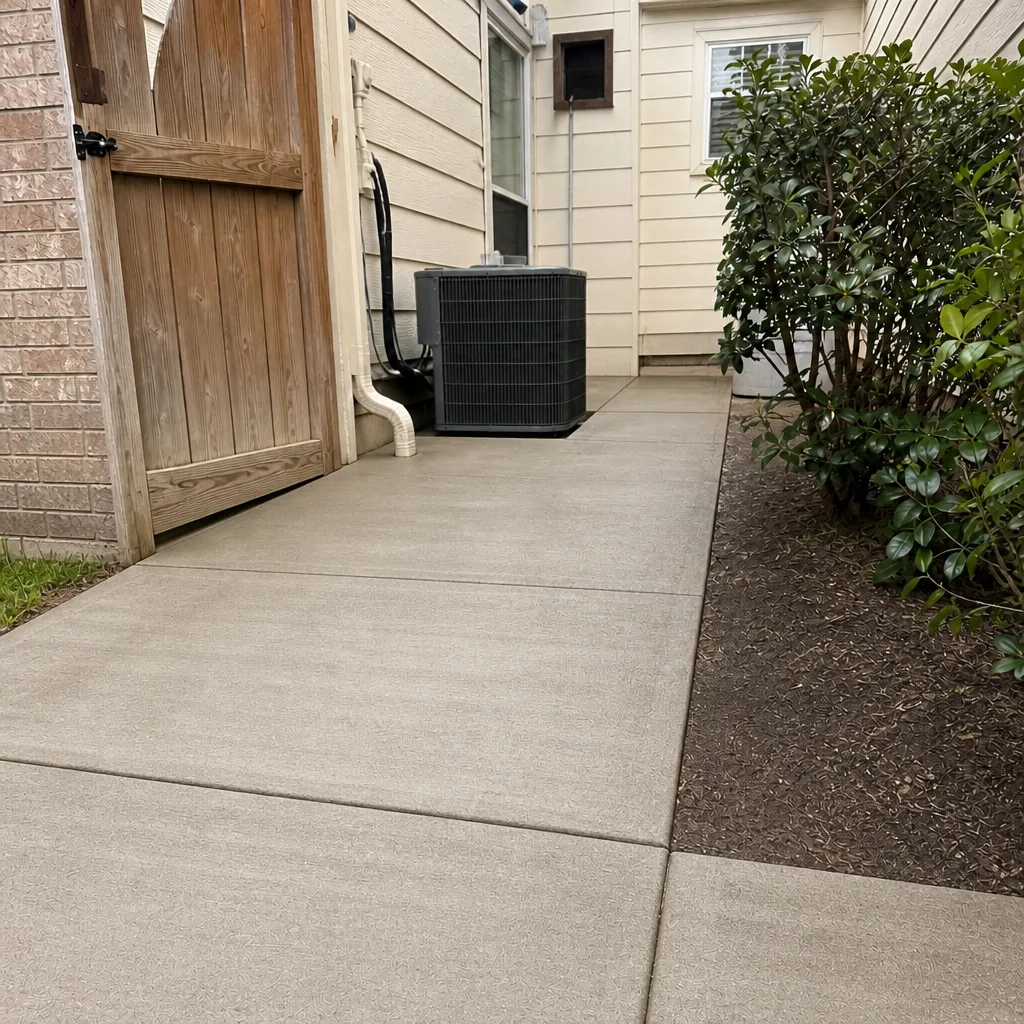 After
When to Call a Professional
You should call a professional when two or more of the warning signs in this guide have been present over at least one full cooling or heating season. You should also call if your home has had significant renovation or new construction in the past year, if a flex duct run has visibly sagged or separated, if your filter is loading faster than the manufacturer’s recommendation suggests, or if you’ve never had a dryer vent inspected. Those situations are where inspection and cleaning together actually change the outcome.
Duct Cleaning Conroe offers free estimates in Conroe and the surrounding area. Call (844) 761-5350 and we’ll talk through what you’ve noticed. If our read is that the problem is a duct issue, we’ll schedule a full-system inspection. If it’s not, we’ll tell you. Our technicians have up to 14 years of experience and can walk you through what they find in plain terms.
Frequently Asked Questions
The reliable test is dust reappearance rate on horizontal surfaces, not a single wipe. Every home collects some dust. But if a surface you clean weekly is dusty again within two or three days, and airflow between rooms feels uneven, the dust is likely entering through the vents rather than settling from ambient air. Call (844) 761-5350 for an inspection estimate, which is free.
A smell that appears at AC startup and fades after a few minutes usually points to the duct side or the indoor coil, rather than the drain pan, which tends to linger. A proper inspection determines which of the three it is, and each has a different fix. Call (844) 761-5350 and we’ll sort it before you spend money on the wrong service.
New builds often are dirtier than expected because ductwork is typically installed before drywall sanding, insulation, trim work, and paint. Those stages all generate fine particles that settle inside open ducts and grilles. In Conroe’s active construction market this is more common than most homeowners assume. A post-construction inspection is worth it, and estimates are free at (844) 761-5350.
If you have flex duct that’s sagging, disconnected at a joint, or compressed against framing, you need repair, because a cleaning alone won’t fix a run that’s lost its capacity to move air. Cleaning restores a sound duct interior; repair restores the duct’s structure. If you’re unsure which applies, call (844) 761-5350 for an inspection-first estimate.
For many homes, an inspection every few years is enough and cleaning follows inspection when there’s a reason. Homes with recent renovation, new construction, pets, or flex duct in the attic tend to need more frequent attention. The honest answer is: clean when the signals say to clean, not on a fixed calendar. Call (844) 761-5350 for an honest read on your home.
A clogged dryer vent is a leading cause of residential fires, and it’s a separate system from your HVAC ducts, with separate risk. Longer dry times, a dryer that’s hot to the touch, or lint collecting around the vent hood are reasons to schedule dryer vent cleaning. Call (844) 761-5350 if you’re overdue for a look.
The Bottom Line
The signs that matter most in a Conroe home are quiet: a musty smell tied to system startup, dust that returns too fast, a filter that clogs too quickly, airflow that isn’t even, a flex duct run that sagged in the attic heat. These are the early signals, and they’re the ones most homeowners rationalize away until the system has been compromised for a long stretch. The right response is inspection first, then the specific fix: cleaning when the ducts contain what they should not, repair when the ducts themselves are failing, and dryer vent service on its own schedule. We work through all three because a full duct system has to be sound everywhere before cleaning means anything. If you’re ready to know what’s actually happening in your ducts, reach out. Our team can put together a clear, honest estimate and show you the work in progress, with before-and-after photos of your own ducts rather than a sales pitch. We answer 24/7. Fast dispatch from 7am to 7pm, Sunday through Friday. Call (844) 761-5350 for a free estimate.
Written by the team at Duct Cleaning Conroe.