
Last updated November 15, 2026
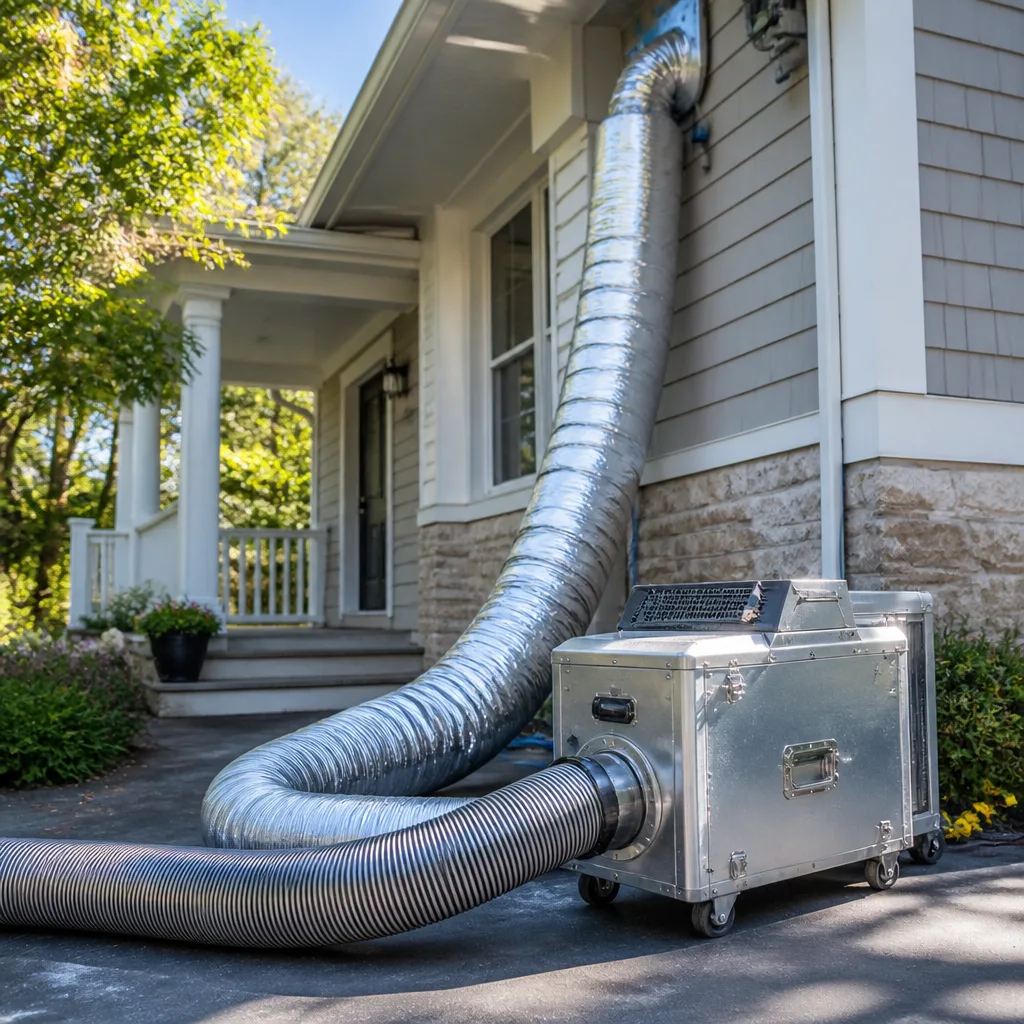 Whole-home duct cleaning
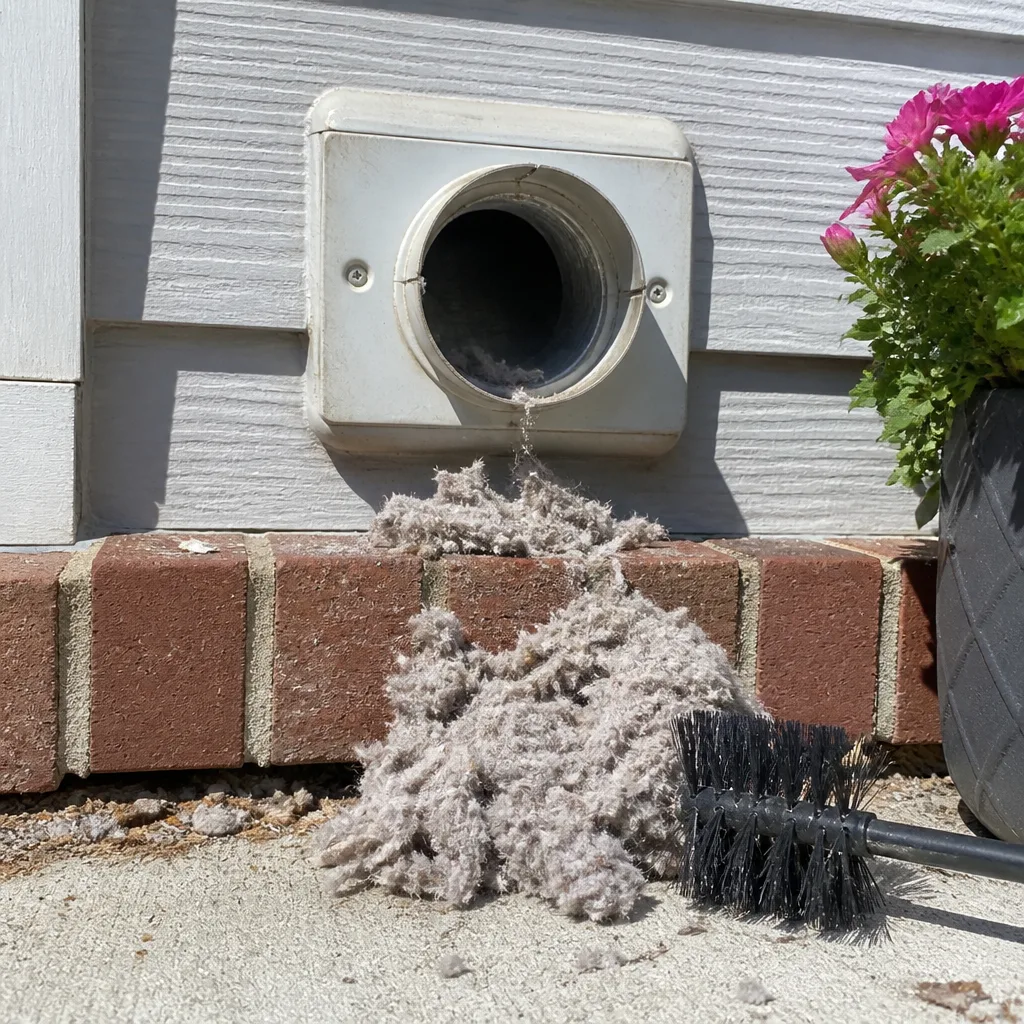 Dryer vent cleaning
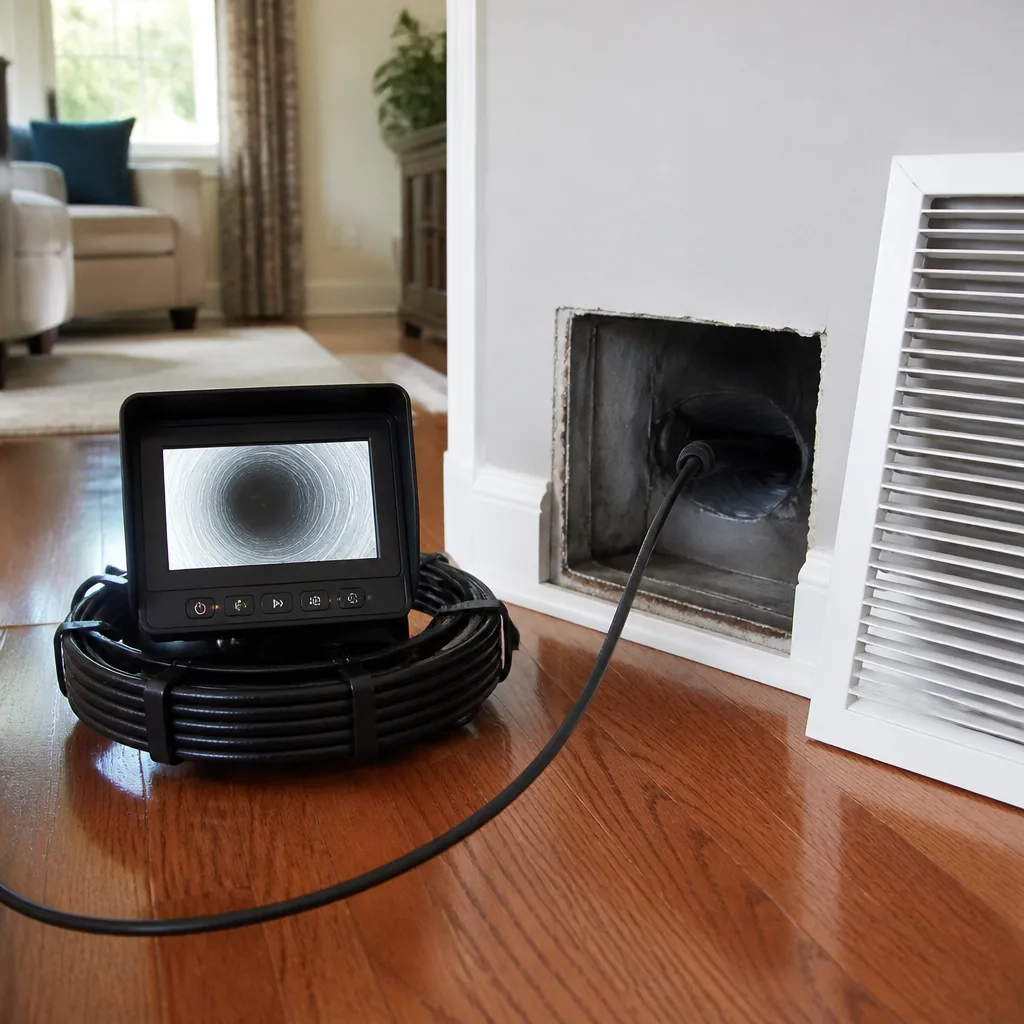 Camera inspection
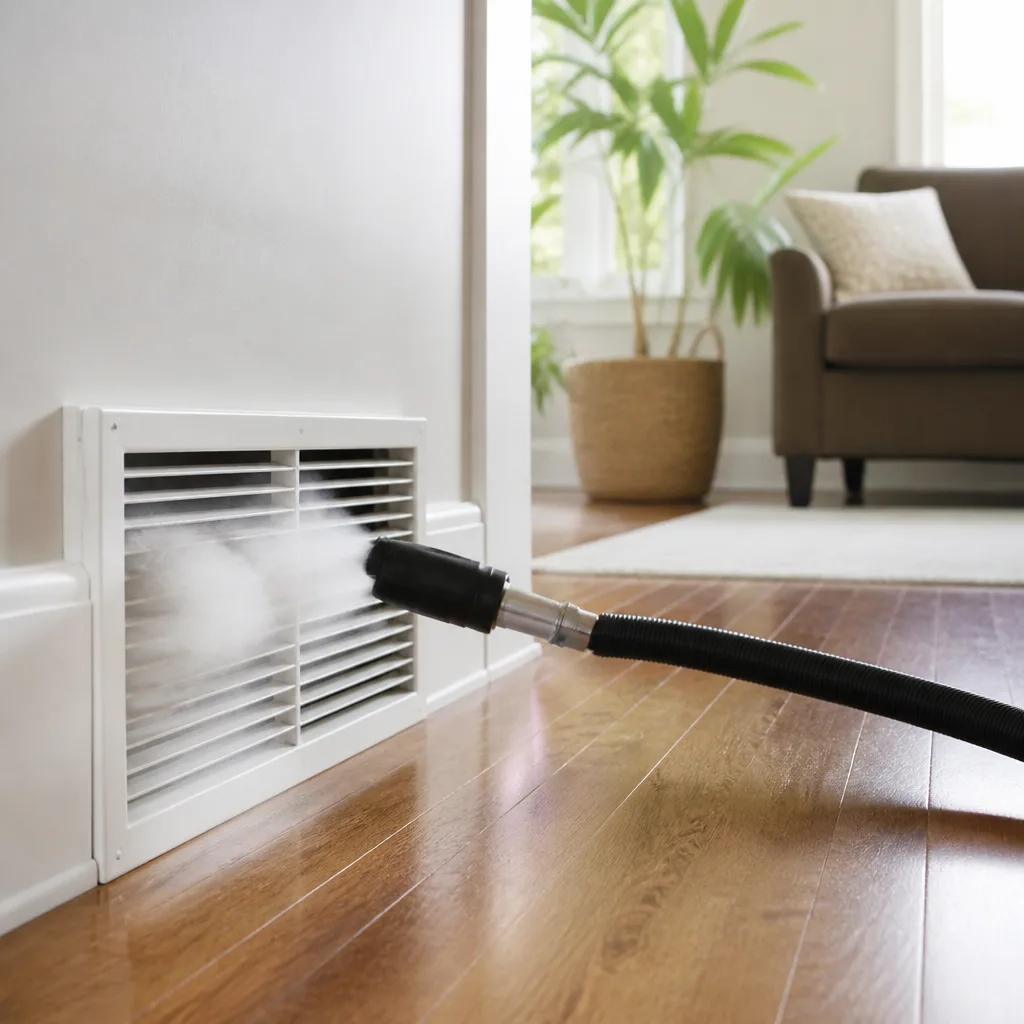 Sanitizing & deodorizing
Whole-system duct and dryer vent check with before-and-after photos - you see exactly what came out of your vents
That "$99 whole-house special" is a bait ad - the real number appears once they are in your hallway, or the "clean" is a shop-vac at the register. We photograph the inside of your ducts before and after instead.
The Complete Guide to Air Duct Cleaning in Conroe
A shop-vac and a spinning brush don’t constitute a duct cleaning. Yet that’s what a significant share of service calls in this region deliver, often labeled as “professional.” The result is a homeowner who paid for something, saw a van pull away, and still has the same dust on the ceiling fan a month later. This guide is about the difference. We’ll walk through what source removal actually means, why Conroe’s humidity and pine pollen load ducts faster than dry-climate assumptions suggest, what equipment tiers can and can’t do in a residential system, and how to verify the work was done. By the end you’ll know exactly what you’re paying for when a legitimate clean happens.
Quick Answer
A legitimate air duct cleaning in Conroe means full-system, source-removal cleaning: contact agitation of every supply and return line, the plenum, the air handler interior, and each register boot, followed by negative-pressure HEPA extraction and a camera-verified inspection before sign-off. Prices in the Conroe market typically run from about $300 for a small single-system home to $900 or more for larger two-story homes with multiple zones, quoted as one flat price per system rather than per vent. Anything that only blows compressed air through the ducts without physical contact and continuous extraction is not a clean.
Styles & brands we work with
- Whole-home duct cleaning
- Dryer vent cleaning
- Camera inspection
- Sanitizing & deodorizing
Table of Contents
- What Source Removal Actually Means
- How Conroe’s Climate Changes the Cleaning Schedule
- The Full Scope of a Legitimate Clean
- Equipment Tiers: What Each Can and Can’t Do
- Post-Cleaning Verification: The Honest Sign-Off
- Why Dryer Vents Belong in the Same Conversation
- When Cleaning Turns Into Repair
- What Duct Cleaning Costs in Conroe
What Source Removal Actually Means
Source removal means physically dislodging the contamination that has bonded to the interior walls of the ductwork and extracting it from the system, rather than redistributing it into the airstream. The debris a duct system accumulates is not loose dust floating in a tube. It’s a layered film: skin cells, pet dander, lint, pollen, and in a humid climate like ours, the microbial growth that feeds on that organic load. Blowing air through the ducts lifts the top layer and pushes it into the living space or deposits it further downstream. Contact cleaning agitates the film off the wall with a rotating brush or air whip, and simultaneous negative pressure pulls the loosened material out of the system before it settles again.
The distinction matters more in Conroe than in a dry-climate city because the moisture content of the air keeps that organic film biologically active. A system that would go stale in a Phoenix house gets tacky and colonized here. That’s why we lead every air duct cleaning job with Rotobrush contact cleaning: the equipment physically engages the duct wall with a brush head on a flexible whip, running the length of each branch line while a HEPA vacuum at the access point maintains negative pressure. The brush doesn’t just stir up debris; it scrubs the wall surface the way you’d clean a bathtub, not the way you’d dust a shelf.
What homeowners often don’t realize is that surface agitation alone, without extraction, can make things worse. If a technician runs a brush or air whip through a branch line with nothing holding the system under negative pressure, the loosened material has nowhere to go but back into the supply register and into the room. This is the failure mode we hear about most often when a homeowner calls us for a second opinion. They had a “cleaning,” and now the house is dustier than before.
- Contact cleaning: brush or whip physically agitates the duct wall; extraction runs simultaneously.
- Negative pressure: a HEPA vacuum or negative-air machine holds the system under vacuum so loosened debris exits the system, not the register.
- Source removal: the contaminant is removed from the duct interior, not merely redistributed.
- Surface-only “cleaning”: air or chemical fog pushed through the ducts without physical contact or continuous extraction. This is not a clean.
How Conroe’s Climate Changes the Cleaning Schedule
The national guidance that says “clean your ducts every three to five years” was largely written for climates with shorter cooling seasons and lower ambient humidity. In Conroe, the air conditioning runs for most of the year, which means the ducts stay in service long enough to accumulate a meaningful burden faster than that guidance assumes. A system that sits dormant for six months a year has half the runtime. A system in Conroe runs closer to nine or ten months of the year, and every one of those months is moving humid air across the same interior surfaces.
Three local factors drive the schedule:
- Extended cooling season. Long runtime means more air passes through the system, which deposits more particulate on the duct walls and the evaporator coil.
- High humidity. Gulf-influenced moisture keeps the interior of the return plenum and the air handler in a range where biological growth can establish on accumulated dust. This is where musty odors come from when the system first kicks on.
- Pine pollen. The East Texas pine belt produces a heavy spring pollen load. Pollen drawn in through the return side is sticky and catches on the interior surfaces of the ductwork, becoming the substrate that later biological growth feeds on.
The practical answer is that homes in Conroe with pets, allergy sufferers, recent remodeling, or a history of no documented cleaning generally benefit from an inspection earlier than the national three-to-five-year guidance. Homes near the tree cover in neighborhoods like River Plantation or out toward the forested edges of the county see the pollen load faster. Homes closer to open ground or newer construction see it at a different rate. There is no single schedule that fits every house in Conroe, which is why an in-person inspection is worth more than a phone estimate.
One more local note: mild winters mean the system rarely gets a long dormant stretch to dry out. That’s actually good news for mold concerns, because a running system with a functioning coil pulls moisture out of the air rather than letting it sit. But it also means the dust layer stays active year-round rather than drying out and becoming inert between seasons.
The Full Scope of a Legitimate Clean
A full-system clean touches every part of the air path, not just the trunk lines you can see from the register. If a company quotes you a price before looking at the air handler, the plenum, and the return side, they’re either guessing or planning to leave half the system untouched. Here’s what a complete job in a Conroe home looks like, step by step.
- System walkthrough and access. Locate every supply and return register, every branch line, the main trunk, the plenum, and the air handler cabinet. Cut access holes in the trunk or branch lines where none exist, then seal them after cleaning.
- Interior protection. Lay floor protection at the work area and contain the air handler opening. This is where we apply Guardsman-level surface protection so the home interior stays as it was found.
- Negative pressure established. Connect the HEPA vacuum or negative-air machine to the main trunk so the entire system is under vacuum before any cleaning begins.
- Supply branch cleaning. Run the Rotobrush whip and brush head down each supply branch, working from the register back toward the plenum so debris moves toward the vacuum, not toward the room.
- Return-side cleaning. Return lines carry the heaviest load because they draw dust, pollen, and pet hair directly from the living space. These get the same contact agitation and extraction.
- Plenum and air handler interior. The plenum and the air handler cabinet interior are cleaned by hand with HEPA vacuuming and contact tools. This is where the evaporator coil sits, and where a lot of the biological growth concentrates.
- Register boots and grilles. Remove each register grille, clean the boot (the short duct stub behind the grille), clean the grille itself, and reinstall.
- Camera inspection and sign-off. Run a camera down each main line to confirm the walls are clean. Show the homeowner the footage before collecting payment.
The full-system distinction matters because the parts most often skipped are the ones that generate the problem. The air handler interior and the return plenum are where the biological growth collects and where the musty smell comes from. A cleaning that skips them leaves the source in place. The register boots accumulate dust at the transition from metal duct to drywall and are the most visible failure when missed. And the trunk line, if left only air-whipped without a brush, keeps its wall film.
The scope also has to account for IAQ components. Homes with a Honeywell or Aprilaire filtration or humidification system in line with the ductwork need those components understood and respected during the cleaning, not bypassed or knocked loose. Our technicians are trained on both systems, which means the clean doesn’t leave a filter housing cracked or a humidifier bypass out of commission.
Equipment Tiers: What Each Can and Can’t Do
There are really three equipment tiers in residential duct cleaning, and the price difference between quotes in Conroe tracks almost exactly to which tier the company is running. Knowing the tiers is the single best defense against a cheap quote that turns expensive on the truck.
Tier 1: Portable shop-vac with a brush head
This is the bottom of the market and the source of most of the bad stories. A portable shop vac has enough airflow to lift loose dust at the hose end but nowhere near enough static pressure to hold a full duct system under vacuum. A brush head on a drill or a hand tool can agitate the walls of a short branch line, but the loosened debris has nowhere to go. Anything that gets lifted resettles downstream or blows back into the room. This is the equipment behind the $99 coupon and the reason a “cleaning” of that type can leave the house dustier than it started.
Tier 2: Portable contact cleaner with HEPA extraction
Better. A dedicated contact-cleaning system like the Rotobrush runs a rotating brush or air whip on a flexible shaft, and it’s paired with a portable HEPA vacuum at the access point. This tier can do a legitimate job on a single-system home with accessible trunk and branch lines. The limitation is that a portable vacuum has to be moved from access point to access point, so the negative pressure is interrupted as the technician repositions. It also requires more access openings. It’s the right tool for many Conroe homes, and it’s what we run most often.
Tier 3: Truck-mounted negative-air machine
The top tier is an Abatement Technologies negative-air machine, the same class of equipment used in mold and hazardous-material abatement. Truck-mounted units generate enough vacuum to hold an entire residential system under continuous negative pressure during the cleaning, which means the debris column never stops moving toward the extraction point. The limitation is access: a truck-mounted machine needs a hose run to the home, and it can’t reach a second-story air handler as easily as a portable unit. On larger two-story homes in Conroe, the right setup is often a hybrid: negative-air machine on the main trunk, portable HEPA extraction at the far branches.
What matters is not which single machine gets run, but whether the system is under continuous negative pressure for the duration of the contact cleaning. A company that tells you it runs “truck-mounted equipment” but leaves the truck idling in the driveway while working a portable vac inside is selling you the label, not the tier.
Post-Cleaning Verification: The Honest Sign-Off
Verification is what separates a credible clean from a claim. The only honest sign-off is a camera inspection of the duct interior after the cleaning, shown to the homeowner before payment. Anything less leaves the customer taking the technician’s word for it.
What to expect during verification:
- Camera footage of each main trunk line after the cleaning, showing the duct walls and the runs. A clean line looks like clean galvanized metal or flex liner, not a gray film.
- A look at the air handler interior and the plenum. This is where the difference between cleaned and “cleaned” shows most clearly.
- Before-and-after photos of the system as found, so you can see the starting condition and the result side by side. We photograph the ducts we clean, not a stock image of somebody else’s system.
- A register-boot check against the room-facing side, so you can see the grille and boot are clean.
If a company can’t show you the ducts after cleaning, they can’t show you they were cleaned. There’s no other honest proof. Before-and-after photos of the customer’s own system, taken on-site and left with the invoice, are the industry’s answer to the bait-and-switch reputation, and it’s the standard we hold ourselves to on every job.
Why Dryer Vents Belong in the Same Conversation
Dryer vent cleaning is a safety service, not a comfort service. Lint is highly combustible, and when a dryer vent line accumulates enough of it, the exhausted heat from the dryer can ignite it. Lint fires are a leading cause of residential fires, and most duct-only companies don’t touch dryer vents at all. That leaves a well-known fire risk sitting in the same mechanical closet as the HVAC system, unaddressed, while a homeowner pays for duct cleaning on the system next door.
We treat dryer vent cleaning as a dedicated third service line for that reason. The work is straightforward: access the vent run at the dryer connection and at the exterior termination, run a rotating brush through the line to break up the compacted lint layer, and vacuum the removal point with a HEPA unit. Then check the termination flap and the exterior hood for blockage, and confirm the run is clear end to end. If the vent is long, has multiple elbows, or is routed through a wall cavity, the cleaning has to respect the actual run geometry, not assume a straight shot to the roof.
Signs a dryer vent needs attention:
- Clothes take two or more cycles to dry.
- The dryer or the laundry room feels unusually hot when running.
- A burning or musty smell during the dry cycle.
- Visible lint accumulation behind the dryer or at the exterior vent hood.
- It’s been more than a year since the last cleaning, or the vent has never been cleaned.
In Conroe’s heat, the exterior vent hood works harder than in cooler climates, and lint turns brittle and packs more densely. Homes with long vent runs or several elbows need attention on a shorter schedule than the average.
When Cleaning Turns Into Repair
A cleaning can reveal problems that a cleaning alone can’t fix. Ductwork that has come apart at a joint, flex duct that has torn, a boot that has separated from the subfloor, or a trunk line that has collapsed all show up during the contact cleaning process. When that happens, the honest answer is to repair the system rather than clean around it. Cleaning a leaking duct system and walking away just leaves conditioned air escaping into a crawl space or attic and unfiltered air being pulled in at the gaps.
Air duct repair in the Conroe market covers:
- Joint and seam sealing where duct sections have separated or where tape has failed.
- Flex duct replacement where the inner liner has torn or where the duct has been crushed or kinked during a previous install.
- Boot-to-floor and boot-to-register reconnection, which is a common source of attic and crawl space air leaking into living spaces.
- Trunk line repair where sheet metal has come apart at the seams or where a previous cleaning opened an access hole that was never properly resealed.
Repair is not an upsell when it comes from real findings. It’s the accountability step. We repair what we find because a cleaned system that leaks is still a broken system. When we inspect a Conroe home and find a repair is warranted, we show the homeowner the visual evidence, price the repair separately, and let them decide before any work begins.
What Duct Cleaning Costs in Conroe
Duct cleaning in Conroe typically ranges from about $300 for a smaller single-system home to $900 or more for larger homes with multiple return lines and accessible air handlers. The price is set per system, not per vent, and it should be agreed before the work begins. The written estimate sets the final price, and no legitimate company should be charging per-vent upcharges after the truck arrives.
A rough breakdown of the Conroe market:
- Small single-system home (around 1,200-1,600 sq ft): approximately $300 to $500, including the main trunk, supply and return branches, and register boots.
- Standard single-story (around 1,600-2,400 sq ft): approximately $450 to $700 for a full-system clean with camera verification.
- Two-story or two-system home: approximately $650 to $900 or more, depending on access and the number of branch lines.
- Dryer vent cleaning: typically quoted as a separate flat rate per vent run, priced by the length and routing of the line.
- Duct repair: priced per repair once the specific issue has been inspected and documented.
Quotes outside those ranges deserve questions, in both directions. A price well below the range often reflects the equipment tier; a price well above it should come with a clearly itemized scope explaining exactly what extra work is included. The number that matters is whole-system, one flat price, agreed in writing before work starts. That’s the pricing structure that ends the bait-and-switch.
Common Mistakes to Avoid
- Buying on the lowest quote without asking what equipment gets run. The cheapest quote in the Conroe market is almost always the shop-vac tier, and the clean you get is what you paid for. Ask what vacuum and what brush system the technician will use on-site.
- Accepting a per-vent price. A per-vent price is a marketing structure, not a pricing structure. The system has a finite number of vents and a flat clean is what it costs to service that system.
- Skipping the air handler interior. If the quote doesn’t mention the air handler and the plenum, the technician is planning to leave the dirtiest part of the system untouched.
- Scheduling duct cleaning without addressing the dryer vent. Most duct-only companies don’t clean dryer vents at all. A home with an uncleaned dryer vent is carrying a fire risk that a duct cleaning won’t touch.
- Paying without camera verification. Before-and-after photos of your own system are the only proof that the work happened. If the technician won’t show you the duct interior on camera, don’t pay yet.
- Cleaning over a known leak. If the ductwork has separated at a joint or a boot has come apart, cleaning first and repairing later wastes the cleaning. Repair the system, then clean it.
- Assuming a national cleaning schedule fits a Conroe home. Our long cooling season and pine pollen load demand a shorter interval than the national guidance suggests. An inspection is worth more than a calendar rule.
See the difference
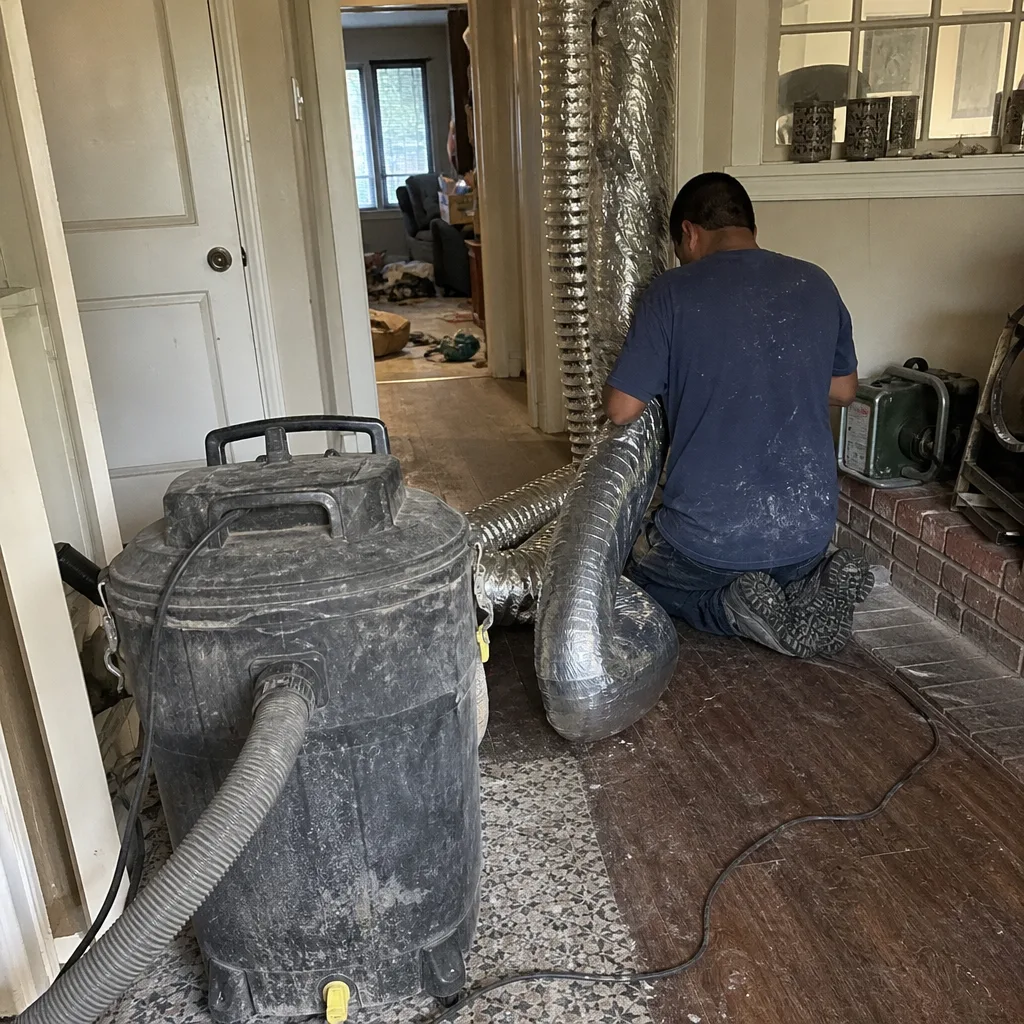 Before
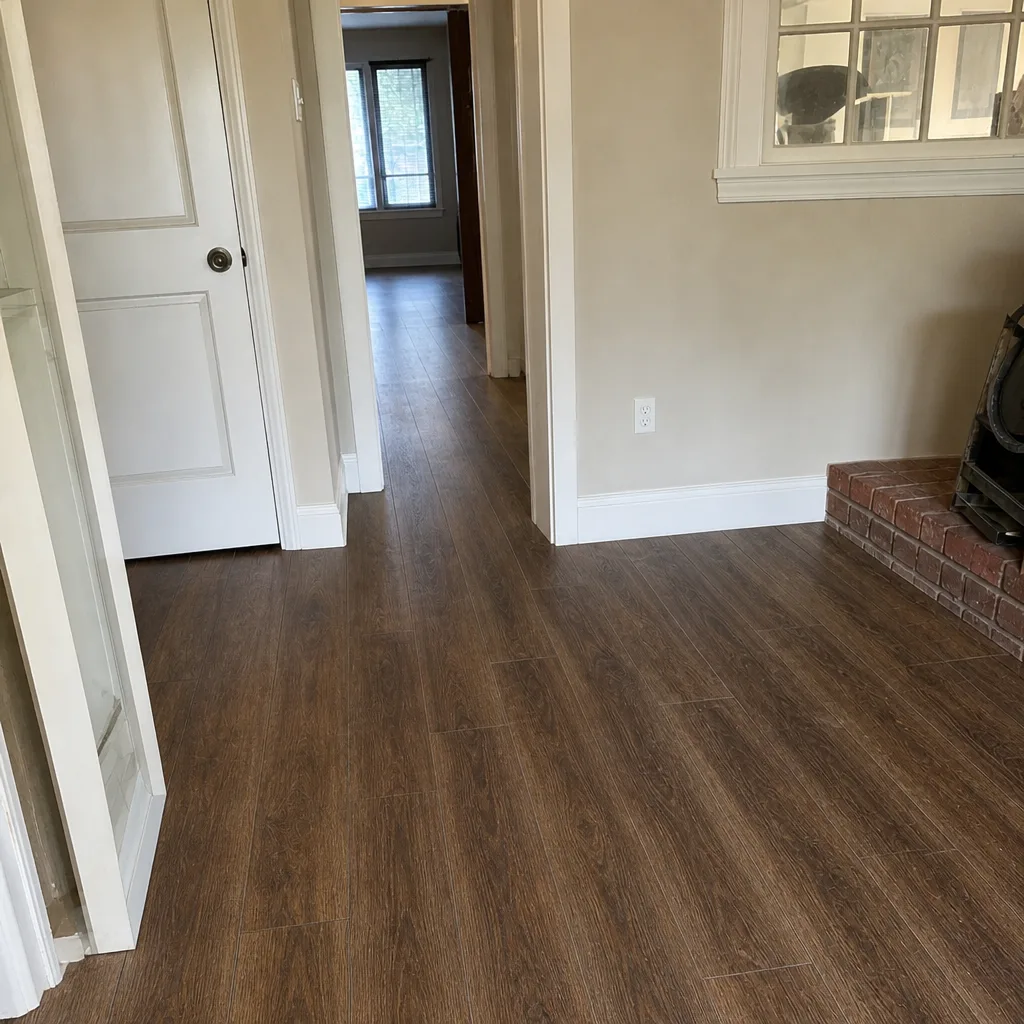 After
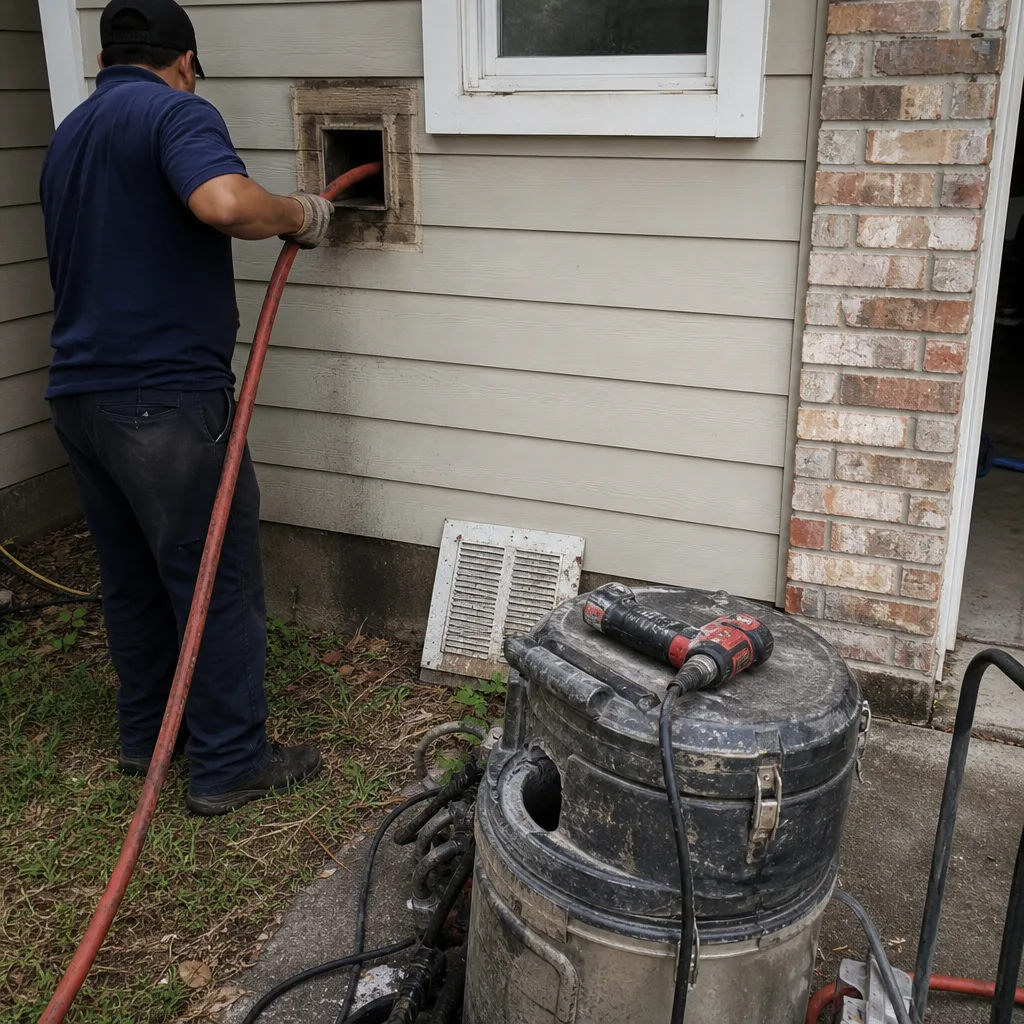 Before
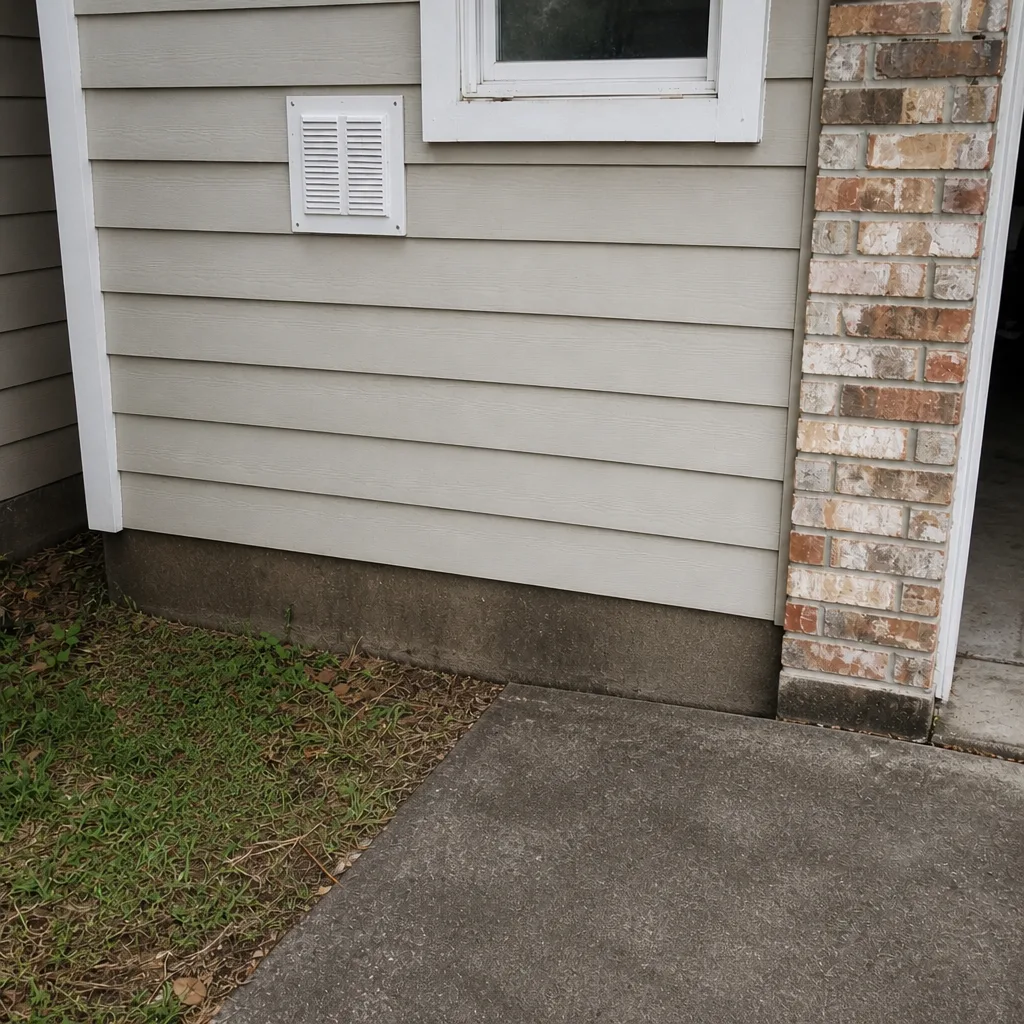 After
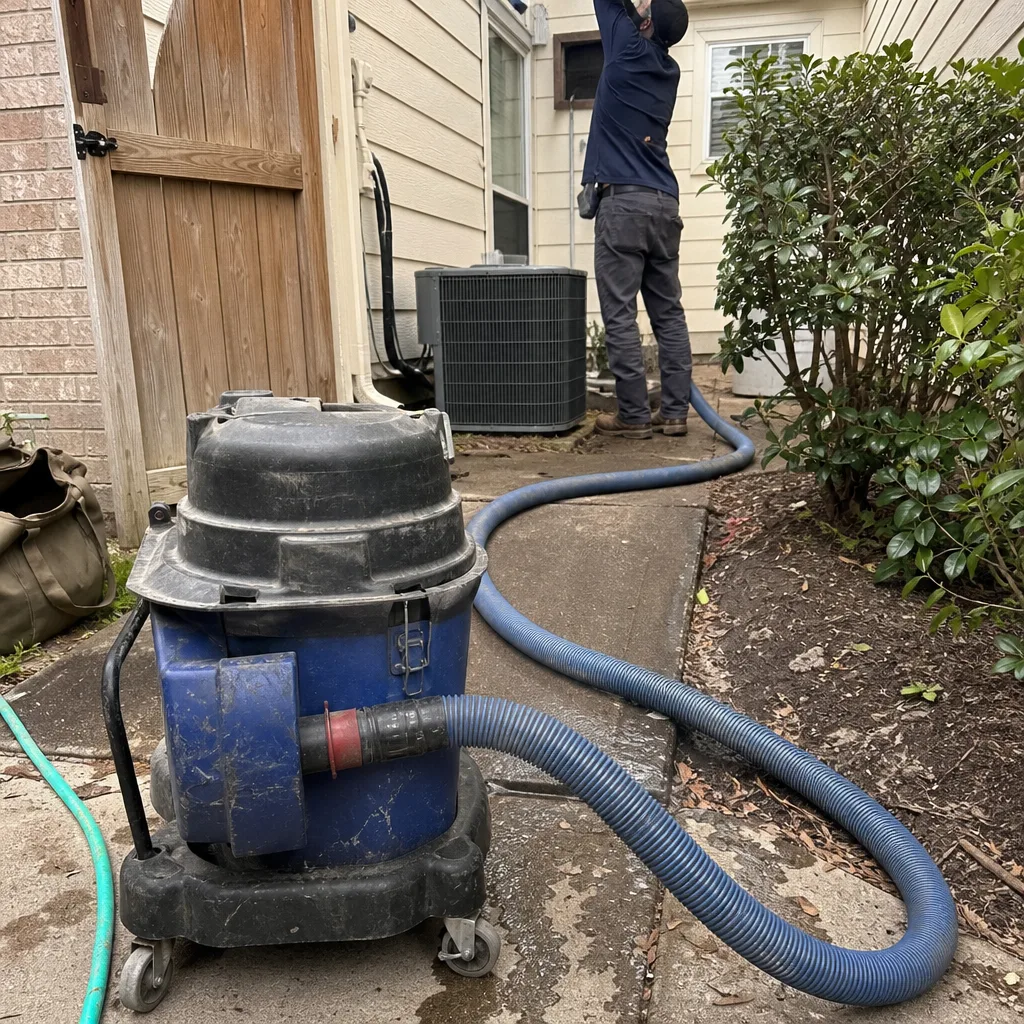 Before
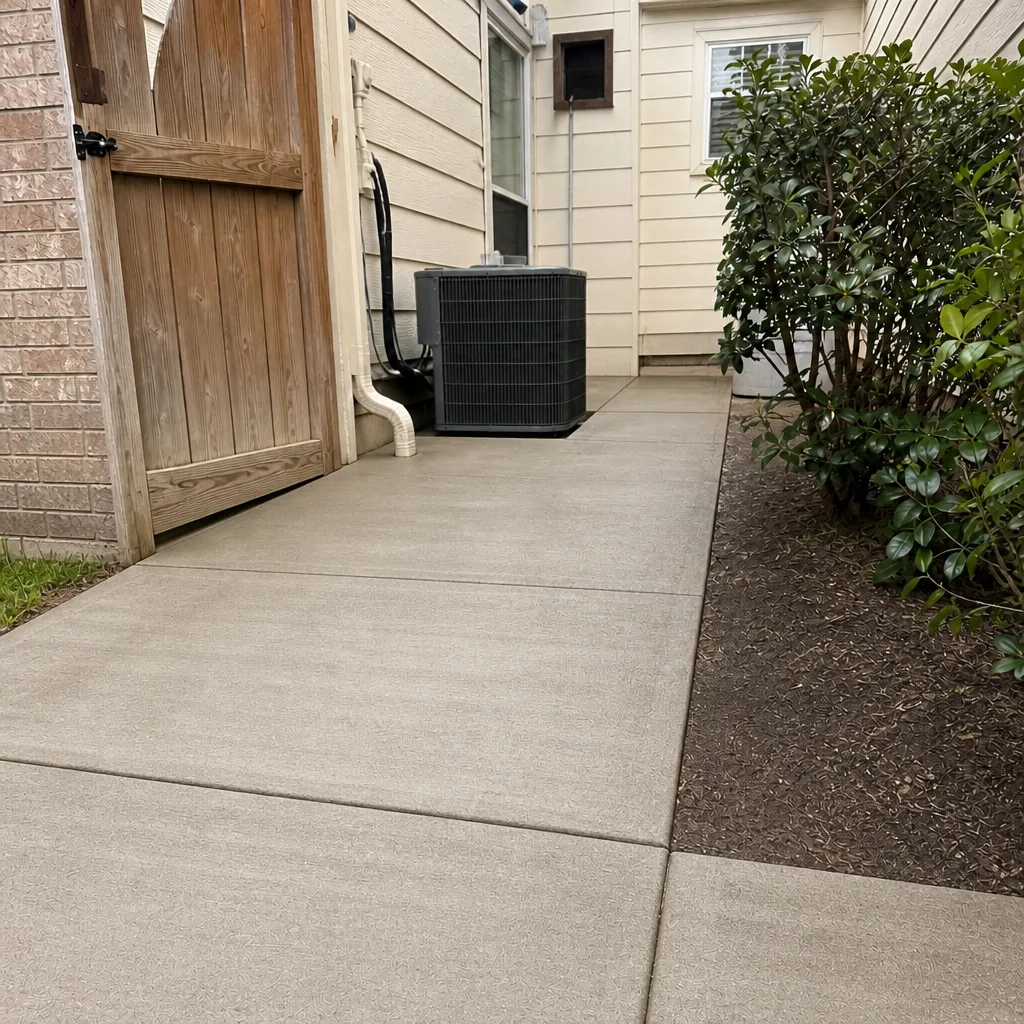 After
When to Call a Professional
Call a professional if you’re seeing recurring dust on the ceiling fans or registers within days of cleaning, if the system smells musty when it first kicks on, if a family member’s allergies worsen when the air conditioning runs, or if you’ve recently finished a remodel and drywall dust may have entered the system. Call if the dryer takes two cycles to dry a load, if you smell burning during the dry cycle, or if you can’t remember the vent ever being cleaned. Call if you’ve bought a home in Conroe and have no record of previous duct service. Duct Cleaning Conroe offers free estimates in Conroe. Call (844) 761-5350. We answer 24/7. Fast dispatch from 7am to 7pm, Sunday through Friday.
Frequently Asked Questions
Most full-system duct cleanings in Conroe run between about $300 and $900 depending on home size, number of systems, and access, quoted as one flat price per system. The written estimate sets the final price, and a legitimate company won’t add per-vent charges after the truck arrives. Call (844) 761-5350 for an exact quote; estimates are free.
For most Conroe homes, every two to three years is a reasonable inspection interval, though the longer cooling season and heavy pine pollen load mean homes with pets, allergy sufferers, or recent remodels may benefit from a shorter cycle. There’s no one schedule that fits every house, so an in-person walkthrough is the better guide than a fixed calendar. Call (844) 761-5350 to book an inspection; estimates are free.
Cheap quotes usually reflect a lower equipment tier, typically a portable shop vac with a brush head that can’t hold the system under continuous negative pressure during cleaning. That’s the equipment behind most of the “cleaning made things worse” stories, and it’s not the same service as a contact-clean with HEPA extraction. Call (844) 761-5350 and ask what vacuum and brush system would be run in your home; estimates are free.
The only honest proof is a camera inspection of the duct interior after cleaning, shown to you before payment, plus before-and-after photos of your own system. If a technician can’t show you the ducts, they can’t show you they were cleaned. Call (844) 761-5350 to schedule a clean with camera verification; estimates are free.
We treat dryer vent cleaning as its own service line, not an add-on, because lint is a leading cause of residential fires and most duct-only companies leave it alone. The clean runs a rotating brush through the full vent length and vacuums the removal point with a HEPA unit, then checks the exterior termination. Call (844) 761-5350 for a dryer vent quote; estimates are free.
Yes, when the technician understands the IAQ components in line with the ductwork. Our technicians are trained on Honeywell and Aprilaire filtration and humidification systems, so a clean doesn’t leave a filter housing cracked or a humidifier bypass out of commission. Call (844) 761-5350 to talk through your setup; estimates are free.
The Bottom Line
The difference between a legitimate duct cleaning and a wasted service call in Conroe comes down to four things: contact cleaning of every duct wall, continuous negative pressure so debris exits the system, coverage of the full air path including the air handler and register boots, and a camera-verified sign-off. Equipment tier determines what’s possible, and home size and system count determine what it costs. Our technicians have up to 14 years of experience, and we run remediation-grade equipment from Rotobrush, Nikro, Abatement Technologies, and compatible with Honeywell and Aprilaire systems. If you’re overdue for a clean, or you’ve had one you weren’t sure about, start with an inspection. Call (844) 761-5350 for a free estimate. We answer 24/7. Fast dispatch from 7am to 7pm, Sunday through Friday. You can also read more about duct cleaning in Conroe and our service area at Conroe, TX.
Written by the team at Duct Cleaning Conroe.