
Last updated November 15, 2026
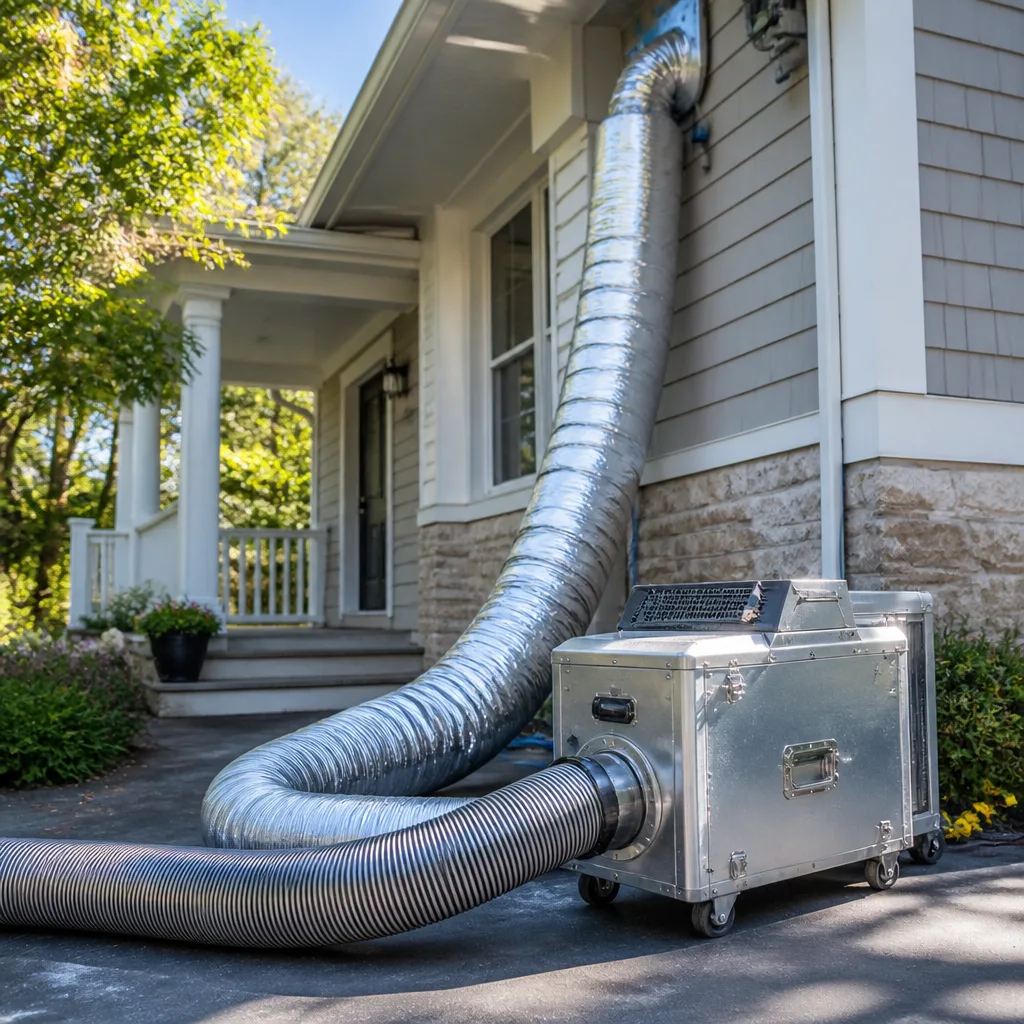 Whole-home duct cleaning
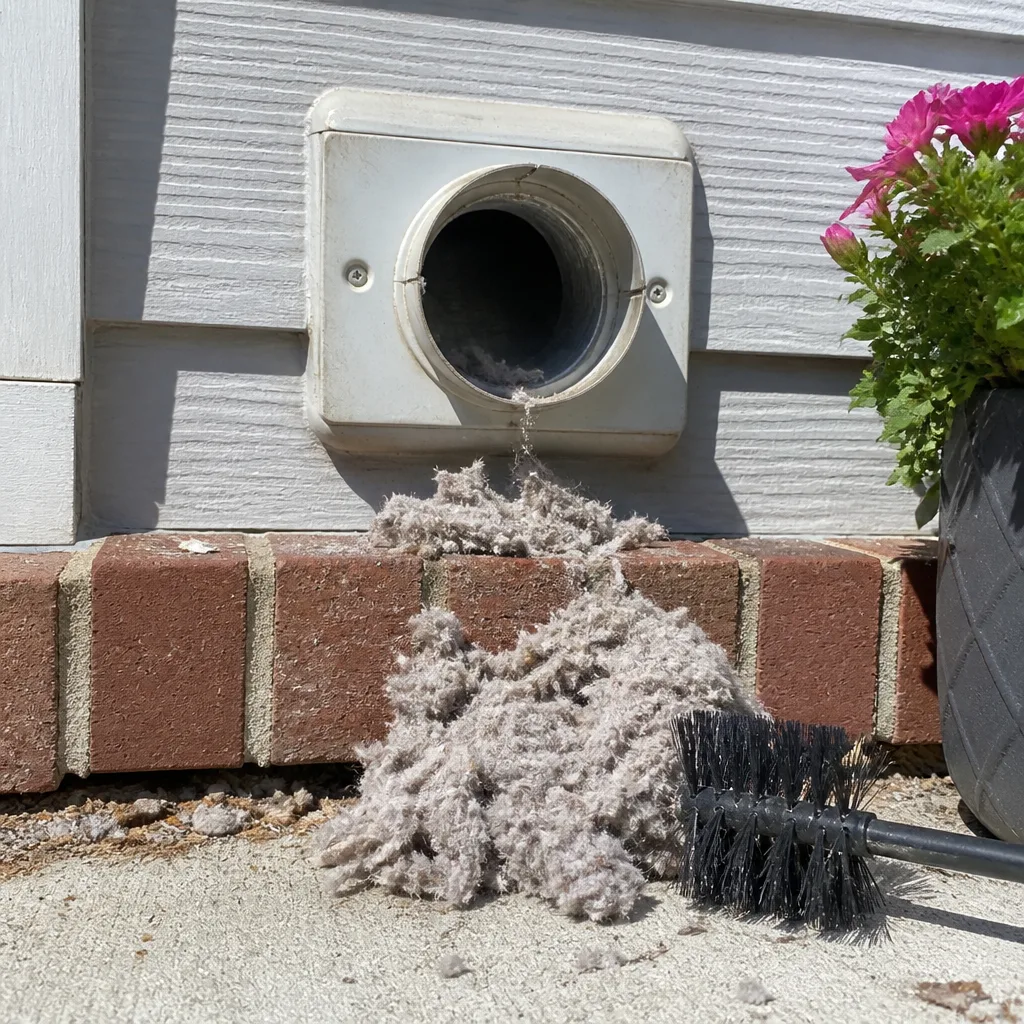 Dryer vent cleaning
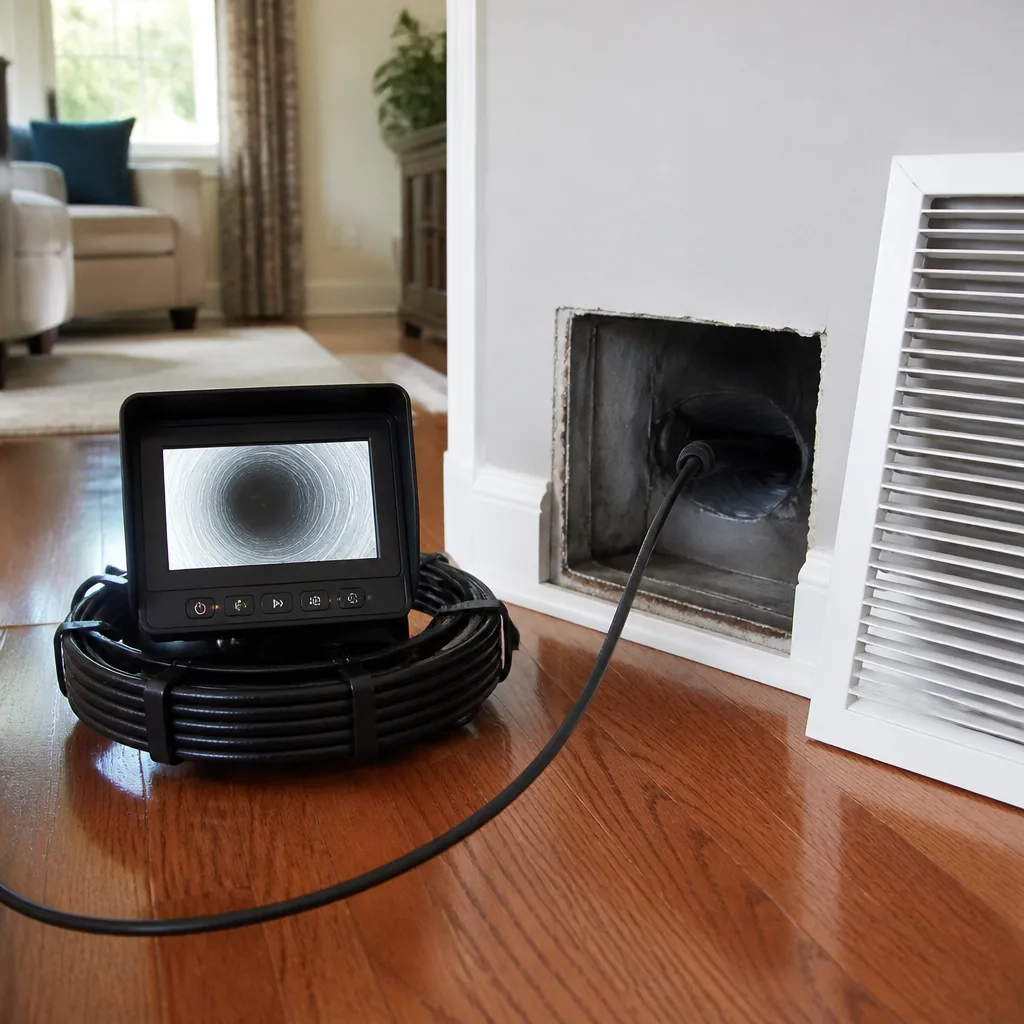 Camera inspection
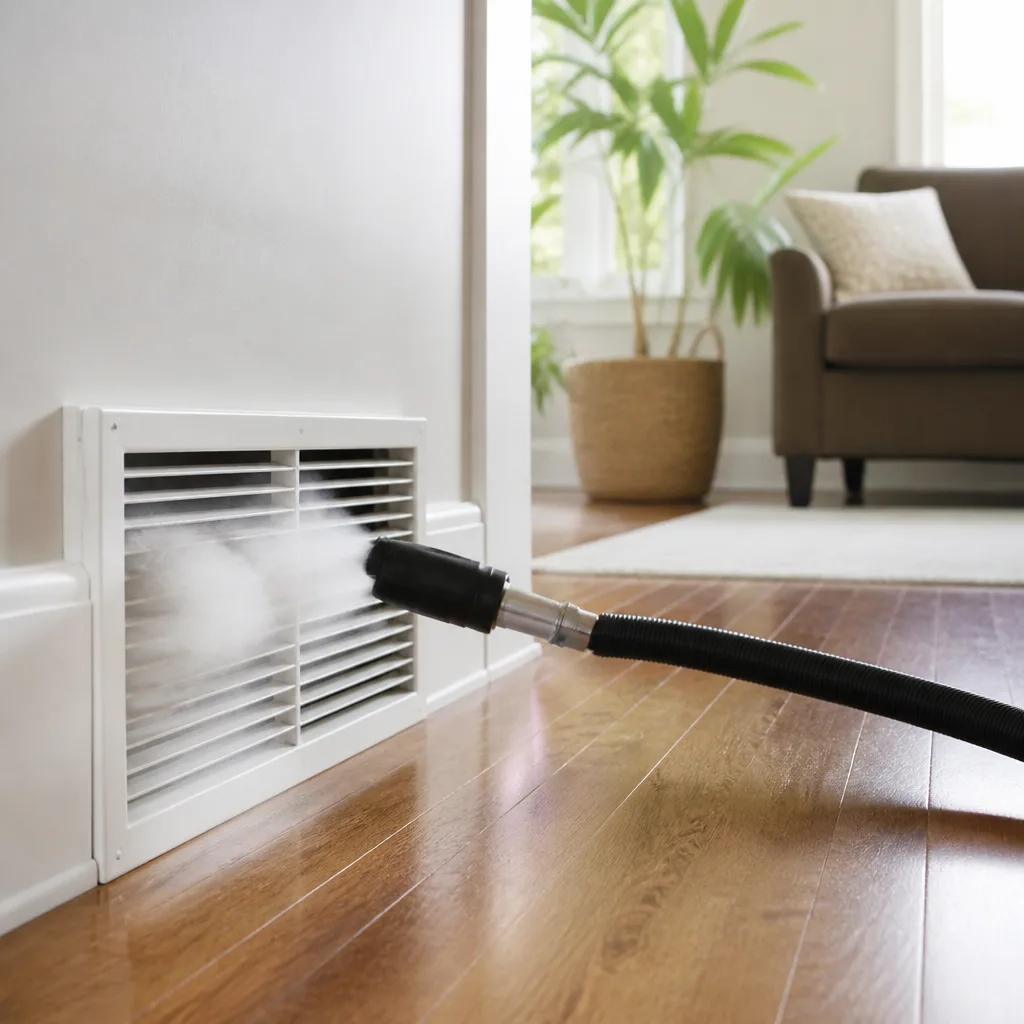 Sanitizing & deodorizing
Whole-system duct and dryer vent check with before-and-after photos - you see exactly what came out of your vents
That "$99 whole-house special" is a bait ad - the real number appears once they are in your hallway, or the "clean" is a shop-vac at the register. We photograph the inside of your ducts before and after instead.
DIY vs Professional Air Duct Cleaning: The Conroe Homeowner’s Decision Guide
A homeowner with a good shop-vac and a dryer vent brush can reach maybe 15% of what a truck-mounted negative air machine pulls out of a residential duct system. That number is the whole argument in miniature. It’s worth knowing before you clear a day to do it yourself. DIY duct cleaning isn’t reckless and it isn’t pointless. It’s structurally limited, and once you understand exactly where that ceiling sits, you can use DIY well instead of expecting it to do a full system’s job. This guide maps what DIY actually reaches in a Conroe home, what it can’t, and where a professional run earns its place.
Quick Answer
DIY air duct cleaning is useful for light between-service maintenance: register grilles, accessible flex duct ends, and dryer vent lint. It cannot perform source-removal cleaning of an entire residential system, because consumer vacuums can’t generate the negative air pressure and airflow that professional contact-cleaning requires. If your Conroe home has visible dust streaks at the registers, musty odors, or uneven airflow, that’s professional territory; routine touch-ups between service intervals are fair game for the homeowner.
Styles & brands we work with
- Whole-home duct cleaning
- Dryer vent cleaning
- Camera inspection
- Sanitizing & deodorizing
Table of Contents
- What DIY Duct Cleaning Actually Reaches (And What It Can’t)
- When DIY Between-Service Maintenance Genuinely Helps
- Why Negative Air Pressure Is the Real Dividing Line
- The Conroe-Specific Risks of DIY Duct Work
- Using DIY Observations to Brief Your Technician
- Equipment: What You Have vs. What the Job Requires
- The Dryer Vent Exception (And Why It Still Matters)
- Cost, Value, and When DIY Genuinely Pays
What DIY Duct Cleaning Actually Reaches (And What It Can’t)
The gap between DIY and professional cleaning isn’t effort. It’s geometry and physics. A shop-vac and a brush can absolutely remove loose dust from surfaces you can physically touch. The problem is that the surfaces you can’t touch make up most of the system’s volume, and that’s where contamination accumulates over years of moving air through a home in Conroe’s humid climate.
- What DIY reaches: Register grilles, register boots (the short metal or flex transition between the floor/ceiling and the duct run), the last few feet of accessible flex duct behind each register, and the visible dryer vent line if it’s straightforward to access.
- What DIY cannot reach: Main trunk lines, the supply plenum and return plenum at the air handler, the interior of the air handler cabinet (a professional scope only when equipment supports it safely), return duct cavities, and any run longer than a few feet without proper agitation tools.
- What DIY shouldn’t touch: Sealed duct sections, the air handler’s internal components, and anything electrical. Opening a duct system you don’t fully understand risks dislodging connections and creating a bigger problem than the one you set out to fix.
In practice, DIY cleaning is a surface tidy. Professional duct cleaning is source removal, meaning the goal is to physically agitate and extract debris from every duct wall in the system, not just the ones near the grille. When we clean a residential system, we run a contact-cleaning pass with a Rotobrush system that agitates duct interior surfaces while a negative air machine at the other end captures what’s lifted. That’s a fundamentally different operation from holding a shop-vac nozzle in a register boot.
When DIY Between-Service Maintenance Genuinely Helps
Nothing above says DIY is useless. It’s actually the right tool for a specific maintenance window: the stretch between professional cleanings. Homeowners in Conroe who want to keep their system in good shape cheaply can do a few things well. These are the ones that are worth your time.
- Vacuum register grilles monthly. Pull the grille cover (they’re usually held by two screws or snap tabs), vacuum both faces with a brush attachment, and reinstall. This alone cuts down on the dust that neighbors see and resent.
- Wipe register boots annually. A damp rag inside the boot handles the settled film that a shop-vac misses, and it takes about a minute per register once the cover is off.
- Vacuum accessible flex duct ends carefully. Where a flex run meets the boot and you can see into the duct mouth, a shop-vac with a soft brush wand will lift loose dust without touching the duct wall. Keep the wand off the interior surface of flex; those walls tear easily.
- Vacuum the return grille face weekly in dusty seasons. Returns do more work than supplies in most homes because they carry the bulk of return air, and in Conroe’s pollen windows this grille collects fast.
- Clear dryer vent lint from the interior end. Lint traps at the dryer connection need clearing regularly; the rest of the vent run is more complex.
- Change the filter on schedule. A clean filter isn’t duct cleaning, but it reduces the rate at which new dust accumulates. This is the single highest-value thing a homeowner can do to protect duct cleanliness between professional visits.
None of these replace a full-system cleaning, but they extend the interval between them. That’s the honest recommendation: use DIY to buy time, not to substitute for the real thing. If your system uses Honeywell or Aprilaire filtration components, the manufacturer’s filter replacement schedule matters more than any home vacuuming routine, because the filter sits upstream of the entire duct network.
Why Negative Air Pressure Is the Real Dividing Line
Here’s the physics a homeowner rarely hears. Professional duct cleaning is built on negative air pressure: a machine at one end of the system pulls enormous airflow while a technician agitates duct surfaces at the other end. Debris is captured before it escapes into the home. Consumer vacuums cannot produce the volume of airflow this requires, which is why you can’t “shop-vac clean” a residential duct system in the same way you can vacuum a carpet.
Two factors define the difference:
- Air volume, not just suction. A shop-vac’s spec sheet emphasizes water lift and sealed suction, useful for puddles, not airflow through duct. Duct cleaning depends on moving a large volume of air through the system so that agitated debris is entrained and captured. Consumer equipment doesn’t move that volume.
- Containment. When debris is agitated in a duct without enough air movement to capture it, it either settles back into the duct or escapes at the nearest open register into the living space. That’s the reason a “cleaning” with a shop-vac at one register and no vacuum at the other can leave the home feeling dustier afterward.
The equipment that solves this is remediation-grade. Nikro HEPA vacuums and Abatement Technologies negative air machines are the same class of machine used when mold or other contaminants are being removed from a building. They hold containment, capture fines, and do the volume work of a full-system cleaning. This is one of the reasons we treat professional duct cleaning as a distinct discipline rather than an HVAC add-on: the tools are different, the process is different, and the results are different.
The Conroe-Specific Risks of DIY Duct Work
Most of the country’s duct systems have soft flex duct in them somewhere. Conroe homes mix flex and rigid metal the way most East Texas construction does, and that mix matters for DIY because flex is fragile. A homeowner who gets aggressive with a brush beyond the boot can dislodge a flex duct connection at the collar and never know it happened.
A disconnected return duct is the failure mode to think about. A return pulls negative pressure continuously. If a flex run with a return connection slips off its collar behind a wall cavity, in a crawlspace, or inside a soffit, that cavity becomes a passive air path. In Conroe’s humid air, an unsealed return in a humid crawlspace or attic pulls moisture and particulate into the living space rather than from it. The problem is invisible from inside the house except for a change in smell, an uptick in dust on horizontal surfaces, or a room that suddenly never feels quite right. By the time it’s diagnosed, the cavity may already need its own remediation.
This is why our approach includes air duct repair as a real service line rather than a cleanup note. Cleaning without checking the physical integrity of the duct runs at every joint only hides the fact that some portion of the system was never connected. When we clean, we inspect joints along the way. If a connection has failed, we repair it. That’s not an upsell; it’s the only way a cleaning job makes sense in a house with soft duct runs.
The second Conroe-specific factor is climate. Our summers are long, our afternoons are humid through the cooling season, and duct systems run nearly year-round. That constant runtime means dust load grows fast, and any leak in the system pulls in unconditioned air. A return leak in a humid month isn’t just a comfort issue; it’s a moisture path that can find its way to surfaces you don’t want damp.
Using DIY Observations to Brief Your Technician
Here’s where DIY observations pay off beyond the vacuuming itself. Before a professional cleaning, an hour of careful looking around your own system produces a brief that lets the technician prioritize. The best cleanings we run start with the homeowner already knowing something useful about their own ducts.
- Run the system and note airflow at each register. A tissue test tells you which registers push strong, medium, or barely anything. Weak registers point at a specific run that may need attention.
- Look for dust streaks or soot-like lines at grille edges. Streaks mean air is escaping past the boot into the floor or wall; that’s a boot seal issue, not a duct body issue, and it changes what needs fixing.
- Smell each room after the system has run a while. A musty smell isolated to one room usually points at one affected run or at a return near a humid crawlspace.
- Note recent changes. “Started three weeks ago” is more useful to a technician than “always been that way,” because changes correlate with concrete events (remodel, new pet, filter change lapse).
- Record what you saw when you pulled a couple of register covers. Loose debris, stains, or insulation fragments at the boot are worth mentioning before the job begins.
- Write down the system’s age and filtration type. Honeywell and Aprilaire filter components have service requirements the technician will want to plan around.
Bring that list when the technician arrives. It shapes where they start and what they’ll dig into. It also gives you a benchmark: if you said “return in the hallway smells musty” and the job closes without an answer, ask why. A properly run cleaning should produce before-and-after photos of the system, and those photos should let you see what changed.
Equipment: What You Have vs. What the Job Requires
The comparison makes more sense as a table than a paragraph. Here’s how consumer tools line up against what a professional cleaning run actually uses.
- Shop-vac: high water lift, low air volume. Good for boot cleaning and wet pickup. Cannot achieve source-removal airflow.
- Dryer vent brush: reaches lint in straight brushable runs. Can damage flex liner if used aggressively. Not built for whole-duct agitation.
- Rotobrush contact-cleaning system: whip and brush heads driven through the duct to agitate the interior wall. Extracts from the surface outward; standard on professional air duct cleaning runs.
- Nikro HEPA vacuum: fine-particle capture at a level consumer vacuums don’t reach. Filters down to sizes that matter for air quality.
- Abatement Technologies negative air machine: drives the negative pressure that captures debris before it escapes. Without this, cleaning agitation pushes contamination into the home.
- Guardsman surface protection: protects carpets, flooring, and furnishings during the run. Small detail, big difference in how the home feels after.
Notice what’s missing from the DIY side: no equipment category on that list has a consumer equivalent that does the same job. A homeowner can buy more shop-vac or a better brush, but there’s no consumer product that produces the CFM required for source removal in a residential duct system. That’s the honest gap.
The Dryer Vent Exception (And Why It Still Matters)
Dryer vents are the one area where DIY genuinely handles part of the job, and also the one area where underestimating the work causes real danger. Lint is the leading cause of residential dryer fires because it accumulates in the vent run and can ignite from the dryer’s own heat. “The dryer still dries” is not proof the vent is fine.
DIY does handle the short, visible stretch from the dryer to the wall well. Pull the dryer out, disconnect the vent hose, vacuum out both ends, and check the exterior termination flap. That’s worth doing regularly. What DIY handles poorly is the full run through a wall, an attic, or a long horizontal path – and those are exactly the runs where lint builds up enough to matter. Rotobrush duct tools carry through full runs; a leftover lint brush doesn’t, and the shared tool the homeowner can actually push through the whole thing is the professional machine. Our dryer vent cleaning service is a dedicated line rather than a footnote on a duct job, and that’s because the safety stake justifies its own process.
Signs you need a professional dryer vent service rather than a touch-up:
- Clothes take noticeably longer than they used to.
- The exterior vent flap barely opens when the dryer runs.
- The dryer gets warm on the outside of the cabinet during a cycle.
- You haven’t had the full run cleaned and the vent path is longer than a short straight run.
Cost, Value, and When DIY Genuinely Pays
Nobody wants to hear “it depends,” so here’s the shape of the decision instead. DIY pays when the work fits within what a shop-vac and a brush actually reach, and when there’s no repair to make. It doesn’t pay when the goal is source removal, because the equipment to do that isn’t sold at any retail price.
- Worth doing yourself: register grille cleaning, boot wipe-down, return grille weekly upkeep, filter replacement, dryer vent short-run lint removal, and a good look-and-record pass before a professional service.
- Not worth doing yourself: main trunk line cleaning, plenum and air handler cleaning, return cavity work, anything that requires opening sealed duct, any joint repair, and any full dryer vent run that goes more than a few feet through walls or attic.
- Never DIY: air handler internals, electrical work at the unit, and duct repair on runs you can’t fully inspect.
We set one flat price per system by written estimate before any work starts, and the estimate is free. If you’re calling because everything looks fine but you’re due, that’s a good reason to call. If you’re calling because you pulled a register and saw something odd, bring that observation along.
Common Mistakes to Avoid
- Assuming shop-vac suction equals duct cleaning. Suction and airflow volume are different measurements, and the second one is what matters for capturing debris during cleaning. A shop-vac at a register will not clean a duct run.
- Pushing a brush aggressively into flex duct. Flex has a thin liner that tears easily, and a torn liner becomes a place where dust collects going forward. Slow and gentle, or leave it to the professional tools.
- Opening duct sections to see inside. You can’t easily re-seal a duct joint under pressure with consumer tape, and a leaky joint pulls unconditioned air. In Conroe’s humid months, that’s a moisture path.
- Skipping the return side in a DIY pass. Most DIY effort focuses on supply registers because they’re visible, but returns carry more of the total air volume. A return that collects dust keeps redistributing it.
- Treating the dryer vent as clean because laundry dries. Lint builds slowly and the first symptom is often a longer dry cycle, not a failure. The full run through walls and attic needs periodic professional cleaning.
- Buying a “duct cleaning kit” off the shelf and running it through the whole system. These tools are typically the same flex-brush style used for short runs. They reach the first few feet and stop; expectations should match.
- Cleaning ducts before fixing a known leak or disconnection. A cleaning over a disconnected return just re-contaminates the duct the first time the system runs. Repair first, clean second, or do both in one visit.
See the difference
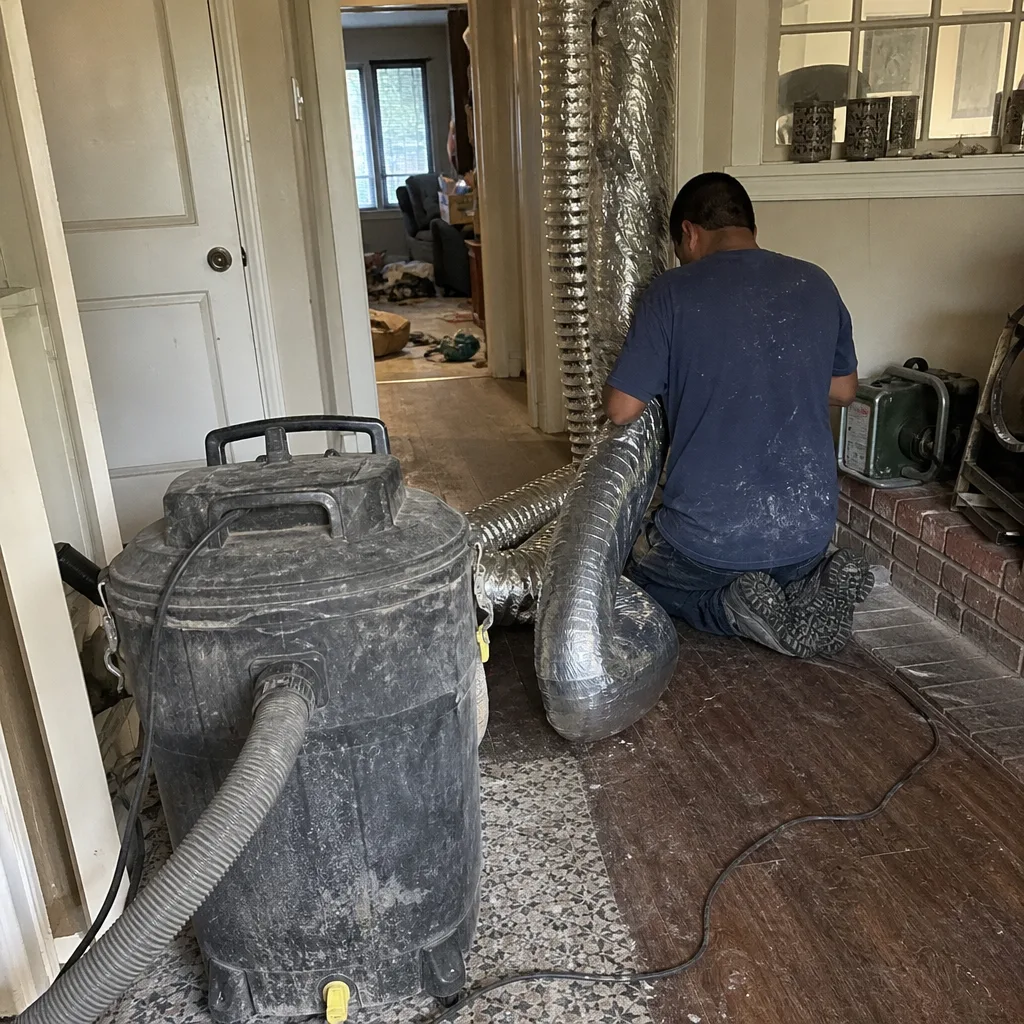 Before
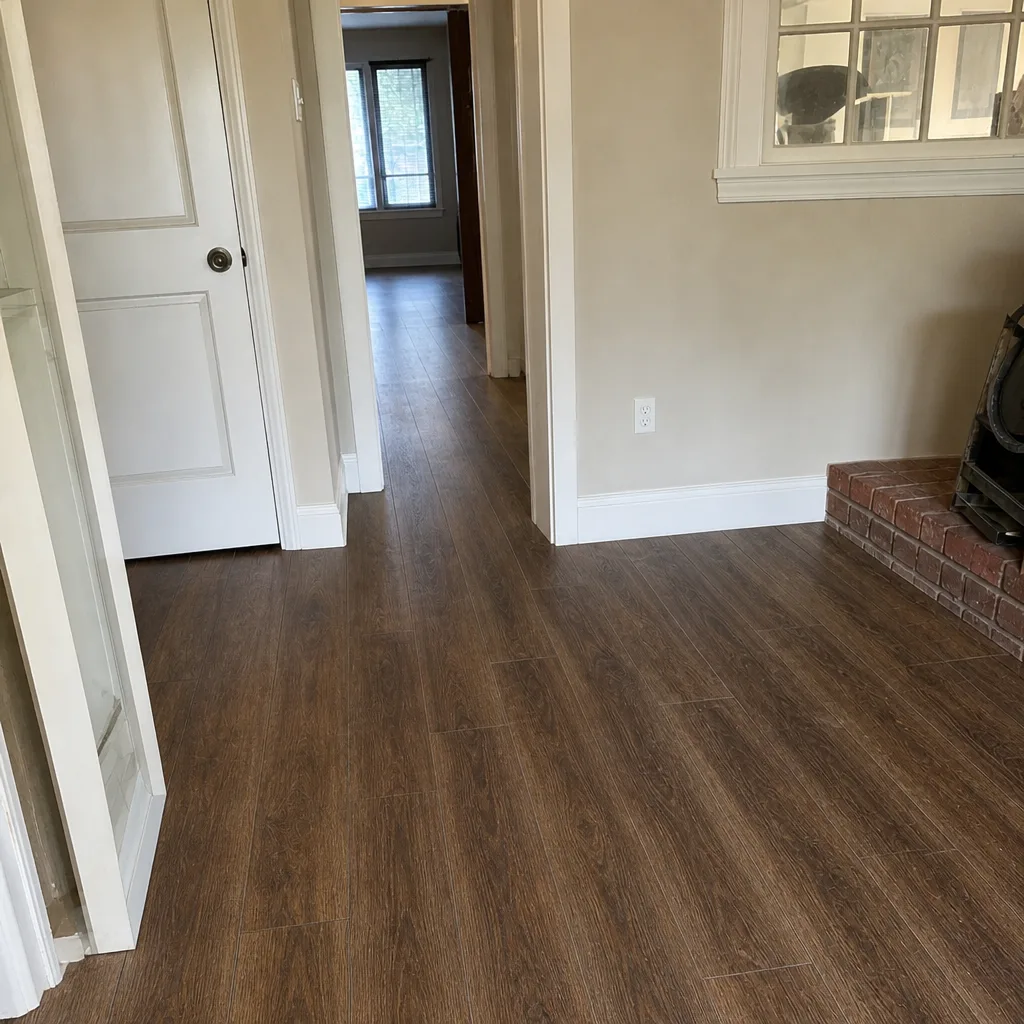 After
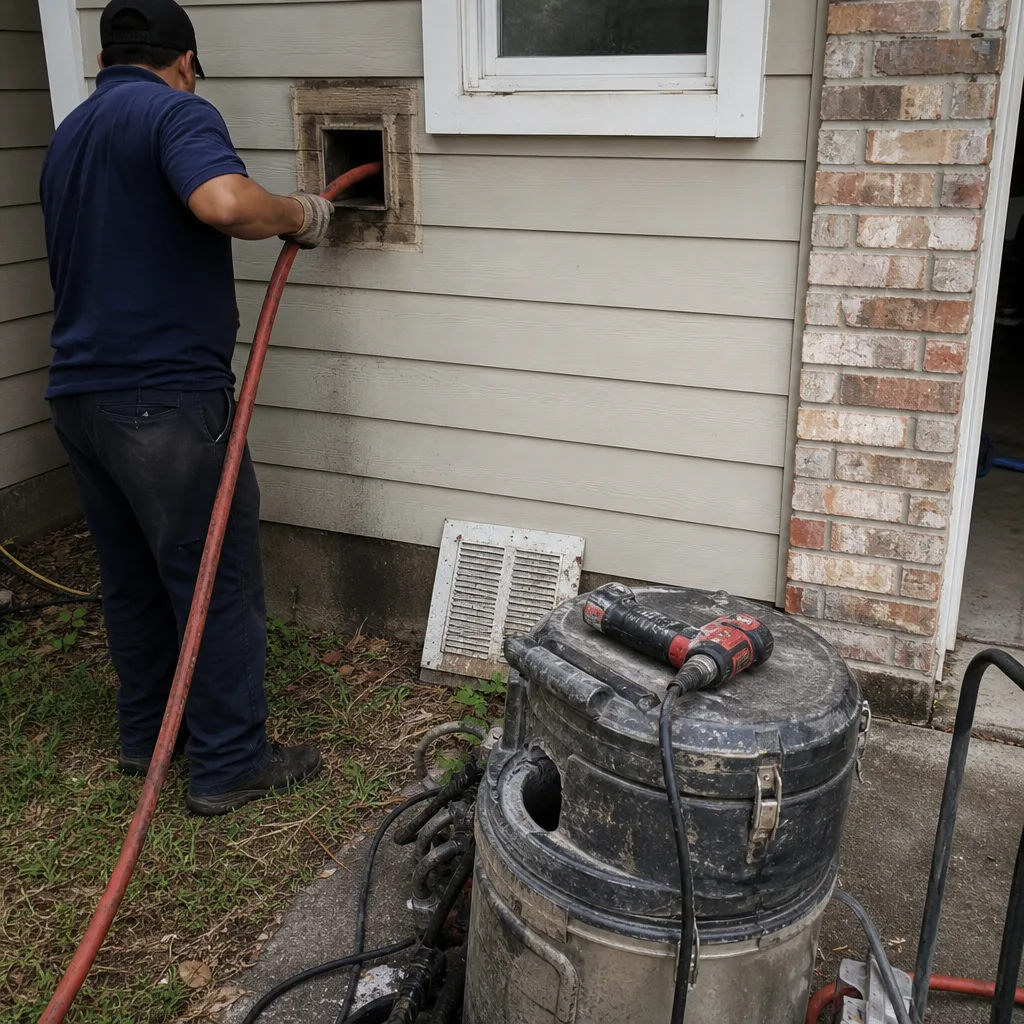 Before
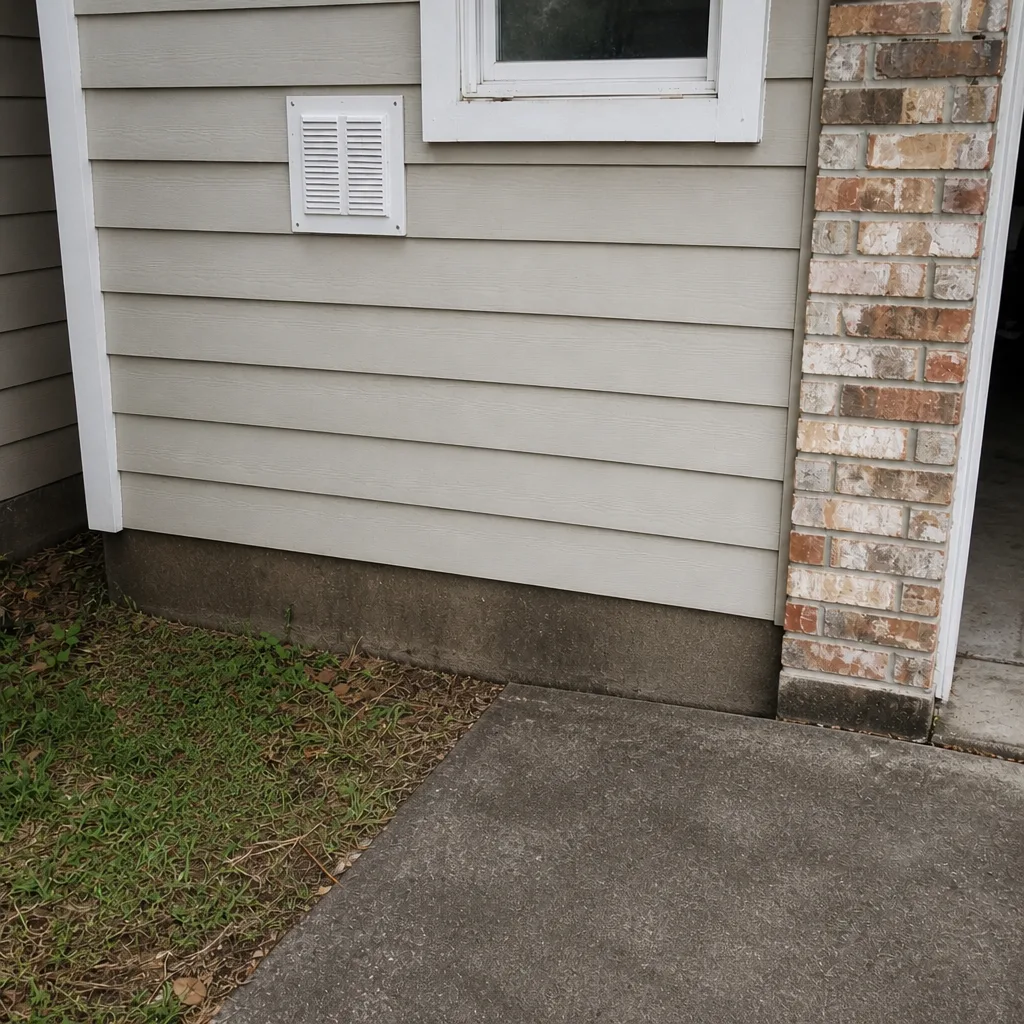 After
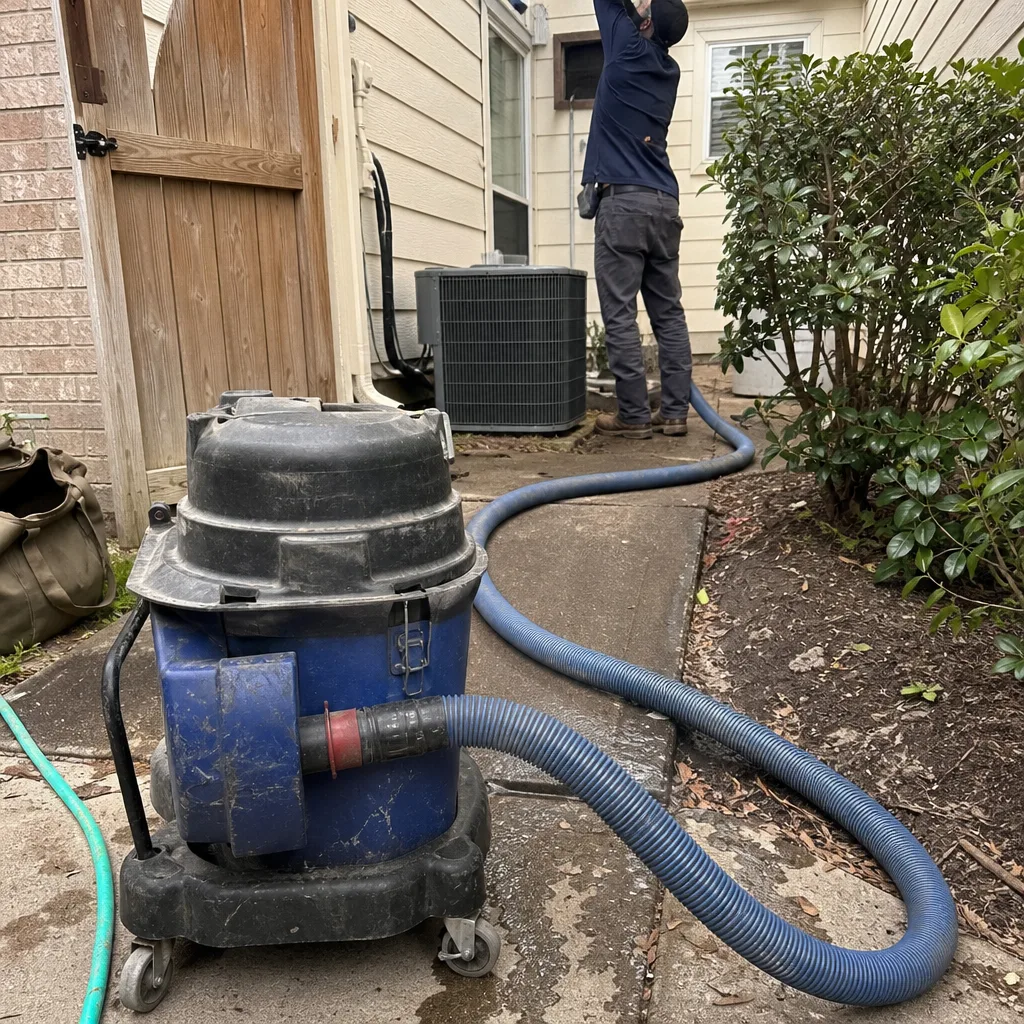 Before
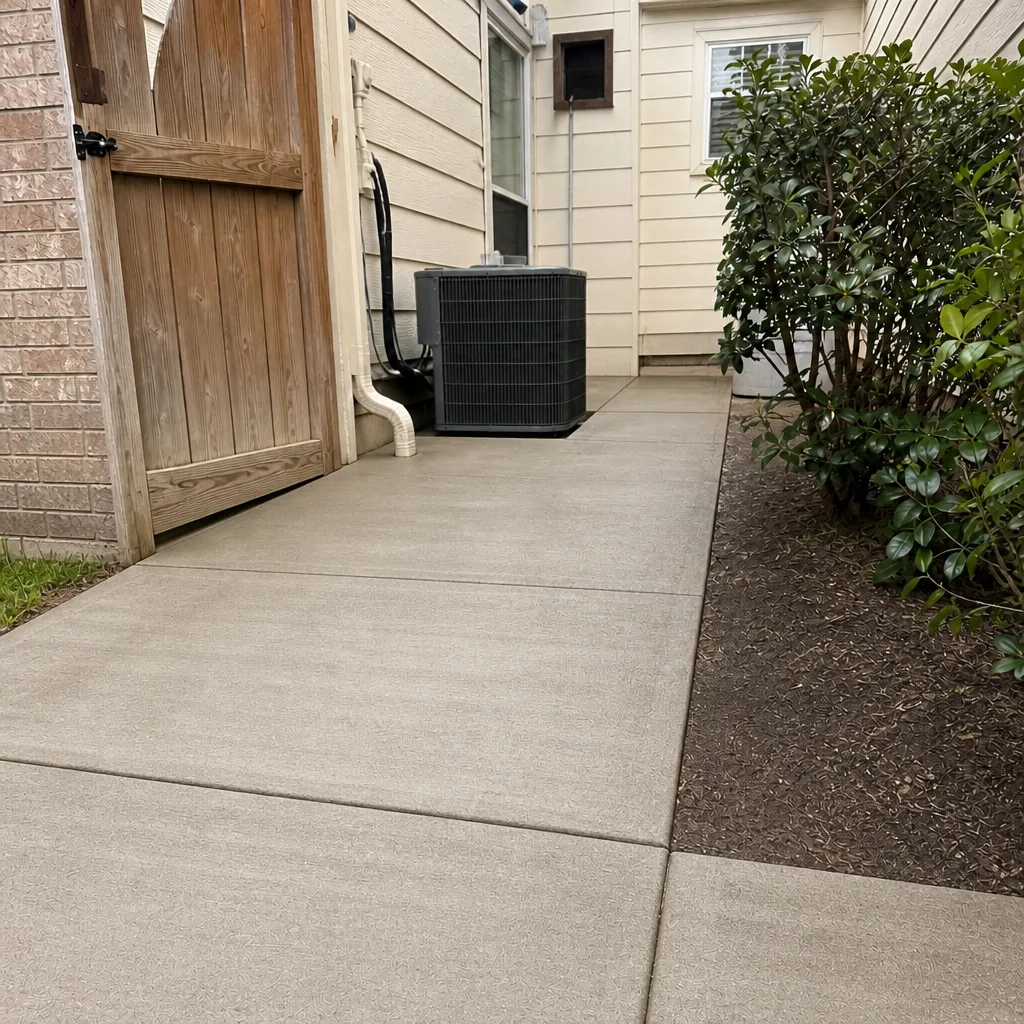 After
When to Call a Professional
Call a professional when the work is source removal rather than maintenance. That means visible dust streaks at registers, a persistent musty smell from one room, uneven airflow that’s changed, a recent remodel that filled the returns with drywall dust, a dryer vent run you can’t fully inspect, or any sign that a duct connection may have failed. A full-system cleaning is also the right call if it’s been several years since the system was cleaned and you can’t recall the last interval. We’ve seen enough Conroe systems to know that a shop-vac reaches the easy 15% and stops, and professional cleaning is what closes the gap. Duct Cleaning Conroe offers free estimates in Conroe; call (844) 761-5350. We answer 24/7. Fast dispatch from 7am to 7pm, Sunday through Friday.
Frequently Asked Questions
Roughly 15%. A shop-vac and a brush reach the register grilles, the boot transitions, and the last foot or two of accessible flex duct behind each register. The main trunk lines, plenums, return cavities, and air handler interior are outside what consumer equipment can source-clean.
No. Register cleaning is maintenance, not system cleaning. The dust you see at the grille is a fraction of what’s accumulated on interior duct walls throughout the run. Regular register upkeep slows the rate of new buildup but doesn’t remove what’s already in the main lines. Call (844) 761-5350 for an exact quote on a full-system cleaning. Estimates are free.
Opening a duct isn’t inherently dangerous, but re-sealing it correctly is harder than it looks, and a poorly re-sealed joint becomes a leak. A leak pulls unconditioned air into the system, which in Conroe’s humid climate can introduce moisture where you don’t want it. We don’t recommend opening sealed duct sections for DIY cleaning.
Airflow changes at one register, a musty smell from one room, or a sudden uptick in dust on horizontal surfaces are the common signs. A shop-vac pass won’t diagnose it. A professional inspection during cleaning will check joints along the run. Call and describe what you’re seeing; that helps the technician prioritize. Ask about air duct cleaning and repairs in the same trip so the fix and the clean happen together.
You can clean the short visible stretch between the dryer and the wall, and you should do that regularly. You cannot fully clean a long dryer vent run through walls or attic without the extended tools and containment a professional service uses. Given that lint is a leading cause of residential dryer fires, the full run is worth doing professionally.
Ask what equipment they use, whether they perform contact cleaning versus a “blow-and-go” pass, whether they inspect and repair duct joints, and whether they can show before-and-after photos. In our case, that’s a Rotobrush contact-cleaning system, Nikro HEPA vacuums, Abatement Technologies negative air machines, and a repair line as a real service. If a quote seems dramatically lower than the rest, ask what’s missing from the service. One flat price per system agreed before work starts is the standard any Conroe homeowner should expect.
The Bottom Line
DIY air duct cleaning is fine for what it actually is: light maintenance between professional service intervals. Grilles, boots, accessible flex ends, and short dryer vent lint removal are all worth a homeowner’s time. Source-removal cleaning of an entire residential system is not, because no consumer equipment generates the negative air volume required to agitate and capture contamination in main lines, plenums, and return cavities. A disconnected flex run in a Conroe home is a real risk from a well-meant DIY pass, and repair matters as much as cleaning. Use DIY for upkeep. Use professional cleaning for the work the equipment actually defines. For more background on the Conroe area and how duct systems perform here, visit our Conroe page; the parent service guide lives at Duct Cleaning Conroe.
Contact
If you’ve read this far and you’re still on the fence, the fastest way to a real answer is a call. Describe what you’re seeing, where, and when it started, and we’ll tell you whether what you’ve described is a DIY-window situation or a full-system one. We set one flat price per system by written estimate before any work starts, and the estimate is free. Call (844) 761-5350 for a free estimate. We answer 24/7. Fast dispatch from 7am to 7pm, Sunday through Friday.
Written by the team at Duct Cleaning Conroe.