
Last updated November 15, 2026
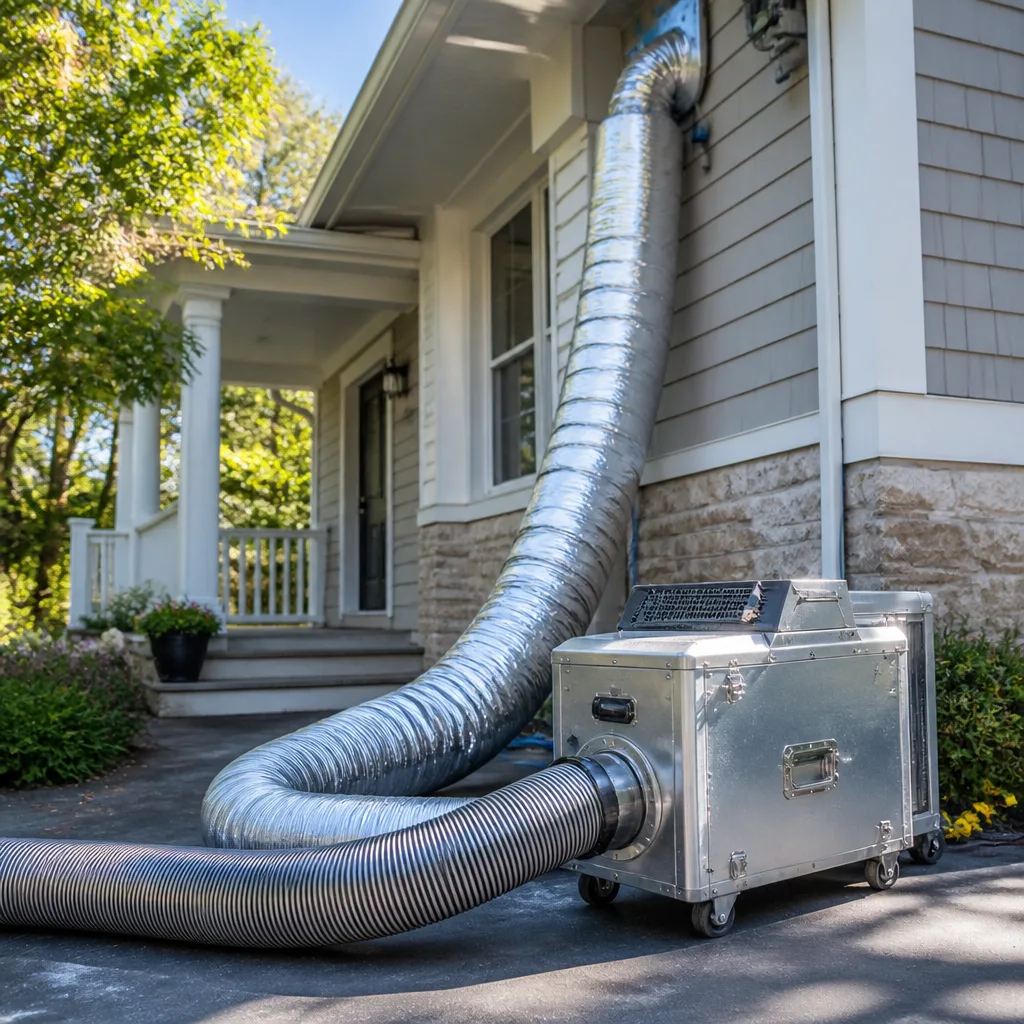 Whole-home duct cleaning
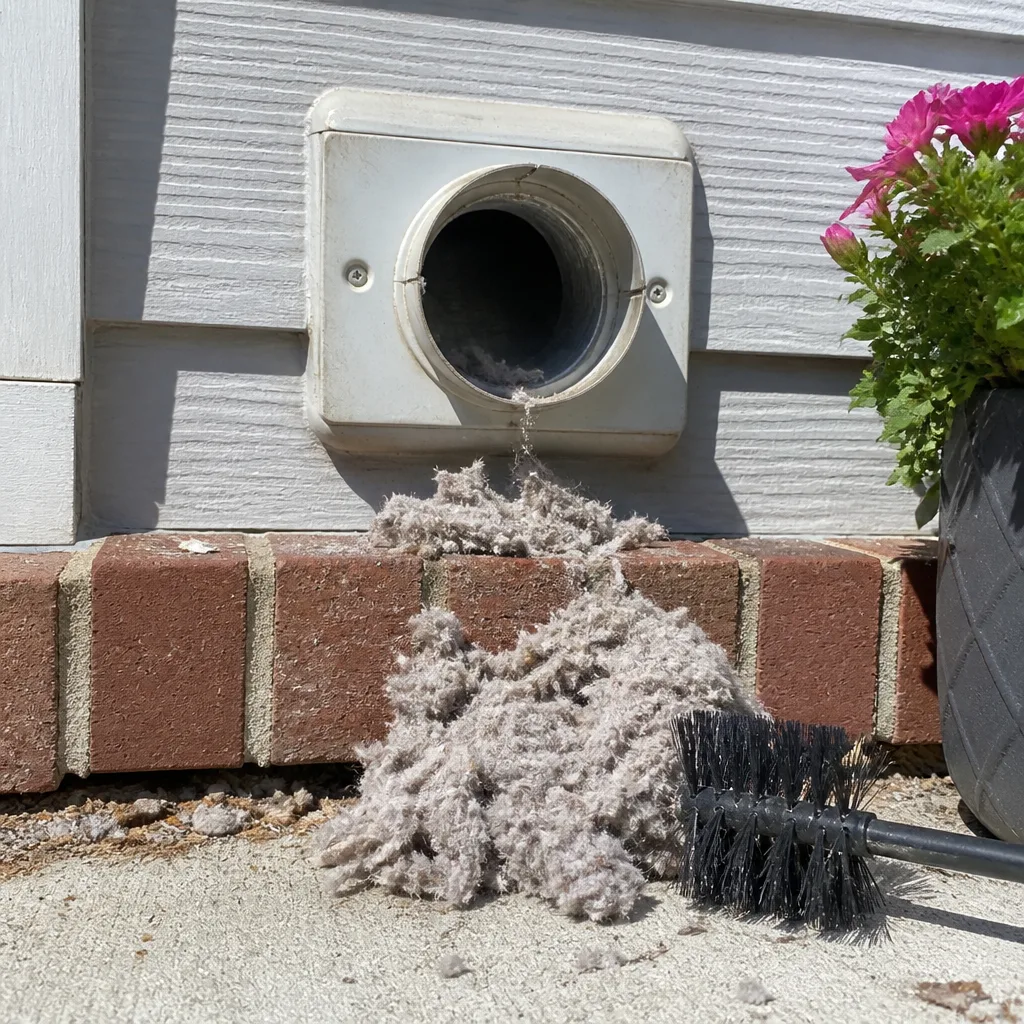 Dryer vent cleaning
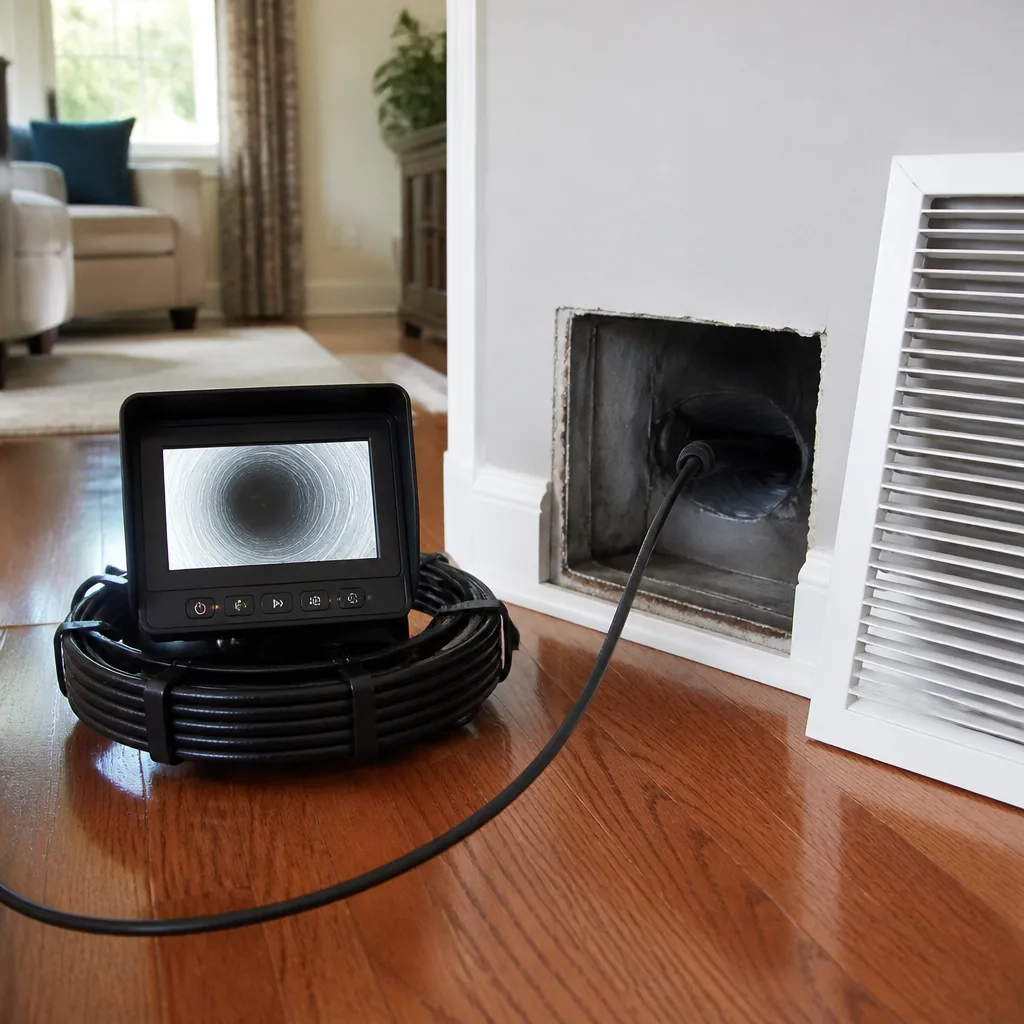 Camera inspection
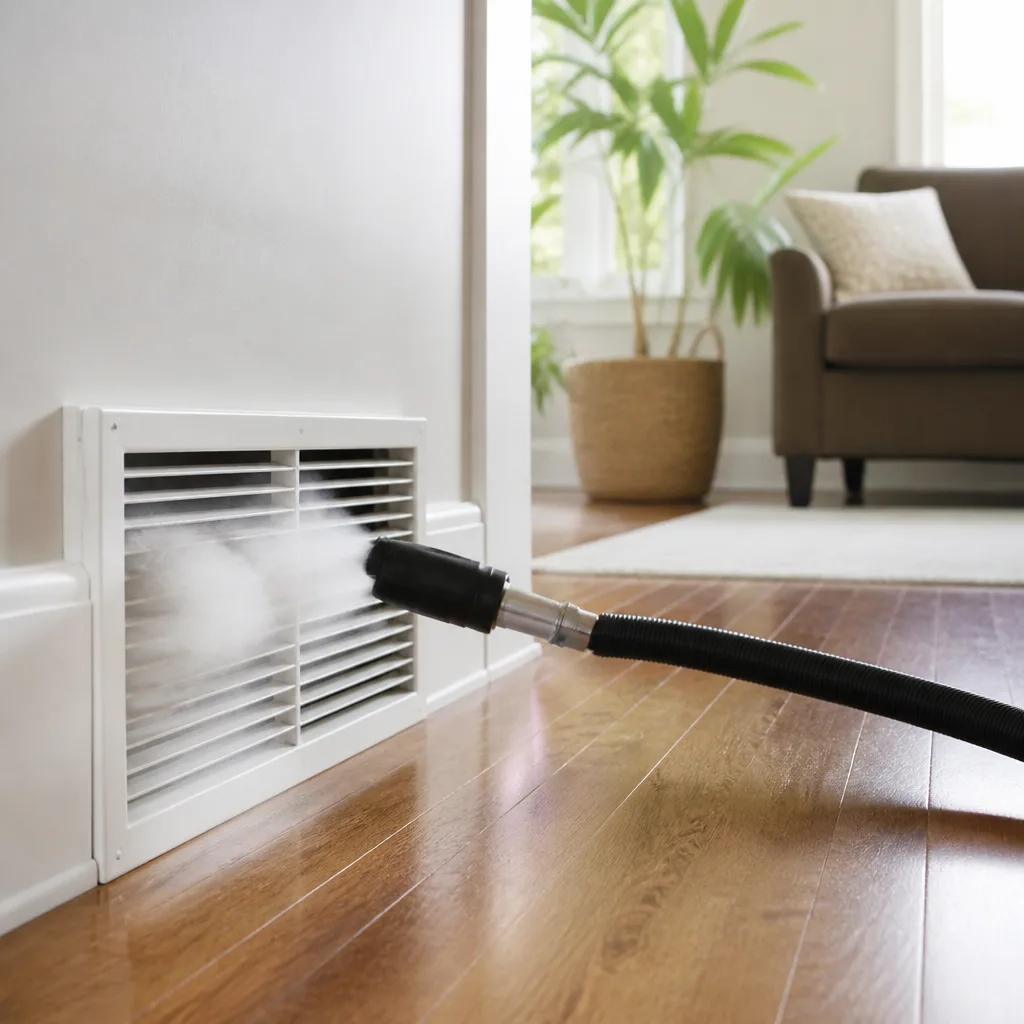 Sanitizing & deodorizing
Whole-system duct and dryer vent check with before-and-after photos - you see exactly what came out of your vents
That "$99 whole-house special" is a bait ad - the real number appears once they are in your hallway, or the "clean" is a shop-vac at the register. We photograph the inside of your ducts before and after instead.
Air Duct Cleaning Maintenance Schedule: What to Do and When
The “every 3 to 5 years” rule you’ve seen on nearly every duct cleaning website was written for a hypothetical house in a temperate climate. It doesn’t account for Conroe’s summer humidity, which sits near 90% for weeks at a time and keeps duct interiors damp long after the air conditioner shuts off. It doesn’t account for a household with two shedding dogs, or a 1970s ranch house with attic insulation that has settled and started migrating into the return plenum. A real maintenance schedule is tiered, and every one of those variables moves the date independently. This guide builds a schedule around your actual conditions instead of an industry average, and explains what to check between professional cleanings so you’re not guessing.
Quick Answer
Most Conroe homes need professional air duct cleaning every 2 to 4 years, adjusted up or down by occupancy, pets, allergy history, home age, and attic insulation condition. Homes with shedding pets or a resident with asthma often land closer to every 2 years, while a low-occupancy newer build with good filtration can stretch past 4. Between professional visits, the homeowner handles filter changes, register wiping, and dryer vent lint checks on a monthly-to-annual cadence. Scheduling before cooling season starts in April is mechanically smarter than waiting until after, because it removes the debris that feeds mold growth during the humid months.
Styles & brands we work with
- Whole-home duct cleaning
- Dryer vent cleaning
- Camera inspection
- Sanitizing & deodorizing
Table of Contents
- Why a Fixed Interval Doesn’t Work Here
- The Five Variables That Shift Your Timeline
- What to Inspect Between Professional Cleanings
- Seasonal Timing Logic for Conroe
- Homeowner Tasks vs. Professional Tasks
- How Your Post-Cleaning Baseline Report Works
- Dryer Vent Maintenance: The Safety Track
- Common Mistakes to Avoid
Why a Fixed Interval Doesn’t Work Here
An interval is a starting point, not a schedule. The number that matters is how fast your particular system loads up with debris, and that rate changes with the house, the household, and the season. We’ve seen duct systems in Conroe that were genuinely overdue at 18 months and others that were still in reasonable shape at 5 years. The difference wasn’t luck. It was load factors.
A duct system is an ecosystem. Supply trunks carry filtered air out, returns pull air back in, and the whole loop passes through a filter and often through indoor air quality components like a Honeywell or Aprilaire setup. Debris accumulates at the points where velocity drops: the last few feet of a run, the boot behind a register, the return plenum, the interior walls of flexible duct where the liner has started to break down. Cleaning on a fixed calendar date means you’re either paying early or waiting too long, and neither is useful.
Build a variable-interval schedule instead. Start with a baseline that reflects the average Conroe home, then apply the multipliers in the next section. Your baseline is 3 years for a single-family house with central air, average occupancy, and no pets. From there, adjust. Write the adjusted number down. That’s your target date, and it’s the date you should put in your own calendar rather than trusting a mailer.
The Five Variables That Shift Your Timeline
Each of these shifts the interval on its own. Most homes have two or three of them at once, which is why the effective schedule varies so much from house to house on the same street.
1. Occupancy Type
A household of two adults who work outside the home generates less skin cell, hair, and clothing fiber load than a household of five with a home office. High occupancy with people home all day pulls more particulate into the return. Shorten the interval by roughly a third for a busy household of four or more, or a home with a home-based business that sees foot traffic.
2. Pet Count
Pets are the single biggest multiplier we see in Conroe homes. One shedding dog or cat justifies tightening the schedule by a year. Two or more heavy shedders can halve it, putting a 3-year baseline at 18 months. Dander and hair load the filter faster, which means the filter bypasses more particulate into the duct interior once it’s saturated.
3. Allergy or Asthma History
If anyone in the house has respiratory sensitivity, treat the schedule as a health intervention rather than a cosmetic one. Shorten to every 2 years as a floor, and don’t skip years when the ducts look “fine” from the register. Duct interior condition and register appearance are not the same thing, which is exactly why contact cleaning with equipment that agitates the duct wall matters more than a visual check.
4. Home Age and Construction Era
Older Conroe homes often have duct board or older flex with failing internal liner. That liner sheds, and once it starts, cleaning alone won’t solve it; the deteriorated section needs repair. Newer tight construction holds moisture differently and can concentrate humidity in the system. Both ends of the age spectrum justify shorter intervals than a mid-era home with intact ductwork.
5. Attic Insulation Condition
Conroe attics get brutally hot, and insulation in a hot attic degrades and settles over time. When attic insulation is disturbed by other trades, by pest activity, or by its own settling, particles can find their way into return leaks and duct joints. If your attic insulation is old, thin, or has been recently worked on, shorten the interval and have the connections checked at the same time.
What to Inspect Between Professional Cleanings
You don’t need to open a duct to know what’s happening inside it. Two leading indicators tell you most of what you need: how fast the register grilles build up, and how fast the filter loads. Both are homeowner-observable, and both track the interior condition of the system closely enough to move your next service date.
Register Grille Buildup Rate
Wipe one supply register with a white cloth on the first of each month and keep the cloth. If the grille stays clean for weeks, your system is in a stable state. If it darkens noticeably within a week, debris is being carried to the register face faster than it should be, which usually means the duct interior is loaded and airflow is scouring particles off the walls. A grille that builds visible dust in days is a strong signal to move your cleaning date forward.
Filter Loading Speed as a System Health Proxy
New filter in, note the date, and check it at 30 days. Hold it up to a light. A filter that’s visibly gray at 30 days is loading fast and the system is moving a lot of particulate. A filter that still looks nearly new at 60 days means low load. Use the loading speed to set your check interval: fast-loading systems need a 30-day filter check, slow-loading systems can go 60 to 90 days. This is a proxy, not a diagnosis, but it’s a reliable one.
Other Signs Worth Noting
- Musty or earthy smell when the system starts up, which often points to moisture in the duct or the indoor coil area.
- Visible dust puffing from a register at startup, which suggests debris sitting in the branch.
- Uneven airflow between rooms, which can indicate a disconnected or crushed run rather than simple debris.
- Lint around the dryer vent termination or a dryer that takes longer than one cycle to dry a load.
One Short Inspection Loop
- Wipe one grille with a white cloth and date your notes.
- Photograph the filter at install and again at 30 days.
- Listen at the return for rattles or whistles.
- Check the dryer vent termination outside.
- Write the results on your schedule card.
Seasonal Timing Logic for Conroe
Timing a cleaning before cooling season, in late March or April, is mechanically smarter than waiting until after. Conroe’s humid summer is the reason. When duct interiors stay damp for weeks, any dust and organic debris sitting on the walls becomes a food source for mold growth. Cleaning in April removes the food source before the humidity arrives, rather than after the growth has already started.
The second reason is load. Once cooling season is running full, the system is moving air constantly and pulling in whatever the filter misses. A clean system entering that stretch has more headroom. A loaded system entering it falls further behind, and you end up paying for cleaning during the hottest month when you’re already noticing uneven airflow in the back bedroom. Schedule the work in the shoulder season and run the summer from a clean starting point.
For the same reason, don’t stack your dryer vent cleaning into late summer, when lint has had a full drying season to accumulate. Dryer lint is a fire risk, and it builds through the winter and spring as clothes get heavier and cycles get longer. Have the vent cleaned in the spring alongside the duct work, and check the lint trap every load regardless of season.
If your home is in a wooded part of Montgomery County, or anywhere pollen counts run high in early spring, wait until the pollen peak has passed in late March, then clean. Cleaning before the peak means you’ll be cleaning again soon after.
Homeowner Tasks vs. Professional Tasks
The clearest way to keep a schedule is to divide labor. Homeowner tasks are low-risk and preventive. Professional tasks involve equipment, containment, and the duct interior itself.
Homeowner Cadence
- Monthly: Check the filter and note its condition. Wipe one register as a leading indicator.
- Monthly: Check the dryer lint trap and clear it before every load of laundry, not just on a schedule.
- Quarterly: Wipe down all visible supply and return grilles. This is surface cleaning only.
- Annually: Have the dryer vent run inspected for lint accumulation along its full length.
- Annually: Review your schedule card and update the next professional cleaning date based on what you’ve recorded.
Professional Cadence
- Every 2 to 4 years, adjusted: Full air duct cleaning using contact equipment that agitates the duct walls and extracts debris, not just air movement.
- At each professional visit: Interior inspection and repair of any deteriorated duct, disconnected joint, or failed liner. Cleaning without repair leaves the problem in place.
- Annually or as indicated: dryer vent cleaning on the full run, not just the first few feet behind the dryer.
- As recommended: Service of any Honeywell or Aprilaire indoor air quality components in the system.
What the Work Actually Involves
When we do a professional cleaning, the sequence matters more than the machines alone, though the machines are not incidental. We use a Rotobrush contact-cleaning system to physically agitate and extract debris from duct walls, backed by Nikro HEPA vacuum equipment and Abatement Technologies negative-air containment so the debris leaves the system rather than settling back into the house. Register faces and surroundings get Guardsman-level surface protection before work starts. Our technicians have up to 14 years of experience with this equipment.
How Your Post-Cleaning Baseline Report Works
A cleaning receipt tells you a service happened. A baseline report tells you where your system stands so the next interval can be set with evidence instead of guesswork. Insist on the second one. It’s the difference between a maintenance schedule and a recurring purchase.
What a proper baseline inspection should include:
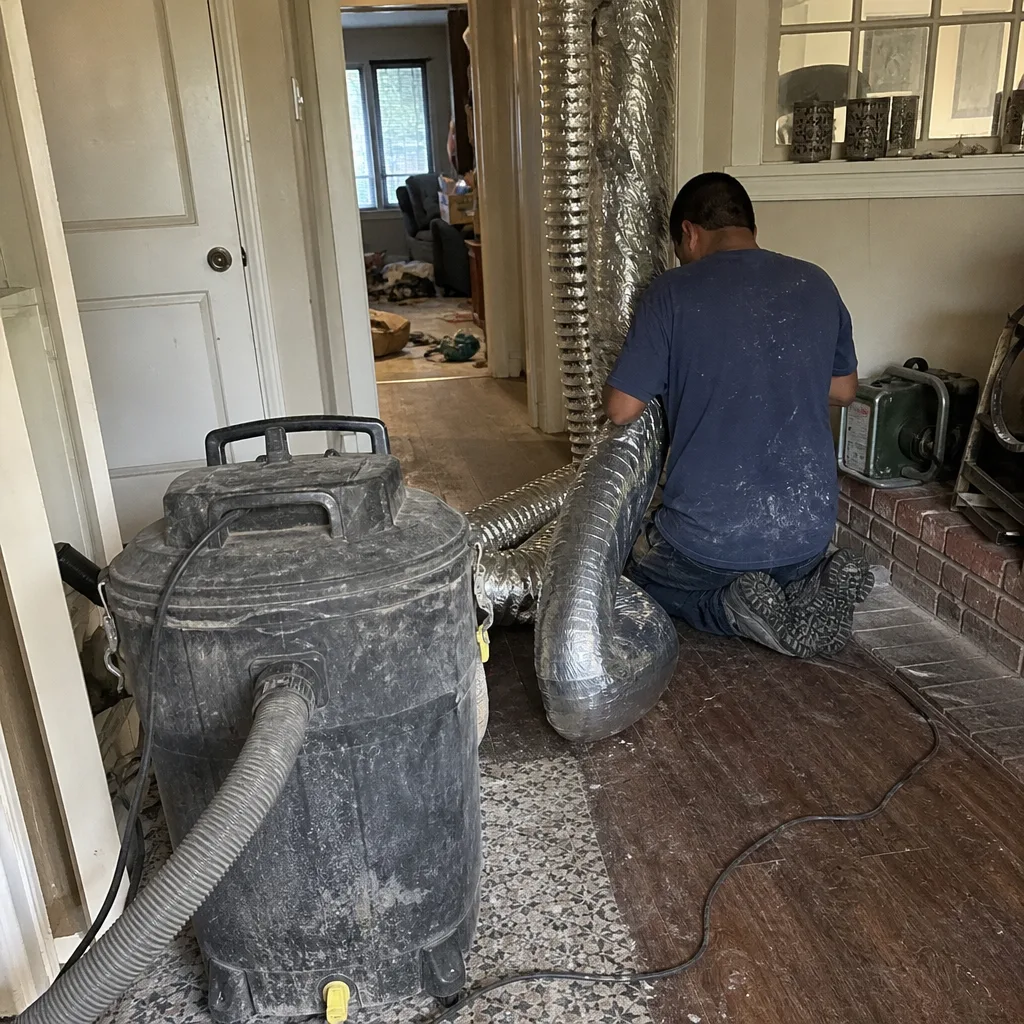
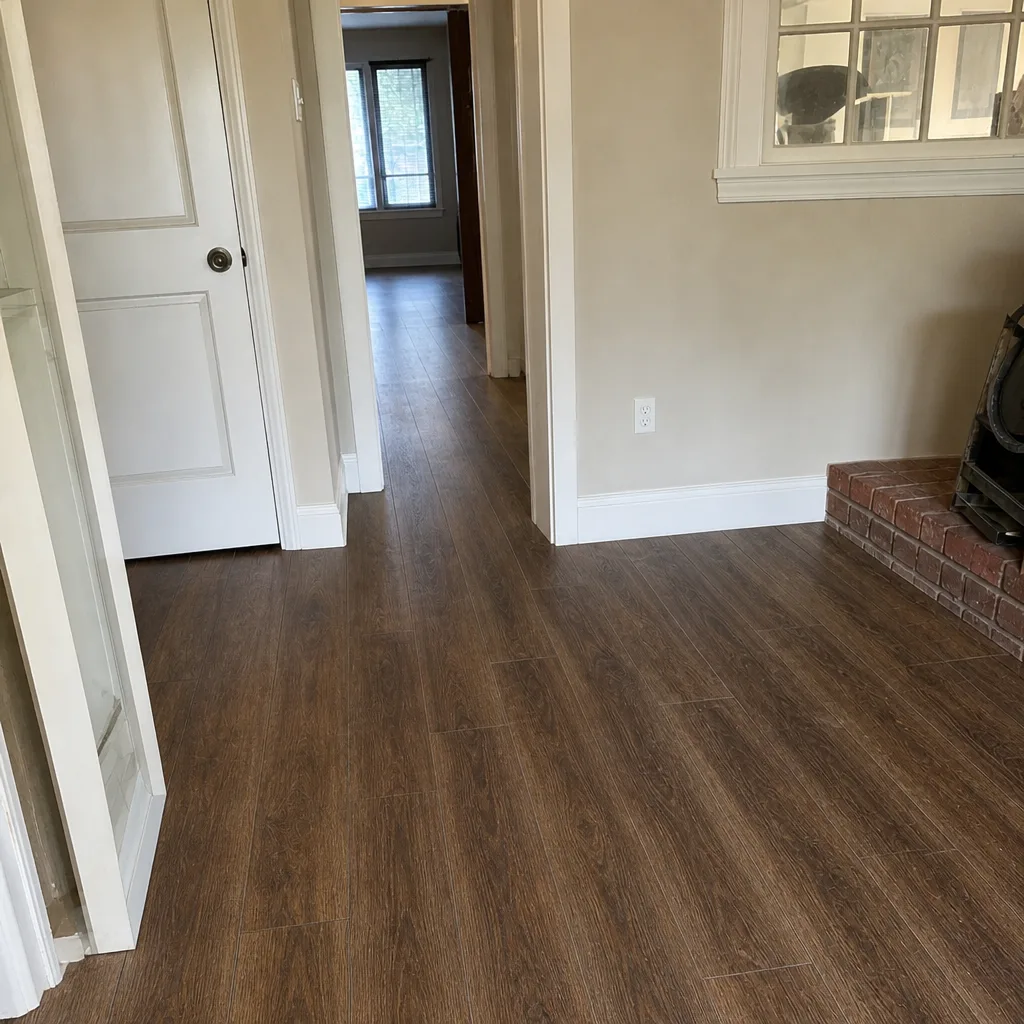
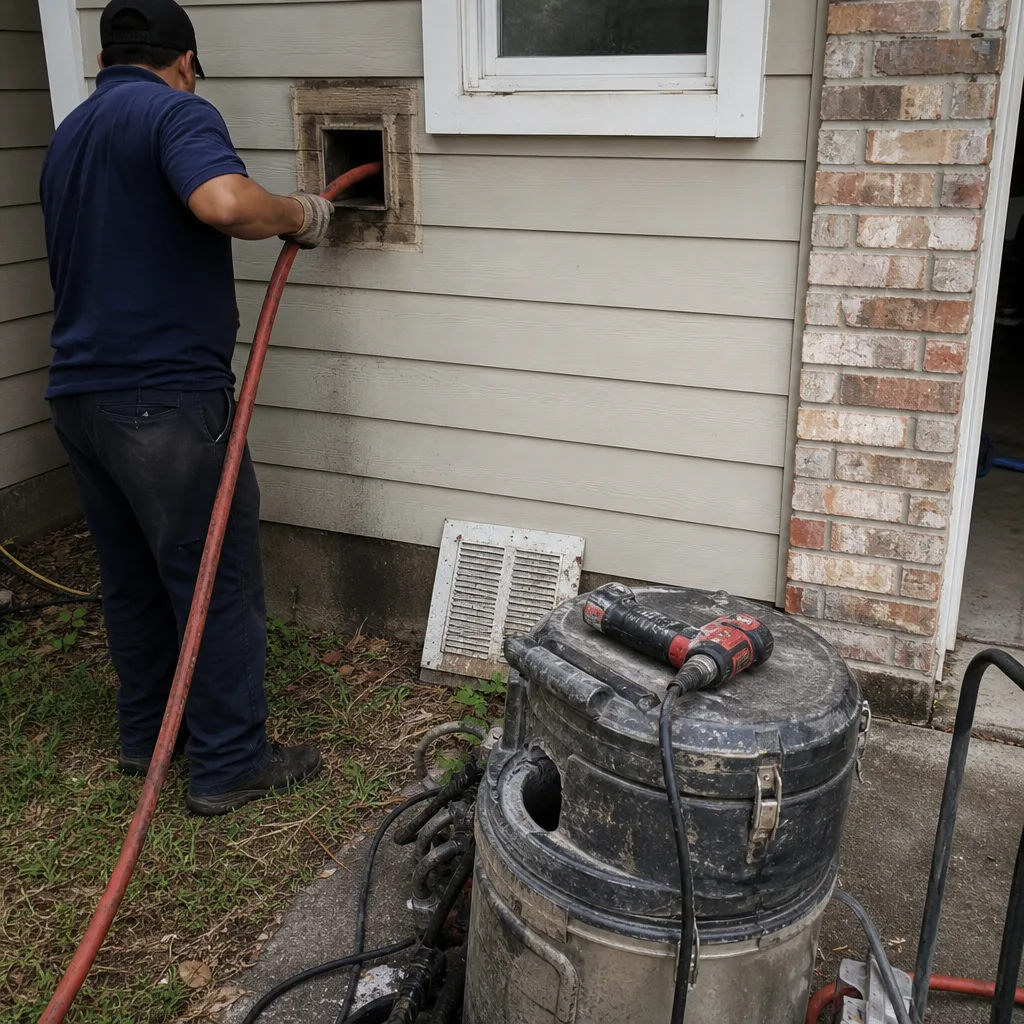
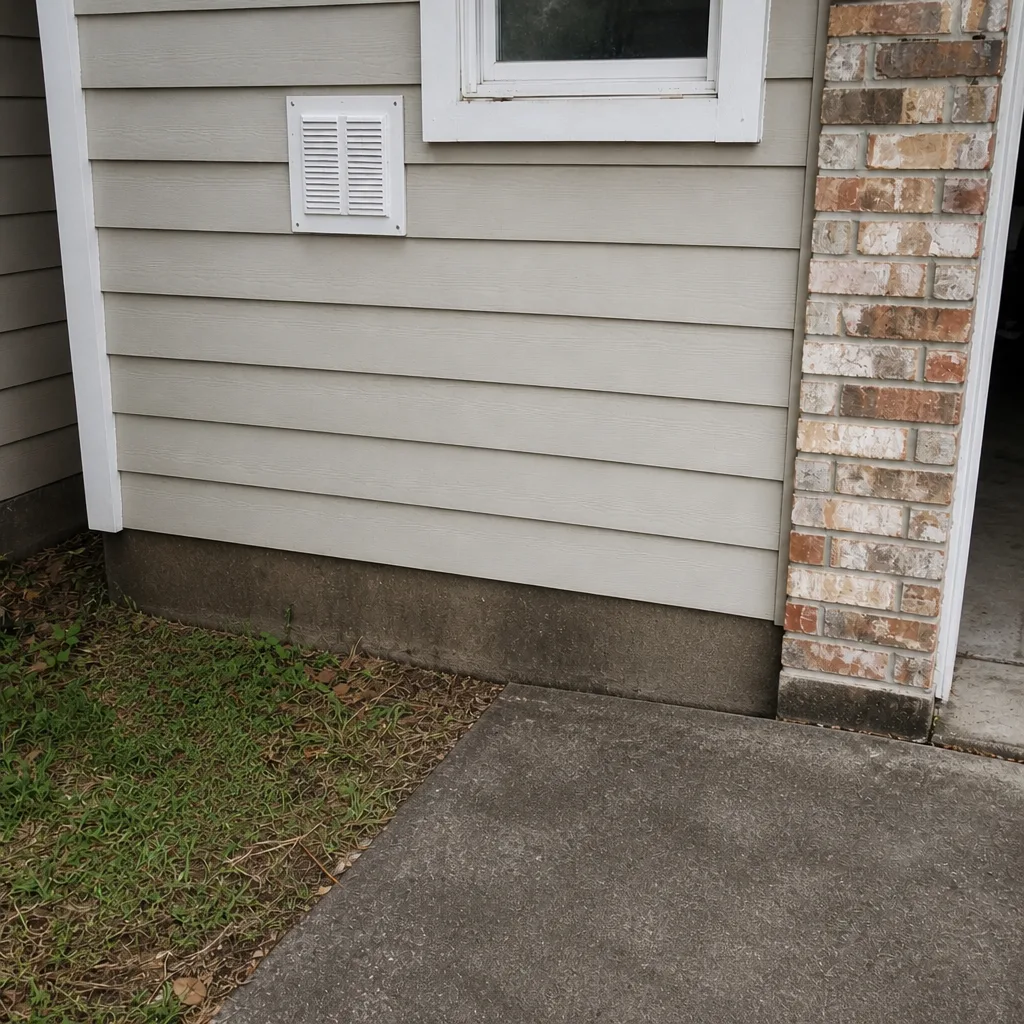
- Before-and-after photos of your own ducts and registers, not stock images. Photographic evidence is how you verify the work happened.
- Documented duct interior condition, run by run, with any deterioration, disconnected joints, or failed liner noted.
- Repairs performed or recommended, separated clearly from cleaning, so you know what was addressed and what was flagged.
- Recommended next service date, with the reasoning attached so it isn’t just a default interval.
- Filter specification and loading notes, so your homeowner checks start from a known baseline.
Treat the report as a starting line. When you call for your next cleaning, the report gives the technician a map of what to look at first. It also means you can tell whether anything has changed in the system, rather than starting over from nothing. If you’re comparing bids, ask each company whether they’ll provide this kind of report. The answer tells you a lot before anyone opens a duct.
The flat price per system is agreed in writing before work starts, so the report doesn’t come with a surprise line item. For a broader look at how we handle the work in this region, see Conroe.
Dryer Vent Maintenance: The Safety Track
Dryer vents sit on a different maintenance track from the duct system, and it’s the one where the stakes are higher. Lint is the leading cause of residential dryer fires, and the accumulation happens along the entire run, not just the section behind the appliance. If your last vent service was only the flexible connector behind the dryer, the full vent run hasn’t been cleaned.
Watch for the signs that the run is loaded: clothing taking more than one cycle to dry, the dryer body feeling unusually hot on top, the exterior termination flap not opening fully, or visible lint around the outside vent hood. Any of those is a reason to have the full run inspected and cleaned, regardless of where you are on your schedule.
Homeowners share this track. Empty the lint trap before every load. That single habit prevents most of the accumulation. Professional dryer vent cleaning handles the full run and the termination, and it’s a good pairing with an annual duct visit so both tracks stay synchronized.
Common Mistakes to Avoid
- Treating the 3-to-5-year rule as a schedule. That figure was written for a temperate climate and an average household. Conroe humidity and a shedding pet can cut it in half. Adjust it with the variables above.
- Judging duct condition by the register face alone. A clean grille can sit in front of a loaded branch. The grille is a leading indicator of change, not a final diagnosis of condition.
- Cleaning without inspecting for repair needs. If duct liner is failing or a joint has separated, cleaning simply masks the problem. Ask for the repair assessment at the same visit.
- Cleaning in July instead of April. Cleaning after the mold season begins removes debris that has already fed moisture-driven growth. Schedule before the humid months, not after.
- Skipping the dryer vent because the ducts were done. The vent run is a separate safety system. Clean it on its own annual cadence, not as a duct accessory.
- Accepting a report with no photos. If you can’t see your own ductwork before and after, you can’t verify the work was done. Ask for photos before the service starts.
- Setting the next date on the drive home. The report is the input for your next interval. If you don’t write the next date down against your load factors, you’ll default to an average that isn’t yours.
When to Call a Professional
Call a professional when the duct system or dryer vent shows signs you can’t resolve through homeowner checks. Specific scenarios: the register grille dirties within a week, the system smells musty at startup, airflow between rooms has become noticeably uneven, a resident’s allergies have worsened indoors, the dryer takes more than one cycle, the exterior vent flap stays closed during a load, or attic insulation has been disturbed and may have entered the return. Any of those warrant an inspection. Contact Duct Cleaning Conroe for duct cleaning in Conroe. Estimates are free. Call (844) 761-5350. We answer 24/7, and fast dispatch runs from 7am to 7pm, Sunday through Friday.
If a repair is flagged, address it rather than waiting for the next cleaning cycle. A deteriorated duct run leaks conditioned air into the attic year-round, and in Conroe’s humidity that means both an energy loss and a moisture pathway. Repairing it at the next scheduled cleaning keeps the system in one service trip and prevents the problem from spreading.
See the difference
 Before
 After
 Before
 After
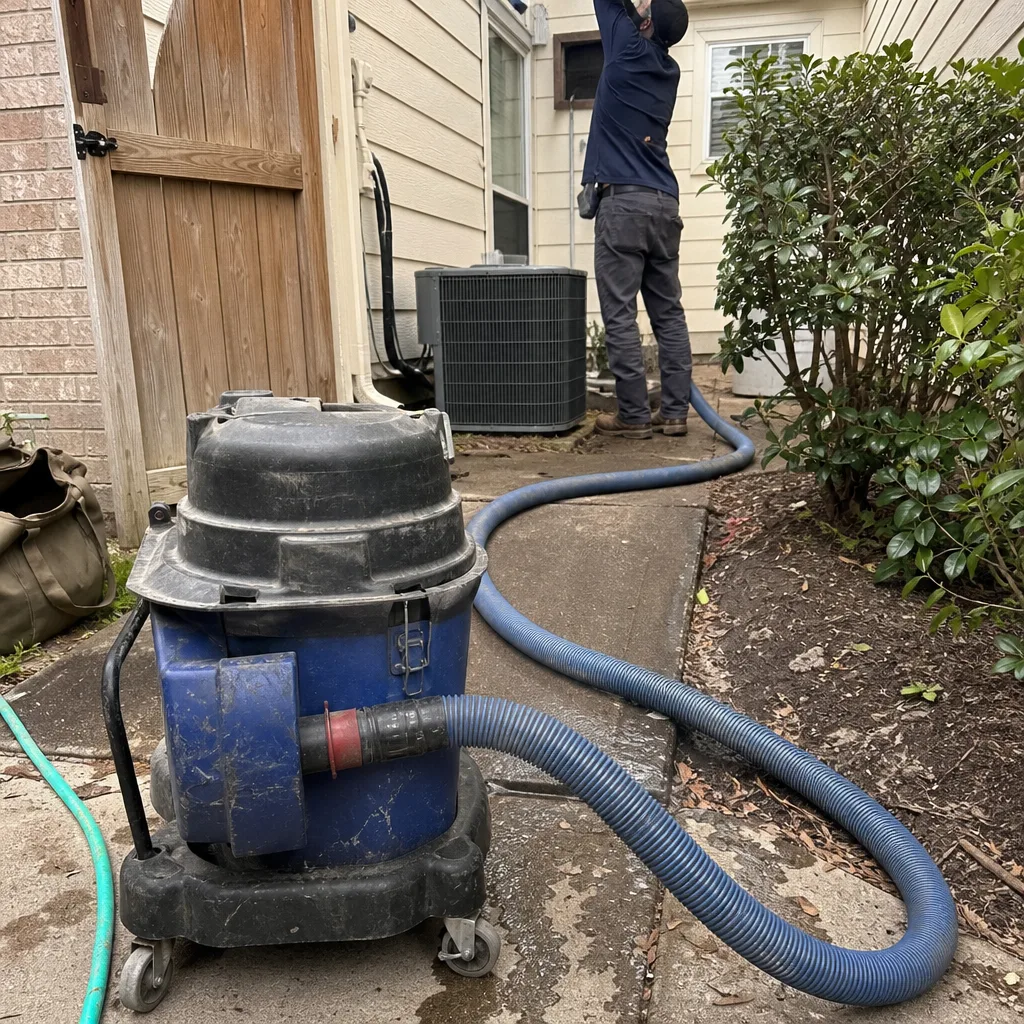 Before
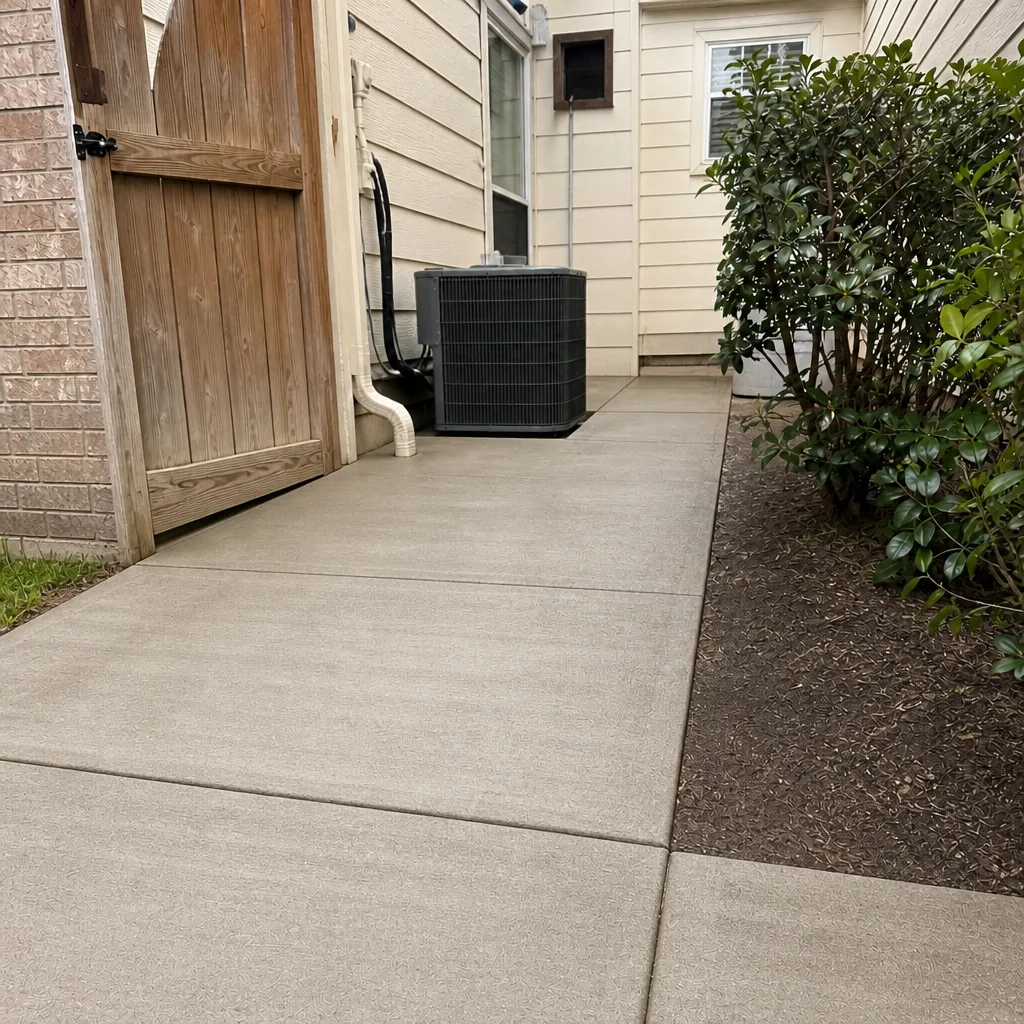 After
Frequently Asked Questions
Most Conroe homes should have professional air duct cleaning every 2 to 4 years, adjusted by occupancy, pets, allergy history, home age, and attic insulation condition. Homes with shedding pets or an asthma sufferer usually need service closer to every 2 years. Homes with low occupancy and intact ductwork can stretch to 4. Use the multiplier framework above to set your own date rather than a default.
Before summer, in late March or April. Dust and organic debris on duct walls becomes a growth surface once Conroe’s humid summer arrives, so removing it first reduces the growth risk through the damp months. Cleaning before the cooling season also means the system enters the heaviest part of its use cycle with a clean starting point.
Watch the register grille buildup rate and the filter loading speed. If a supply grille dirties noticeably within a week of wiping, or a new filter turns visibly gray at 30 days, debris load is high and you should move the date forward. Musty smells at startup, dust puffing from registers, and uneven airflow between rooms are also reasons to have the system inspected rather than waiting.
You can and should handle the homeowner side: filter checks and changes, register wiping, lint trap clearing, and recording grille and filter observations. You should not attempt to clean the duct interior or open the system yourself. Contact cleaning with agitation and HEPA extraction is a professional task, and the risk of damaging flex duct liner is real.
You should receive before-and-after photos of your own ducts and registers, a documented interior condition by run, any repairs performed or recommended, and a proposed next service date with reasoning attached. If a company doesn’t offer a report of this kind, ask what you’ll get instead. The report is what makes the next interval evidence-based.
No. Some use air-only or blow-and-go methods that push debris without extracting it. We use a Rotobrush contact-cleaning system combined with Nikro HEPA vacuum and Abatement Technologies negative-air containment, and we service Honeywell and Aprilaire indoor air quality components in the systems we work on. Ask any company what equipment it uses and whether it removes debris or just discharges it.
The Bottom Line
Your air duct maintenance schedule is a variable-interval system, not a fixed date. Start with a 3-year baseline for a typical Conroe home, then shorten it for high occupancy, pets, allergy sensitivity, older ductwork, or disturbed attic insulation. Run the homeowner track on your own: filter checks, register wiping, lint trap clearing, monthly grille observations. Schedule the professional track in April, before the humid months, and pair it with a full dryer vent run. Use the post-cleaning report as the starting point for the next interval, not as a receipt. That’s what keeps the schedule tied to your house instead of an average.
Get Your System Scheduled
Call Duct Cleaning Conroe at (844) 761-5350 for a free estimate. We’ll inspect the full duct system, set a flat price per system in writing before work starts, and show you before-and-after photos of your own ducts when the job is done. We answer 24/7, with fast dispatch from 7am to 7pm, Sunday through Friday. For an overview of everything we handle, start at Duct Cleaning Conroe.
Written by the team at Duct Cleaning Conroe.