
Last updated November 15, 2026
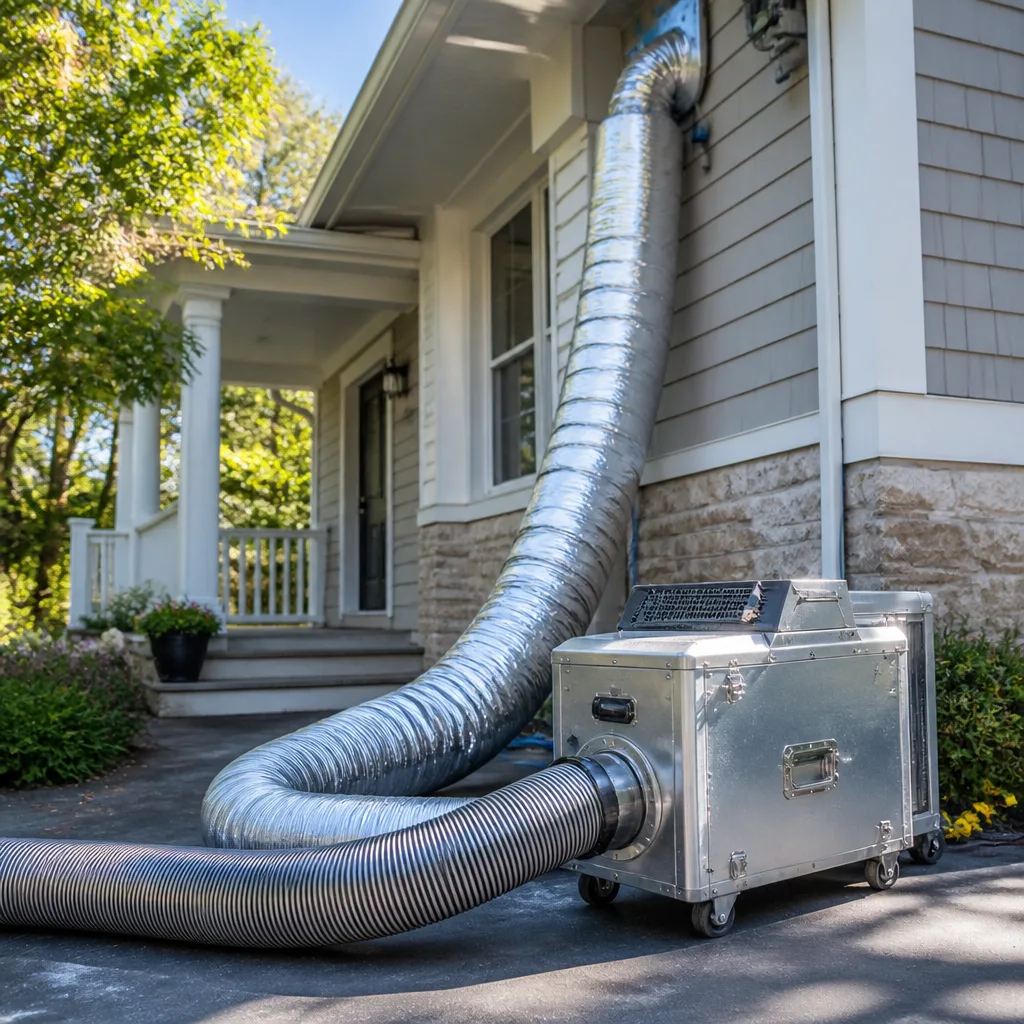 Whole-home duct cleaning
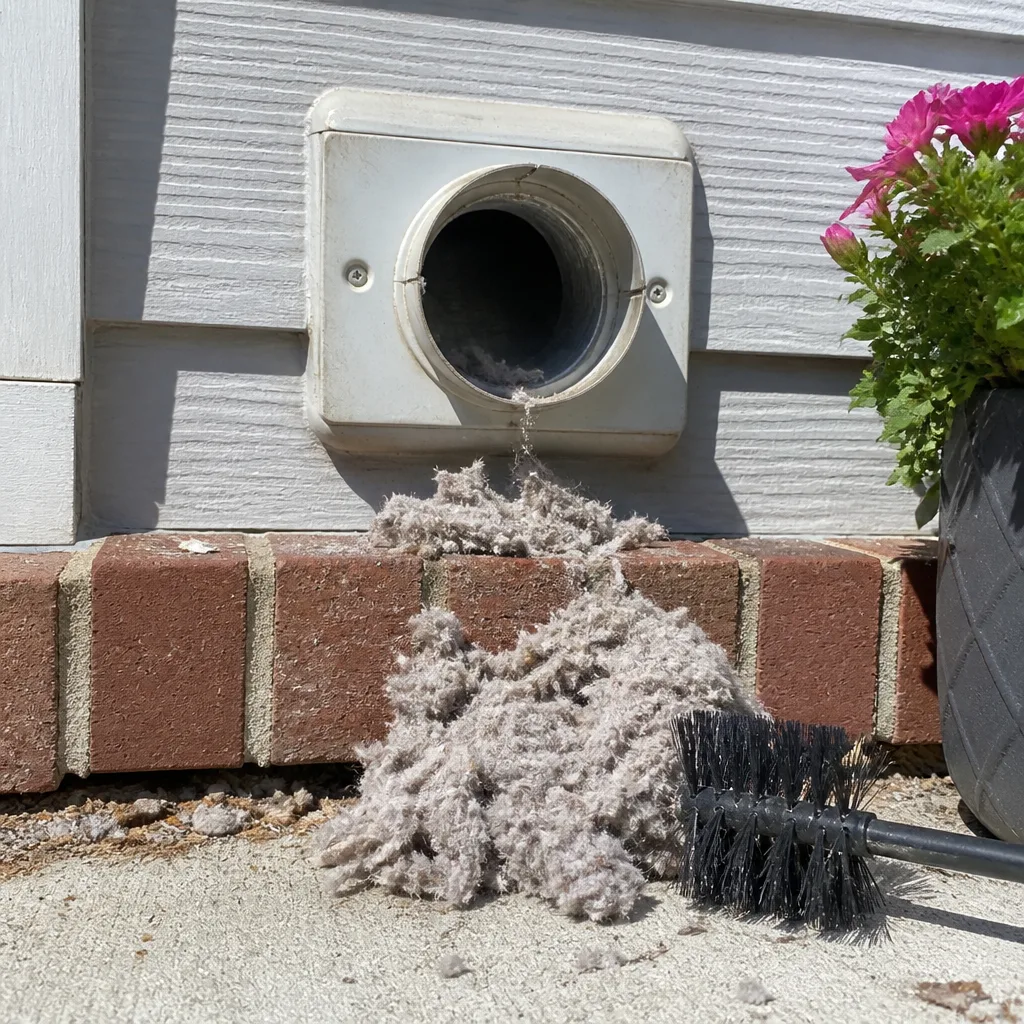 Dryer vent cleaning
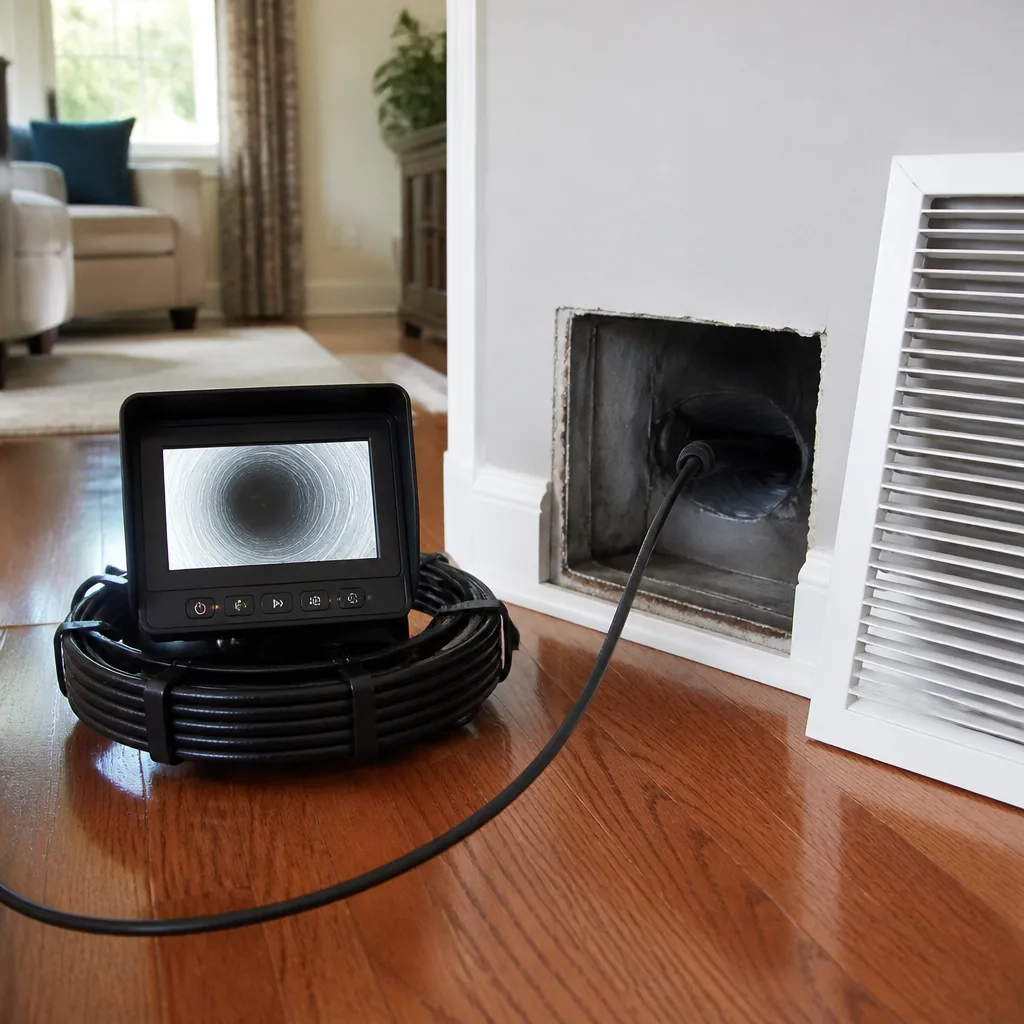 Camera inspection
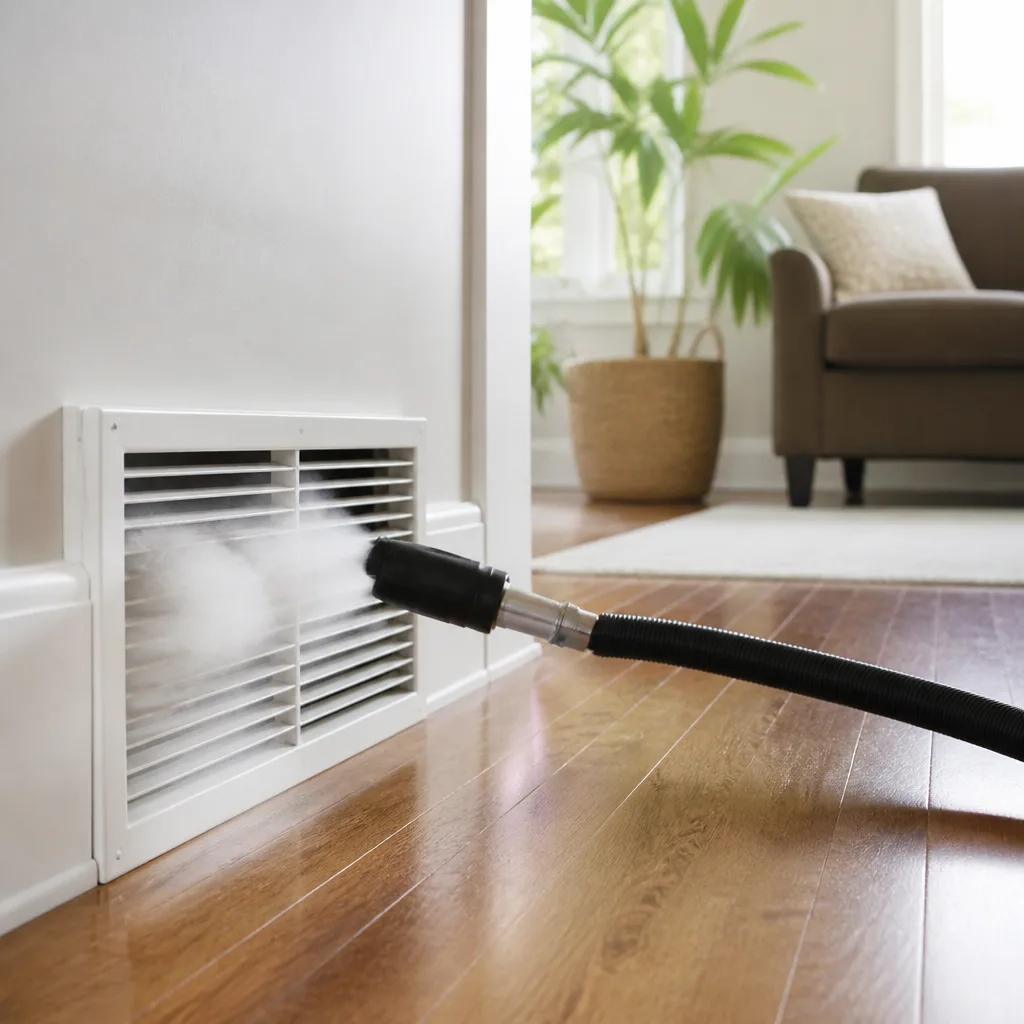 Sanitizing & deodorizing
Whole-system duct and dryer vent check with before-and-after photos - you see exactly what came out of your vents
That "$99 whole-house special" is a bait ad - the real number appears once they are in your hallway, or the "clean" is a shop-vac at the register. We photograph the inside of your ducts before and after instead.
Air Duct Cleaning Maintenance Checklist for Conroe Homeowners
Most homeowners judge their duct system by the air coming out of a register on the day they think to check. That’s the wrong test. Ducts don’t fail in a single dramatic moment. They degrade through a chain of small, trackable conditions: a filter that clogs faster than it should, a register that pushes weaker air than the one across the hall, a faint smell that shows up only when the system first kicks on. Each one is a signal, and each one is readable long before the ductwork itself becomes a problem. This guide walks you through a checklist you can run yourself in Conroe, between professional service intervals, so you know what to watch, what to log, and what should move you to call.
Quick Answer
An effective air duct maintenance checklist in Conroe has three moving parts: a room-by-room visual inspection of registers and airflow, a filter-loading log you update on a set schedule, and seasonal checkpoints tied to the local calendar (pre-summer AC startup, post-hurricane-season review, fall heating kickoff). A professional full-system cleaning handles what you can’t reach or see; your job between those visits is tracking the trends so any technician can read them.
Styles & brands we work with
- Whole-home duct cleaning
- Dryer vent cleaning
- Camera inspection
- Sanitizing & deodorizing
Table of Contents
- Reading Your Filter Like a Diagnostic Tool
- The Room-by-Room Inspection You Can Run Yourself
- Seasonal Checkpoints on the Conroe Calendar
- How to Log Observations a Technician Can Actually Use
- Red-Line Conditions: When to Stop Monitoring and Schedule Service
- Airflow Balance and What Uneven Registers Tell You
- Dryer Vent Maintenance: The Separate Checklist
- Duct Repair vs. Cleaning: Knowing Which You Need
Reading Your Filter Like a Diagnostic Tool
A filter isn’t just a consumable. In a healthy system, it loads at a predictable rate. When that rate changes, the filter is telling you something about the ductwork behind it. In Conroe, filters tend to load faster than in drier climates because the mild, humid Gulf-state air keeps a steady supply of fine particulate circulating, and because cooling systems here run long stretches of the year. A filter that used to last a season and now looks gray in a month is a trend worth noting.
What the loading pattern means
- Even, gradual gray across the entire filter face: normal loading. Keep to your schedule.
- Dark banding on one side or one edge: often a sign of a duct leak pulling unfiltered air in near the filter box, or a poorly seated filter frame that lets air bypass the media.
- Sudden heavy loading on a filter that used to stay clean: could mean duct deterioration downstream, a return that’s drawing from an unintended space, or a change in nearby construction or landscaping activity.
- Filter looks clean but airflow has dropped: the restriction may be elsewhere in the system, not at the filter itself.
If your system runs an air duct cleaning-ready setup with branded indoor air quality components, the filter housing and filtration cabinet are part of the system too. Components from Honeywell and Aprilaire are common in Conroe homes, and they change how filter loading behaves: a properly sealed media cabinet loads the filter evenly, while a housing with a loose gasket lets dirty air slip past the filter entirely. Worth noting which setup you have so you’re reading the right signal.
The Room-by-Room Inspection You Can Run Yourself
You don’t need tools to do this. You need ten minutes and a notepad. The point is to establish a baseline for every room so future changes stand out. Pick a day when the system has been running steadily for at least half an hour.
- Check the register supply face. Look at the grille and just inside the boot opening with a flashlight. Fine dust is normal. Visible clumps, dark buildup, or debris stuck to the register vanes is worth noting.
- Feel the airflow with the back of your hand. Hold your hand a few inches from each register and note whether the push is strong, moderate, or weak. Do this in every room and record the results in order.
- Compare rooms. Rooms far from the air handler will push a bit weaker than ones close to it. What matters is a sudden imbalance: a room that used to be strong and now trickles.
- Inspect the boot opening. With some grilles, you can see up into the boot. Look for debris, dust trails, or loose material. Anything you can see at the boot usually extends further up the run.
- Note the return grilles. Returns often show loading before supply registers do. A darkened return filter or grille face is a leading indicator.
- Smell each room as the system starts. Turn the system off, wait a few minutes, then restart it and smell the air at each register. A musty or stale odor points to moisture or biological growth in the system, not just dust.
- Check filters at every return. Some systems use multiple return filters. Note their condition relative to each other.
Do this walkthrough once at the start of cooling season and once before heating season. Over a couple of cycles you’ll build a picture of which rooms behave consistently and which drift. That picture is exactly what a technician needs to make a fast, accurate diagnosis.
Seasonal Checkpoints on the Conroe Calendar
Duct maintenance in Conroe runs on its own rhythm, shaped by a long, humid cooling season and a short, mild heating season. Building your checklist around that rhythm is more useful than following a generic quarterly plan built for a different part of the country.
Pre-summer AC commissioning (typically late April to May)
- Replace the filter before the cooling season starts, then log the date.
- Run the room-by-room walkthrough with the AC running at full load.
- Check for musty odor now, before heat and humidity peak. This is the season when moisture issues in ductwork become obvious.
- Note any dust around supply registers that appears new since the last season.
Post-hurricane-season inspection (typically October into November)
- Check for water intrusion near ducts, especially in attics where ducts often run in Conroe homes.
- Look for displaced or crushed flex duct, which wind damage or roof work can cause.
- Re-run the airflow comparison against your pre-summer baseline. A shift here is important to note.
- Check filter condition. Storm activity can stir up enough particulate to load a filter faster than usual.
Fall heating startup (typically November through December)
- The first time the heat runs, leave the house for the first twenty minutes and then check for smell at each register. A dusty heating-startup smell is common; a persistent musty or smoky smell is not.
- Repeat the register inspection with heating running.
- Filter check ahead of the heating season, even if the filter looks fine.
This three-checkpoint schedule keeps your observations fresh and seasonal. It also means that when you do talk to a professional, you’re presenting a year of tracked data rather than a single snapshot.
How to Log Observations a Technician Can Actually Use
A technician who arrives with a log of your system’s behavior over time can read trends instead of guessing from a single visit. That’s a genuine advantage: a snapshot tells you what the system looks like today, a trend tells you where it’s headed. Here’s how to build a simple log that’s actually useful. Use a notes app or a small notebook, and keep it consistent.
- Date every entry. Even a short note is useful if it’s dated.
- Note filters first. When you changed it, when you checked it, and how loaded it looked. A simple scale like “light, medium, heavy” works fine.
- Record the room-by-room airflow. A simple list of room names and airflow observations on a scale of 1 to 3 (weak, moderate, strong) will show change over time.
- Note smells and when they occur. First-startup smell is different from sustained smell. Note which it was.
- Log any HVAC service that happened. If a technician serviced the AC, note it. Changes to airflow or filter loading often correlate with HVAC work.
- Note any home changes. Renovation, new furniture, a new pet, roof work, or landscaping activity near the home all change the dust load the system sees.
- Photograph the filter when you change it. A dated photo is the single clearest piece of data you can bring to a service call.
None of this is complicated. The goal is a log that reads quickly. If you hand a technician a page of dated notes with consistent categories, they can interpret your system’s direction in minutes. And if your ducts need professional cleaning or repair, that log tells them a lot about where to look first. This is part of why our technicians have up to 14 years of experience across duct systems of this type. A trained eye can read a log fast.
Red-Line Conditions: When to Stop Monitoring and Schedule Service
Monitoring is the right move until it isn’t. Certain conditions mean the system has moved from “watch it” to “schedule service” and further monitoring won’t tell you anything new. If you see any of these, stop logging and book a professional visit. These are red-line observations, not normal wear.
- Persistent musty or moldy odor that shows up whenever the system starts. This points to moisture and biological growth somewhere in the system, and no amount of cleaning at the visible components solves that.
- Asymmetric airflow that clearly wasn’t there before. One supply register pushing noticeably weaker than the others, or a room that used to be fine and now gets weak air, usually means the duct run has a restriction, break, or disconnect.
- Visible debris at multiple registers. If you’re seeing accumulated debris at more than one supply boot, the problem extends up the run.
- Visible mold or staining inside ducts or around register openings.
- Duct runs you can see that look crushed, disconnected, or sagging, especially in attic runs where much of a Conroe duct system typically lives.
- Filter loading that changes rapidly on a filter that used to last a whole season. A clear change in load rate is a signal the duct system has shifted.
- Any signs of animal intrusion in attic ductwork.
Red-line does not mean panic. It means the system tells you it’s time to get a trained set of eyes on it. Contact cleaning, done with professional equipment that agitates and extracts, is a different process than what you can do yourself at the register boot. That’s where remediation-grade equipment matters. We use Rotobrush contact-cleaning systems and Nikro HEPA vacuum equipment, plus Abatement Technologies negative-air machines on larger jobs, which means the work addresses the duct walls and not just the airflow. If you want a sense of the broader picture, take a look at duct cleaning in Conroe and what a full-system job involves.
Airflow Balance and What Uneven Registers Tell You
Airflow balance is the most reliable diagnostic you can track yourself. Your system was designed with a specific pressure balance across all its runs. When that balance shifts, you can usually feel it at the registers long before a professional can measure it with instruments. What you’re tracking is change, not absolute strength.
What imbalance patterns point toward
- One weak register, others normal: a localized run problem. Often a crushed or disconnected flex run, a collapsed section, or a damper that’s moved.
- Whole zone weak: a trunk duct issue or a problem at the plenum.
- Weak supply but strong return: a supply-side restriction.
- Weak everything, filter medium-load: often a filter or filter housing issue, or a fan/motor issue that isn’t duct-related.
- Cycling between strong and weak on its own: this points toward an HVAC control or blower problem and needs a different kind of technician.
If you’re noting weaknesses across the board and the filter looks clean, the answer may be a duct repair rather than duct cleaning. Deteriorated ductwork leaks conditioned air out and pulls unconditional air in, and a cleaning alone doesn’t fix that. We repair what we find, which is why our repair service exists as a distinct line alongside cleaning. Our technicians have up to 14 years of experience distinguishing a cleaning job from a repair job, and the first minutes of a visit are usually enough to tell.
Dryer Vent Maintenance: The Separate Checklist
Air ducts and dryer vents are two different systems with two different profiles. Dryer vents get checked less often than ducts, and the consequence is more serious: clogged dryer vents are a leading cause of residential fires. This is a real safety stake. It should be part of any home maintenance checklist, particularly in Conroe where cooling and heating systems get attention and the dryer vent quietly doesn’t.
What to check between professional cleanings
- Drying time. Clothes that used to dry in one cycle and now need two are telling you the vent is restricted.
- Heat at the outside vent. With the dryer running, hot air should be exiting the exterior vent with force. Weak or no airflow is a red flag.
- Lint at the outside vent. A build-up of lint around the exterior vent hood is one indicator; failure to clear it is another.
- Lint screen load. If the lint screen loads unusually fast, the airflow path is slower than it should be.
- Dampness at the duct run. Any visible moisture is a stop-and-call condition.
- Dryer overheating or shutting off mid-cycle. Both point to vent restriction and warrant a stop.
Professional dryer vent cleaning reaches the full length of the run, including the interior of flexible vent runs where lint accumulates. Doing it on a regular schedule, tied to the same walkthrough you do for your air ducts, keeps both systems in view. If your dryer vent hasn’t been checked in a while, that’s the single most urgent item on this checklist.
Duct Repair vs. Cleaning: Knowing Which You Need
Homeowners often call for one and need the other. Both are legitimate jobs, but confusing them wastes time and money. The difference comes down to whether the system’s structure is intact. Cleaning is about the condition of the duct walls; repair is about the duct system’s integrity. You need repair when the structure has failed, and cleaning when the structure is sound but the surfaces are dirty. Sometimes you need both, and that order matters: repair first, then clean.
Signs you need cleaning
- Visible debris or dust accumulation inside the ducts or at multiple registers.
- Musty or stale smell that shows up when the system starts.
- Recent renovation work that generated dust loads.
- Long interval since the last professional cleaning.
Signs you need repair
- Crushed, disconnected, or sagging duct runs, especially the attic flex runs common in Conroe homes.
- Clear airflow imbalance between rooms that wasn’t there before.
- Conditioned air escaping into an attic or unconditioned space.
- Visible breaks in duct insulation or duct board.
When both appear together, which is common, we repair what we find and then clean. The alternative is cleaning a duct system that’s going to leak back into the attic as soon as the system starts. That’s why our scope covers three service lines, not just cleaning. Your checklist tells you which one to call about. Our job is to confirm and get it done right.
Common Mistakes to Avoid
- Judging the system by how the house feels one day. Comfort is a lagging indicator. Register airflow and filter loading are leading indicators. Track those instead.
- Assuming a clean filter means clean ducts. Dust that bypasses the filter at a poor filter housing gasket never touches the filter and ends up on duct walls. Clean filter, dirty ducts is a common combination.
- Cleaning before repairing. If the duct structure is broken and you clean first, the work won’t hold the leak. Repair has to come first so the system holds the cleaning.
- Ignoring the dryer vent because the air ducts got attention. These are separate systems. Dryer vents carry a fire risk that air ducts do not. Check each on its own schedule.
- Skipping a written log. Without a log, each visit to the system feels new. With a log, you can see direction and the technician can diagnose from trend.
- Assuming the seasonal calendar is the same as everywhere else. In Conroe, the AC startup is the biggest checkpoint of the year because the cooling season is long. Don’t skip it.
- Trusting only a low-price quote without scope clarity. What gets cleaned, whether repair is included, and whether the price is per-system or per-vent changes what you’re actually buying. Ask before you book.
See the difference
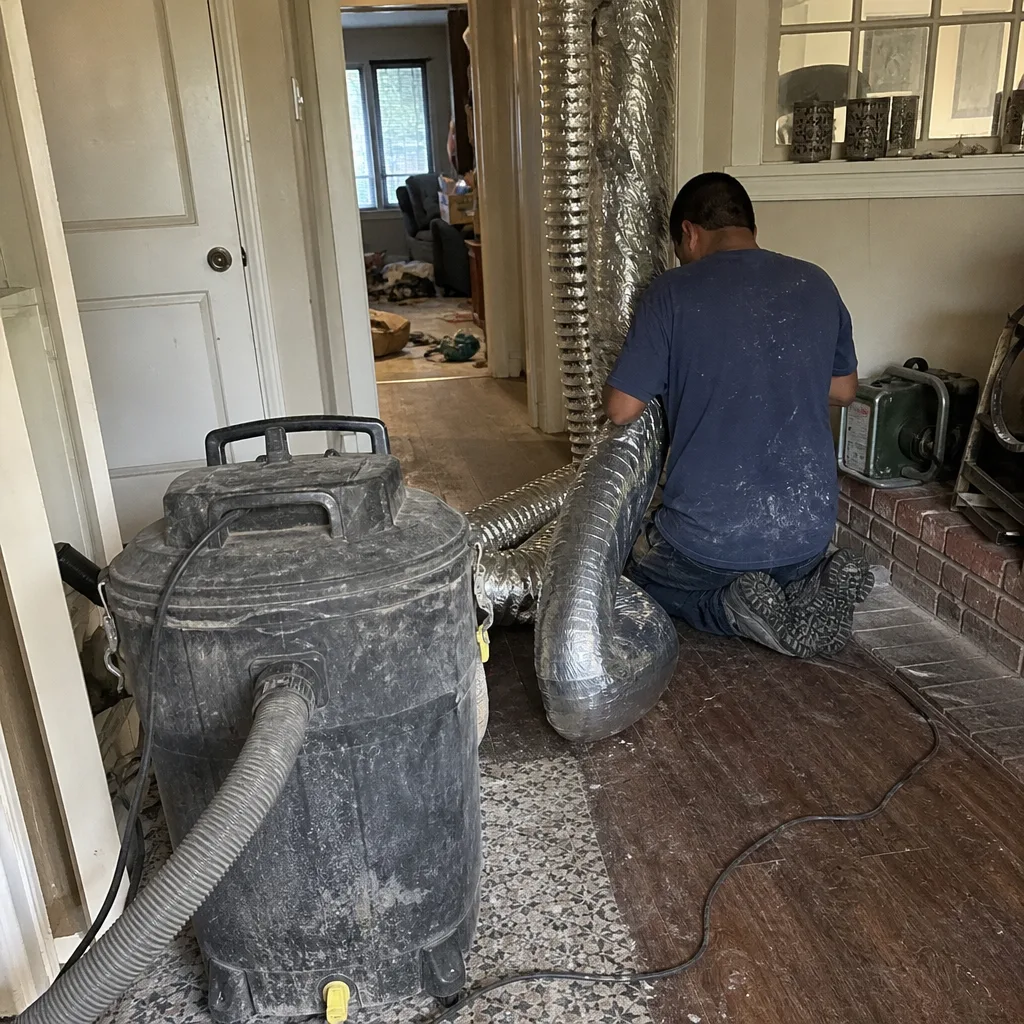 Before
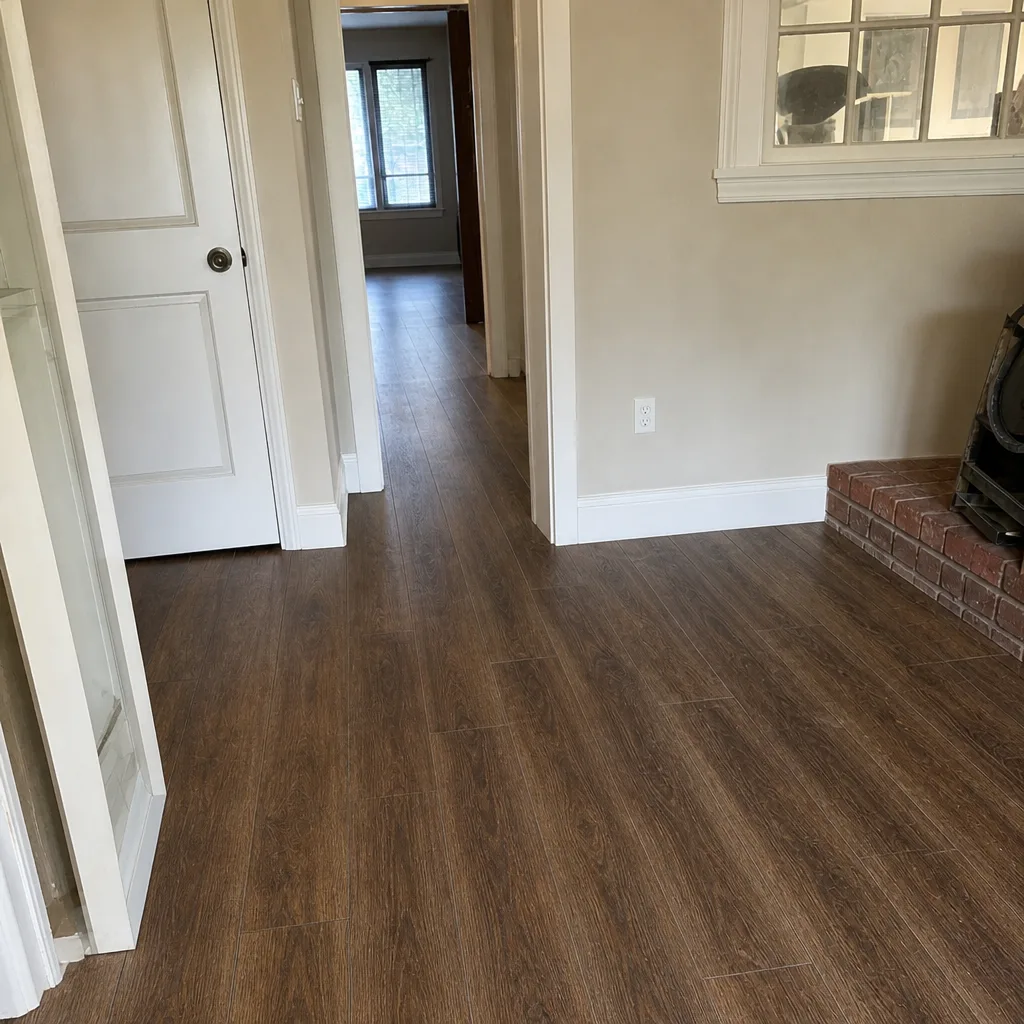 After
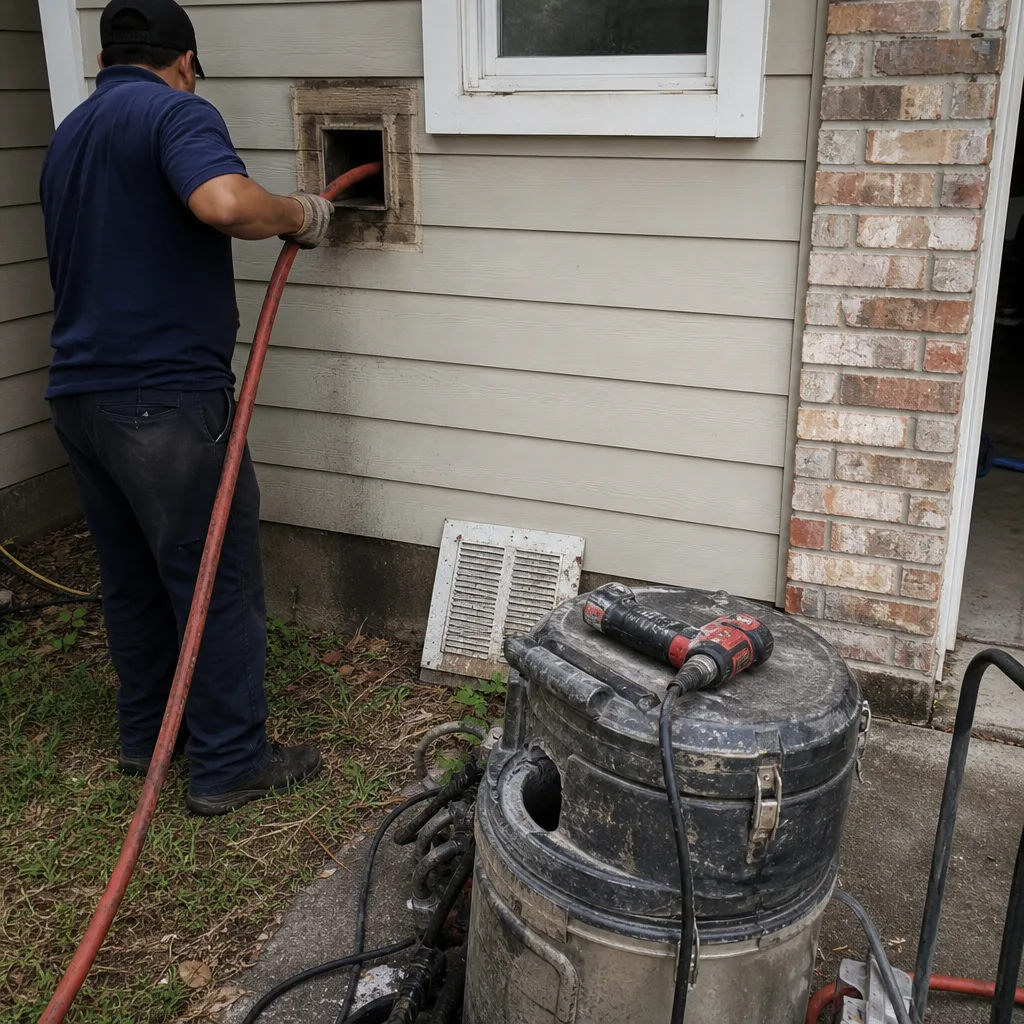 Before
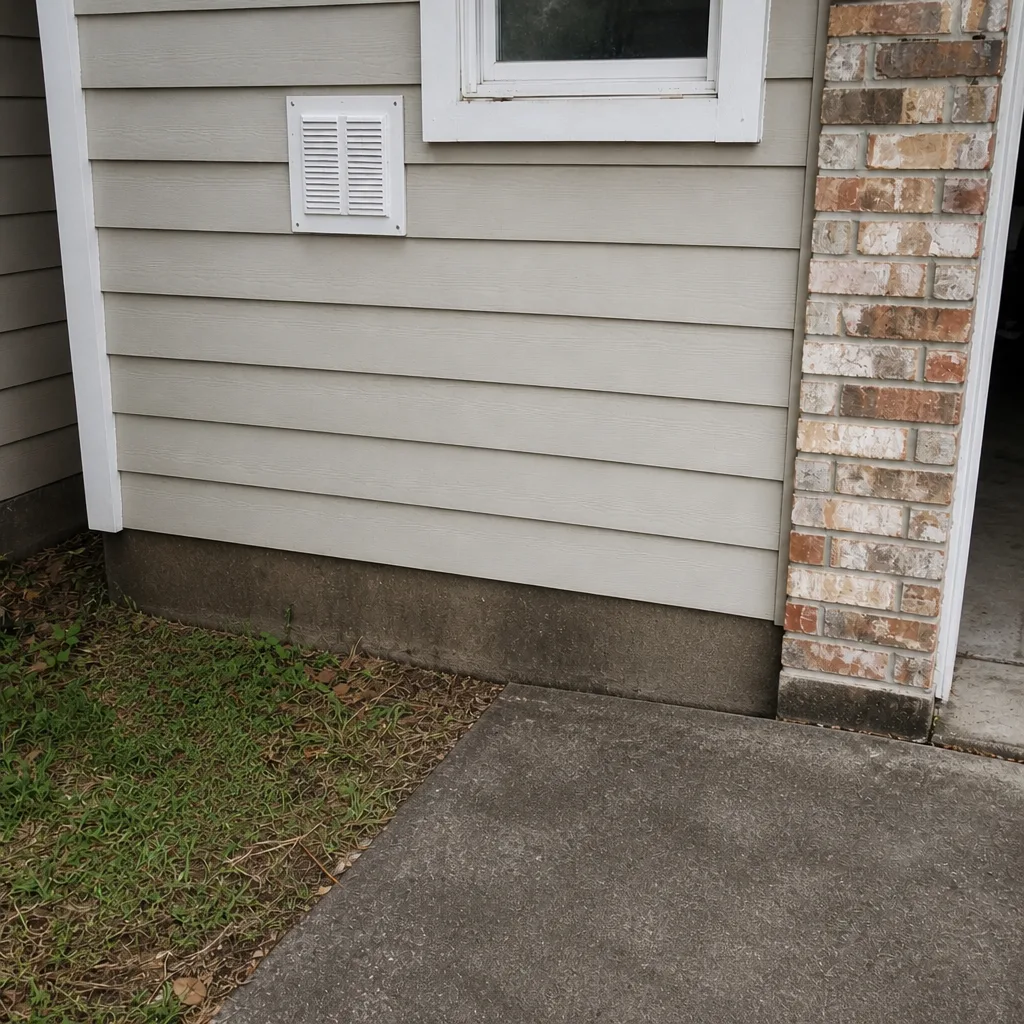 After
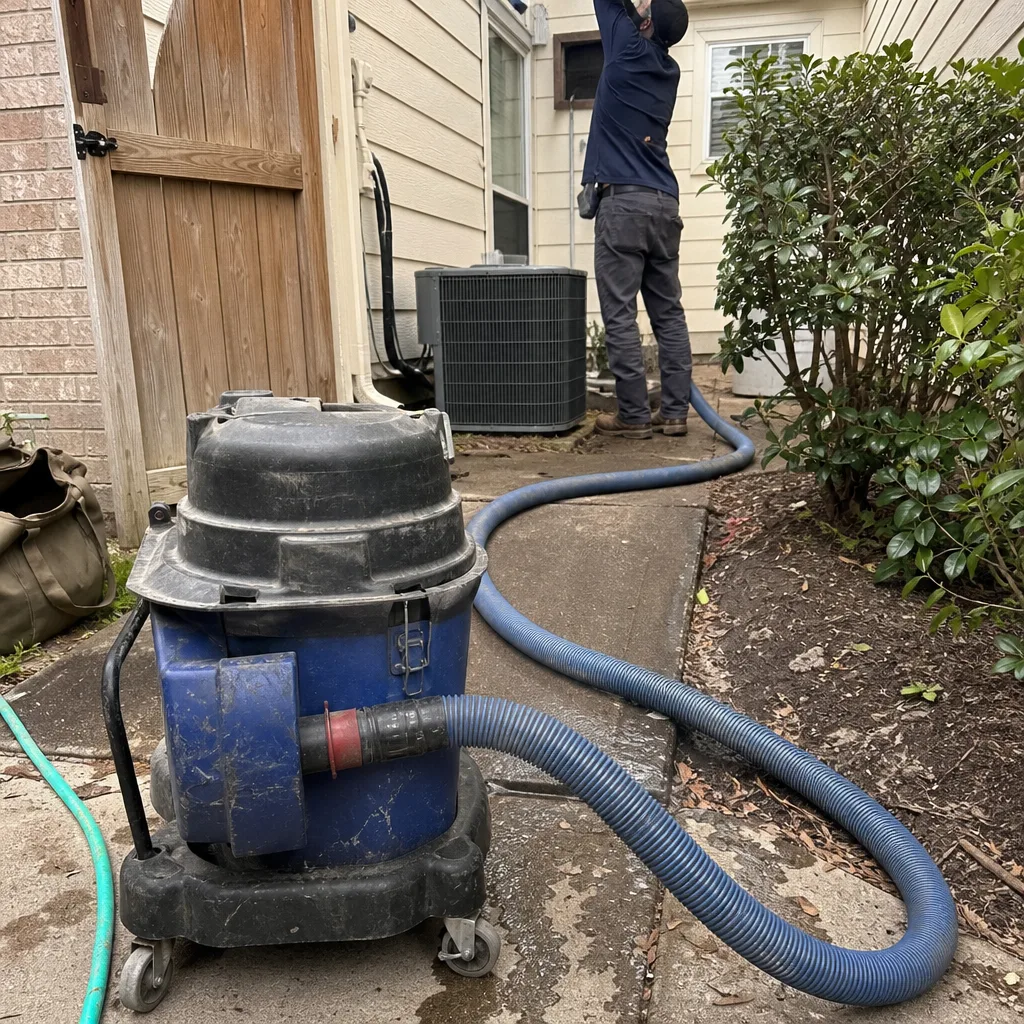 Before
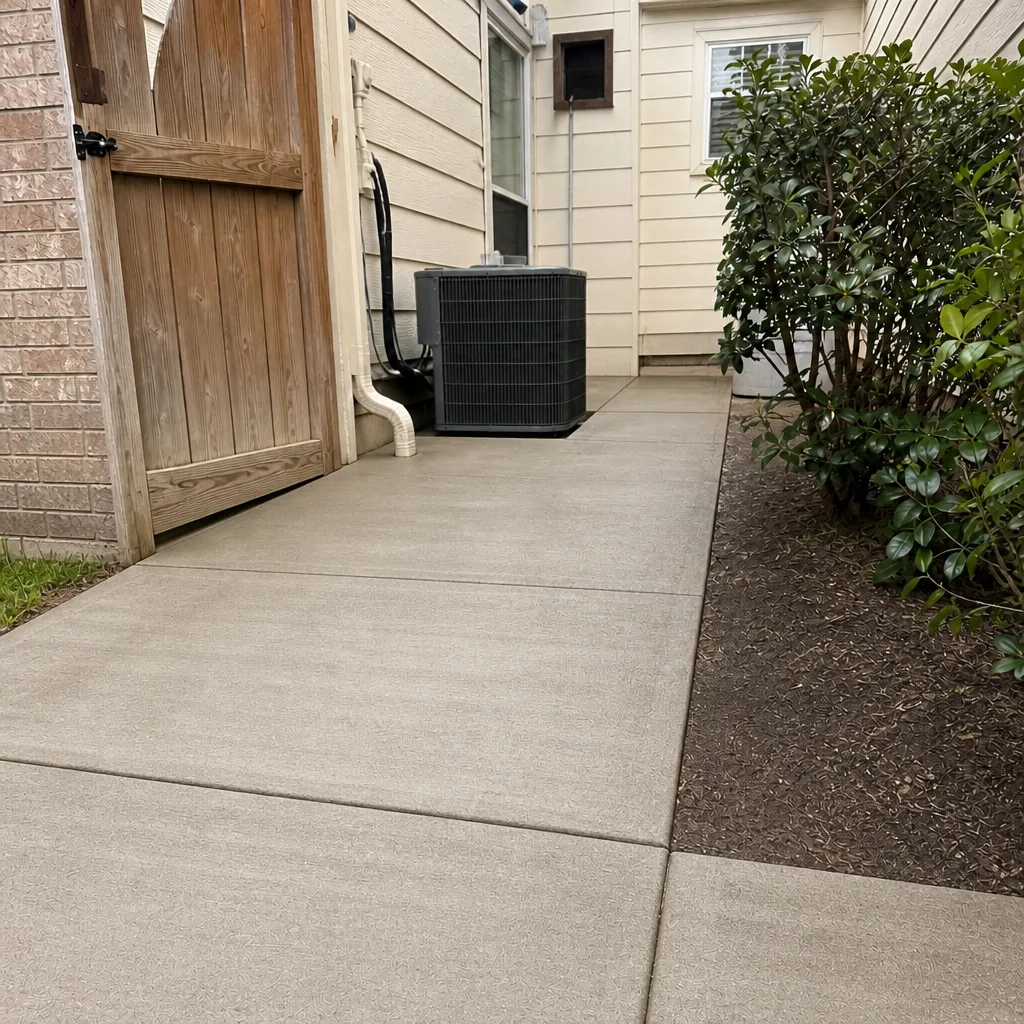 After
When to Call a Professional
Most of this checklist is what you can do yourself. Certain things you cannot. Call a professional when you’ve spotted a red-line condition (musty odor, asymmetric airflow, visible debris at multiple registers), when your log shows clear direction over two or more checkpoints, when you’re due for a full-system service, or when your dryer vent hasn’t been examined in a long stretch. A professional brings equipment that reaches the ducts and the walls of the ducts, not just the visible openings. If your system uses IAQ components from Honeywell or Aprilaire, ask for a technician who’s familiar with those. Our team is trained on both. Duct Cleaning Conroe offers free estimates in Conroe, and we’d be glad to look at your log with you. Call (844) 761-5350. We answer 24/7. Fast dispatch from 7am to 7pm, Sunday through Friday.
Frequently Asked Questions
Most Conroe homes do well with a full-system cleaning every few years, but the right interval depends on your home. Homes with pets, recent renovation, allergy-sensitive occupants, or a long-running AC system often benefit from more frequent service. Track filter loading and check the register walkthrough each season; those observations tell you when the next cleaning is due more reliably than a fixed schedule.
Cleaning addresses what’s on the walls of the duct; repair addresses the structure of the duct itself. If your system shows visible debris at registers, musty odor, or heavy dust accumulation, that’s a cleaning signal. If it shows crushed or disconnected runs, sudden airflow imbalance, or conditioned air leaking into an attic, that’s a repair signal. A full-system visit from a technician who handles both will tell you definitively, and our estimate is free. Call (844) 761-5350 to schedule.
It tells you how fast your system is pulling in particulate. A filter that loads faster than it used to can mean increased particle load in your home, a duct leak pulling in unfiltered air, or a filter housing that’s no longer sealing. A sudden change in loading rate is one of the most useful signals you can track, especially if you’ve been logging it consistently.
Dryer vents should be cleaned on a regular schedule because the fire risk rises with every cycle that pushes lint further into the run. Homes with heavy laundry use need more frequent service than light users. If you’re not sure when yours was last cleaned, that’s the right time to schedule it. It’s separate from your air duct schedule and deserves its own place on the calendar.
Usually the low quote is low for a reason: either it covers less work, uses less equipment, or prices per-vent in a way that grows quickly. A full-system job with contact cleaning that agitates and extracts debris from duct walls, and equipment like a Nikro HEPA and Abatement Technologies negative-air machine, is a different scope than a quick air blow. Ask what’s included in the written estimate before you book. Call (844) 761-5350 for a full-scope free estimate in Conroe.
Ask for before-and-after photos of the inside of the ductwork. Any technician who’s actually done a contact cleaning job can produce them. Ask for the scope in writing before the work begins so you know what’s covered. We provide before-and-after photos on every job, and the price is a single flat price per system agreed before work starts.
The Bottom Line
Your duct system doesn’t need constant attention, but it does need consistent attention. A filter log, a room-by-room walkthrough each season, and a seasonal checkpoint tied to the Conroe calendar give you the observations a technician needs to keep the system healthy. When the log starts pointing toward red-line conditions, or when the dryer vent hasn’t been checked in a while, that’s the moment to schedule professional service. The right call is a full-system scope: contact cleaning with professional equipment and repair when needed. Our team handles air duct cleaning, dryer vent cleaning, and air duct repair under one scope. Call (844) 761-5350 for a free estimate. We answer 24/7. Fast dispatch from 7am to 7pm, Sunday through Friday.
Written by the team at Duct Cleaning Conroe.